Best Ramen In Tokyo: Shops Worth The Queue And Shops That Skip It
Fifteen ramen shops, all rated 4.2 or higher on Google with at least 300 reviews, sorted by style, ward, price band and whether you can just walk in.
Short answer
Among the 15 ramen records on this site, 10 are labelled usually walk-in, 4 booking recommended and 1 booking usually required. Standouts include Jikasei MENSHO at 4.8 on Google across 4,480 reviews, Shinjuku-tei Yotsuya Halal Wagyu Ramen at 4.9 across 3,552 and UMAIR Halal Wagyu Ramen Ueno at 5.0 across 486.
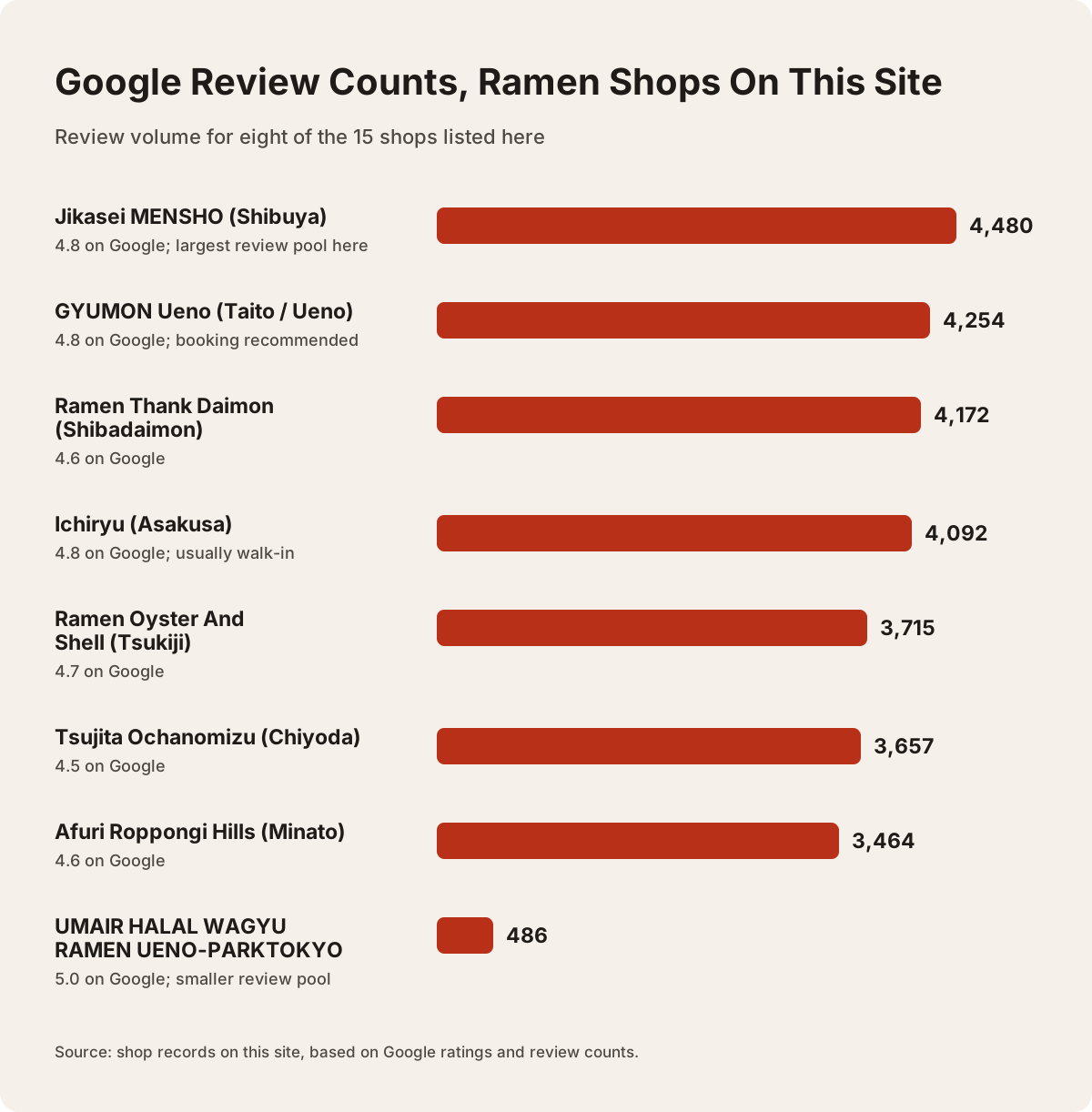
Ramen in Tokyo is a queue sport, but not everywhere. Among the 15 ramen records curated for this site, drawn from the 980+ in our own guide, The Tokyo Food List, 10 shops are labelled usually walk-in while only one, Ramen Minowaya Nakano Honten, is labelled booking usually required. The spread of styles is just as wide: tonkotsu, shoyu, miso, tsukemen, iekei and yuzu bowls all sit within this set, from Jikasei MENSHO's spicy miso at 4.8 on Google across 4,480 reviews to the oyster broth bowls of Ramen Oyster And Shell in Tsukiji at 4.7 across 3,715. Price bands stay low too: 11 of the 15 are labelled inexpensive, and the famous faces, as the table below shows, are mostly counter shops you can walk into.
What Is The Best Tonkotsu Ramen In Tokyo?
Tonkotsu, a creamy pork bone broth, anchors the classic ramen experience, but this curated set leans toward cousins of the style rather than a single shrine bowl. Menya NOBUNAGA in Kyobashi, 4.8 on Google across 3,090 reviews, lists tori paitan ramen among its order tags, a chicken based take on the same richness. Ramen Thank Daimon in Shibadaimon, 4.6 across 4,172, goes the other way with chicken ramen beside potage.
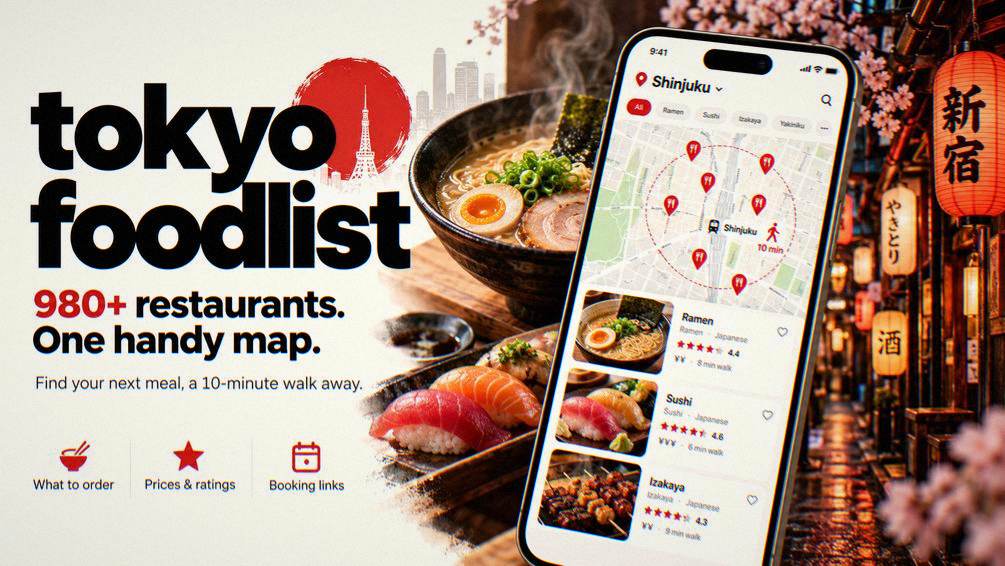
The honest answer is that this record set is not heavy on dedicated Fukuoka style tonkotsu counters; its strength is broth variety. Ichiryu in Asakusa, 4.8 on Google across 4,092 reviews and labelled moderate with usually walk-in access, lists beef bone broth, wagyu ramen and tantanmen, a beef take on richness that most first-time visitors have never tried. The shop's own site at 1dragon.jp carries the current menu. GYUMON Ueno, 4.8 across 4,254 and labelled booking recommended, pairs its bowls with gyukatsu and gyoza, which makes it a full meal stop rather than a quick slurp. Ramen is only the start; The Tokyo Food List holds 980+ restaurants sorted by cuisine, and the ramen entries list Google ratings, price ranges and what to order.
For a pork bone bowl with a booking-friendly twist, the halal wagyu ramen shops deserve their own look, and they get one further down this page. If pure tonkotsu is your single mission, treat this set as the map of alternatives and read the style table later in this guide before choosing a ward to hunt in. Deciding between a beef bone broth bowl in Asakusa and a chicken paitan in Kyobashi is exactly the kind of choice The Tokyo Food List is built for, since it sorts its 980+ listings by cuisine and price range and shows what to order at each. And when you're ready to look beyond noodle bowls, the guide to Tokyo's tempura, tonkatsu and unagi specialists applies the same single-dish logic to the city's fried and grilled masters.
What Is The Most Famous Ramen In Tokyo?
Fame in Tokyo ramen splits two ways: the international chains, Ichiran and Ippudo, are the names most travellers know, while the shops with the deepest local standing in this record set are Jikasei MENSHO in Shibuya at 4.8 on Google across 4,480 reviews, the largest review pool here, and the three-branch Afuri family, whose yuzu ramen appears in three separate records with a combined 10,480 reviews.
Jikasei MENSHO sits in Shibuya ward, is labelled inexpensive and usually walk-in, and lists spicy miso ramen, vegan tantanmen and truffle ramen among its order tags, an unusually wide spread for one counter. Its own page at menya-shono.com gives current details. Afuri is a different kind of fame: consistency. The Shibuya Dogenzaka branch holds 4.8 across 3,278 reviews, Roppongi Hills 4.6 across 3,464 and Roppongi Crossing Gate 4.5 across 3,738, all labelled usually walk-in and inexpensive, with yuzu ramen, shio ramen and char siew rice in the order tags. Three branches of the same bowl, two wards, no booking needed.
The data also flags a quieter kind of fame. UMAIR HALAL WAGYU RAMEN UENO-PARKTOKYO in Yushima holds a perfect 5.0 on Google, though across a smaller pool of 486 reviews, and its crowd label reads local rather than mixed or tourist. A perfect rating from a smaller pool is a signal, not a verdict; the review count is the context that keeps it honest.
Why Is Ippudo So Famous?
Ippudo is famous because it scaled: its official store locator lists 31 locations in Tokyo alone, its branches carry foreign language menus, and it accepts credit cards, IC cards and QR payments, a payment spread many independent ramen counters still do not match. Ichiran, its main rival, is famous for the opposite reason, solo flavour concentration booths with a bamboo curtain and a written order sheet for customising every element of the bowl. If you're weighing which chain suits you better, our head-to-head comparison of Ichiran and Ippudo in Tokyo breaks down the differences in format, ordering and payment side by side.
Neither chain appears in this site's curated 15, which selects for independent records with Google ratings of 4.2 or higher and at least 300 reviews. But the chains set the expectations visitors arrive with, so they are worth understanding. Ichiran's own system page at ichiran.com describes the partition booths and the order sheet, where you circle flavour strength, richness, garlic, green onion, chashu, red sauce and noodle firmness. Order sheets are available in English at most branches. Ippudo, by contrast, operates as a sit-down restaurant with counter and table seating suited to groups, which is precisely why families default to it.
The independent shops in this guide reward the extra effort. They are where the styles diversify: oyster broth in Tsukiji, beef bone broth in Asakusa, iekei in Nakano. If you want the chain experience, no guide is needed; if you want the bowl your hotel concierge eats, the ward table further down is the shortcut. For a deeper look at the street food culture that surrounds these counters, see our Shinjuku restaurant guide.
Ramen By Style In Tokyo: Tonkotsu, Shoyu, Miso, Tsukemen, Iekei, Yuzu
Every style in this guide is read from the order tags and cuisine fields of the records themselves, not from a chef's mythology. Shoyu and tsukemen are represented by Tsujita Ochanomizu's tsukemen with sudachi and togarashi, miso by Jikasei MENSHO's spicy miso and tantanmen bowls, iekei by Ramen Minowaya Nakano, and yuzu by the three Afuri branches, making yuzu the most widespread single style in the set.
Tonkotsu richness, as covered above, shows up here mostly in chicken paitan form at Menya NOBUNAGA. Miso is the most decorated style in the set by review volume: Jikasei MENSHO's 4,480 reviews, Shinjuku-tei Yotsuya's 3,552 at 4.9 and Ichiryu's tantanmen at 4,092 all sit in the miso or tantanmen family. Yuzu is the traveller's easy win: all three Afuri branches are inexpensive, walk-in and in wards, Shibuya and Minato, that are already on most itineraries. Tsukemen, the dipping style where noodles and broth arrive separately, appears once, at Tsujita Ochanomizu in Kanda, 4.5 across 3,657 reviews, with sudachi citrus and togarashi chilli listed alongside.
| Style | Where to order it | Shop, ward | Google rating, reviews |
|---|---|---|---|
| Miso and tantanmen | Spicy miso ramen, vegan tantanmen | Jikasei MENSHO, Shibuya | 4.8, 4,480 |
| Miso, halal wagyu | Spicy miso ramen, wagyu | Shinjuku-tei Yotsuya Halal Wagyu Ramen, Shinjuku | 4.9, 3,552 |
| Beef broth | Beef bone broth, wagyu ramen, tantanmen | Ichiryu, Taito / Asakusa | 4.8, 4,092 |
| Yuzu | Yuzu ramen, shio ramen | Afuri Shibuya Dogenzaka, Shibuya | 4.8, 3,278 |
| Yuzu salt | Yuzu salt ramen | Afuri Roppongi Hills, Minato | 4.6, 3,464 |
| Tsukemen | Tsukemen with sudachi and togarashi | Tsujita Ochanomizu, Chiyoda | 4.5, 3,657 |
| Iekei | Iekei ramen, salt pork bone ramen | Ramen Minowaya Nakano, Nakano | 4.3, 1,998 |
| Chicken paitan | Tori paitan ramen, spicy ramen | Menya NOBUNAGA, Chuo / Kyobashi | 4.8, 3,090 |
| Oyster | Oyster ramen, oyster broth, oyster rice | Ramen Oyster And Shell, Chuo / Tsukiji | 4.7, 3,715 |
The halal wagyu shops deserve a note on sourcing: their names and tags come straight from the Food List's cuisine and order fields. The list records what the listing says; it is not a certification check, so confirm directly with the shop if halal matters to your meal. Our dietary guide for Tokyo covers this in more depth, including the vegan tantanmen tag at Jikasei MENSHO.
All 15 Ramen Shops On This Site, By Ward And Rating
The full curated set spans eight wards, from Shibuya, Taito and Minato at three shops each to single entries in Shinjuku, Chiyoda, Nakano and Bunkyo, and every record holds 4.3 or higher on Google. Shibuya, Taito and Minato tie as the densest ramen wards here with three records each. The table below is the complete list.
| Shop | Ward / area | Google rating | Reviews | Price level | Booking label |
|---|---|---|---|---|---|
| Jikasei MENSHO | Shibuya | 4.8 | 4,480 | inexpensive | usually walk-in |
| GYUMON Ueno | Taito / Ueno | 4.8 | 4,254 | inexpensive | booking recommended |
| Shinjuku-tei Yotsuya Halal Wagyu Ramen | Shinjuku | 4.9 | 3,552 | inexpensive | booking recommended |
| Ichiryu | Taito / Asakusa | 4.8 | 4,092 | moderate | usually walk-in |
| HALAL WAGYU RAMEN SHINJUKU-TEI Asakusa | Taito / Asakusa | 4.8 | 3,457 | inexpensive | usually walk-in |
| HALAL WAGYU RAMEN SHINJUKU-TEI Tokyo Shibuya | Shibuya | 4.8 | 3,400 | inexpensive | booking recommended |
| Afuri Shibuya Dogenzaka | Shibuya | 4.8 | 3,278 | inexpensive | usually walk-in |
| Ramen Oyster And Shell | Chuo / Tsukiji | 4.7 | 3,715 | inexpensive | usually walk-in |
| Menya NOBUNAGA | Chuo / Kyobashi | 4.8 | 3,090 | inexpensive | booking recommended |
| Ramen Thank Daimon | Minato / Shibadaimon | 4.6 | 4,172 | moderate | usually walk-in |
| Afuri Roppongi Hills | Minato / Roppongi | 4.6 | 3,464 | inexpensive | usually walk-in |
| Afuri Roppongi Crossing Gate | Minato / Roppongi | 4.5 | 3,738 | inexpensive | usually walk-in |
| Tsujita Ochanomizu | Chiyoda / Kanda | 4.5 | 3,657 | moderate | usually walk-in |
| Ramen Minowaya Nakano Honten | Nakano | 4.3 | 1,998 | very expensive | booking usually required |
| UMAIR HALAL WAGYU RAMEN UENO-PARKTOKYO | Bunkyo / Yushima | 5.0 | 486 | inexpensive | usually walk-in |
Two rows jump out against the grain of everything else here. Ramen Minowaya Nakano Honten is labelled very expensive and booking usually required, the only record in the set to carry either label, and the Food List data reports those labels without explaining them. At the opposite pole, UMAIR in Yushima pairs a perfect 5.0 with a local crowd label and walk-in access, an unusual combination in a city where the highest rated counters often demand planning. That contrast, one shop you book, one you stumble into, is the whole queue question in miniature, and it is why sorting by reservation difficulty rather than fame pays off.
Which Ramen Shops Are Walk-In And Which Need Booking?
Ten of the 15 records are labelled usually walk-in, four are labelled booking recommended and one, Ramen Minowaya Nakano Honten, is labelled booking usually required. The labels describe what usually happens, not a fixed policy, so treat them as planning guidance: a walk-in label means queues rather than reservations are the mechanism, and a booking recommended label means a reservation removes real risk at peak hours.
Google Review Counts, Ramen Shops On This Site
The booking-recommended four are GYUMON Ueno, Shinjuku-tei Yotsuya Halal Wagyu Ramen, HALAL WAGYU RAMEN SHINJUKU-TEI Tokyo Shibuya and Menya NOBUNAGA. None of these is described as impossible without a reservation; the label signals that demand regularly outruns counter seats. The halal wagyu shops carry tourist crowd labels, which suggests their demand is visitor driven and heaviest at midday and early evening. If you are working through a neighbourhood anyway, the Food List's map of what is within a 10-minute walk of any pinned shop is the fastest way to find a walk-in fallback two streets away rather than across the city.
Timing beats booking at the walk-in ten. Ramen turnover is fast, and the shops labelled mixed crowd, which is most of this set, thin out between the lunch and dinner rushes. Reading the room matters more than the clock: if tickets are selling fast at the machine and the counter is full of unfinished bowls, walk. Our reservations guide for Japan covers the mechanics if you do want to lock a table at the booking-recommended four.
Shop Mechanics: Ticket Machines, Cash And Counter Manners
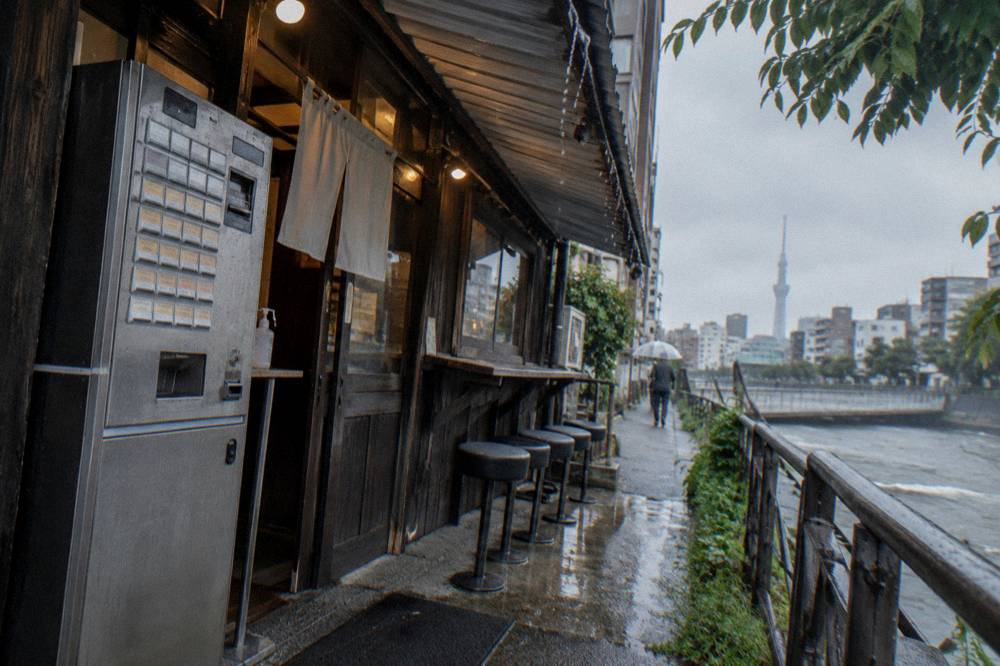
At most Tokyo ramen shops you order by buying a meal ticket from a vending machine, a shokkenki, by the entrance, hand the ticket to staff when seated and eat quickly, since turnover is fast. Many small ramen shops and counters typically remain cash-only or cash plus IC card, while others take cards; there is no uniform policy, so carry cash even in card-friendly Tokyo.
The machine sequence is simple once seen: insert money first, buttons light up, select, collect the ticket. Touch panel machines with an English toggle and photos are increasingly common at tourist-oriented and chain shops, per Japan Bites' ticket machine guide. Some busy shops now issue same-day numbered tickets outside from the morning rather than relying on a standing queue alone, and a few sell paid priority-entry tickets online to skip the line. Slurping is normal and expected at ramen counters (TripGuide.Tokyo); it is not a liberty you are taking but the standard way the bowl is eaten. The same row's other half matters just as much: do not linger, because the seat is the resource. If you're wondering what that ticket will actually cost you, Tokyo ramen prices and the extras that raise the bill covers it across every price band.
| Mechanic | What typically happens | How to handle it |
|---|---|---|
| Ticket machine | Buy a meal ticket at the entrance before seating | Insert cash first, then select; hand the ticket over when seated |
| Payment | Many small counters are cash-only or cash plus IC card | Carry cash; IC cards work where cards do not |
| Queue | Fast turnover, sometimes numbered tickets from morning | Go off-peak; check for a ticket dispenser before joining a line |
| Eating pace | Counter seats turn over quickly | Order, eat, stack bowls neatly, leave |
| Tabelog and booking fees | Multilingual booking services charge per-person, per-seat fees | Factor fees in if you book rather than queue |
One more mechanic sits outside the shop: tax. Dine-in meals carry 10 percent consumption tax while identical takeout is taxed at 8 percent, per NHK's reporting, which is why a takeaway bowl can ring up cheaper than the same thing at the counter. None of this changes which bowl to order, but it changes how much cash to carry and how long you can nurse a chashu-topped miso.
Can I Slurp My Ramen In Japan?
Yes. Slurping noodles in Japan is normal, ordinary and close to universal at ramen counters; TripGuide.Tokyo reports it as standard shop etiquette, not a breach of manners. What actually reads as rude is the opposite set of behaviours: camping a counter seat during a queue, lingering long after the bowl is finished, or ignoring the ticket machine flow and holding up the line behind you.
The distinction travellers miss is that slurping is functional, cooling noodles as they exit the broth, rather than performative. Nobody at a ramen counter is listening for volume. The rest of the manners are logistical. Eat at the counter's pace, which at a busy tonkotsu or miso shop is brisk. Stack finished bowls neatly if the shop's system expects it. And when the meal ticket is your order, the whole transaction from machine to empty bowl can run under fifteen minutes at turnover-focused shops, which is exactly the speed the design intends. For table-service contexts the rules differ, and our piece on whether it is rude in Japan to not finish food covers that setting.
What To Say Before Eating Ramen?
The standard phrase before eating in Japan is itadakimasu, said quietly at the start of the meal, and gochisosama at the end; both are gratitude formulas rather than religious ritual, and at a ramen counter a murmured itadakimasu before the first slurp is the full ceremony. No bow to the chef, no announcement to the room, and nothing at all is required of a visitor who simply eats.
Counter culture compresses manners to their smallest form. You can say itadakimasu to the bowl, to the staff or to nobody in particular. If you need something mid-meal, sumimasen gets attention. The machine has already replaced most ordering conversation, and at shops with English touch panels or English order sheets, like the Ichiran branches described on their own site, the entire visit can happen without a word of Japanese. That low linguistic floor is part of why ramen is the most visitor-friendly dining category in the city, and why the crowd labels in this set tilt tourist at only three of fifteen shops: locals use the same machines at the same counters.
Making The Bowl: A Class Or A Crawl?
For visitors who want more than to eat ramen, a 90-minute Shibuya cooking class covers tonkotsu, shoyu and miso styles in one session, from $113.36 per person, with a 5.0 rating across 259 reviews, a meal included and free cancellation. It caps at 20 travellers, and no cooking experience is assumed. The class is the related tour for this guide because it maps onto the same style framework this page uses.
The practical case for a class is compression. Three broths, three seasoning bases and the noodle logic behind them, all in one sitting, gives you a vocabulary for every bowl you eat afterwards, including the ones in the table above. The practical case against is that Tokyo's counters are already a free classroom if you order widely, and the walk-in ten in this set cost a fraction of the class fee per bowl. Both are legitimate; the deciding factor is whether you want to cook or to eat.
If eating your way through the styles sounds better than cooking them, a guided walk leads you straight to the good counters. The Shinjuku Local Eateries Walk runs 3 hours from $84.21 per person, holds a 4.9 rating across 10,498 reviews, includes both a meal and drinks, caps groups at 12 and carries free cancellation. It is a street-food walk rather than a ramen seminar, but Shinjuku's counter density makes it a fair sampler of the same world this page maps.
A third format sits closer to the source. The Tsukiji Market walk with five tastings runs 3 hours from $97.17 per person, 4.9 across 3,868 reviews, meal included, up to 20 travellers, free cancellation. Tsukiji's outer lanes sit minutes from Ramen Oyster And Shell, the oyster broth record in this set, so a market morning and a counter lunch pair naturally. Whichever format you pick, the shops above stay the point: the styles, the labels and the queues are the same from either side of the counter.
For everything beyond these 15, from the 980+ full list to the map that shows what is within a 10-minute walk of any pinned counter, our own guide, The Tokyo Food List, is the companion to this page. Pair it with what to eat in Tokyo when ramen is only one stop of the trip, and with the best cheap eats in Tokyo when the inexpensive labels here are the budget. More of the same reporting lives at Best Restaurants Tokyo.
Common Questions About Ramen In Tokyo
What is the best tonkotsu ramen in Tokyo?
In this curated set, pure Fukuoka style tonkotsu is rare; the closest rich-broth expressions are Menya NOBUNAGA's tori paitan in Kyobashi (4.8 on Google, 3,090 reviews) and Ichiryu's beef bone broth in Asakusa (4.8, 4,092). Both are worth the detour if creamy richness is the goal.
What is the most famous ramen in Tokyo?
Globally, Ichiran and Ippudo. Within this site's records, Jikasei MENSHO in Shibuya (4.8 across 4,480 reviews) and the three-branch Afuri yuzu family (a combined 10,480 reviews) carry the deepest recognition.
Why is Ippudo so famous?
Scale and accessibility: 31 Tokyo locations on its official locator, foreign language menus and broad card, IC and QR payment acceptance, plus table seating that suits groups rather than solo booths.
Can I slurp my ramen in Japan?
Yes, slurping is normal and expected at ramen counters. The genuine breaches of manners are lingering at a queued counter seat and slowing the ticket machine line.
What to say before eating ramen?
Itadakimasu before the first bite, gochisosama when finished. Both are quiet gratitude formulas; nothing more is expected, and silence is unremarkable at a counter.