How Much Is One Bowl Of Ramen In Tokyo?
What a bowl of ramen costs in Tokyo, how ticket machines work, which extras raise the bill, and how the city's best rated ramen shops split by price band.
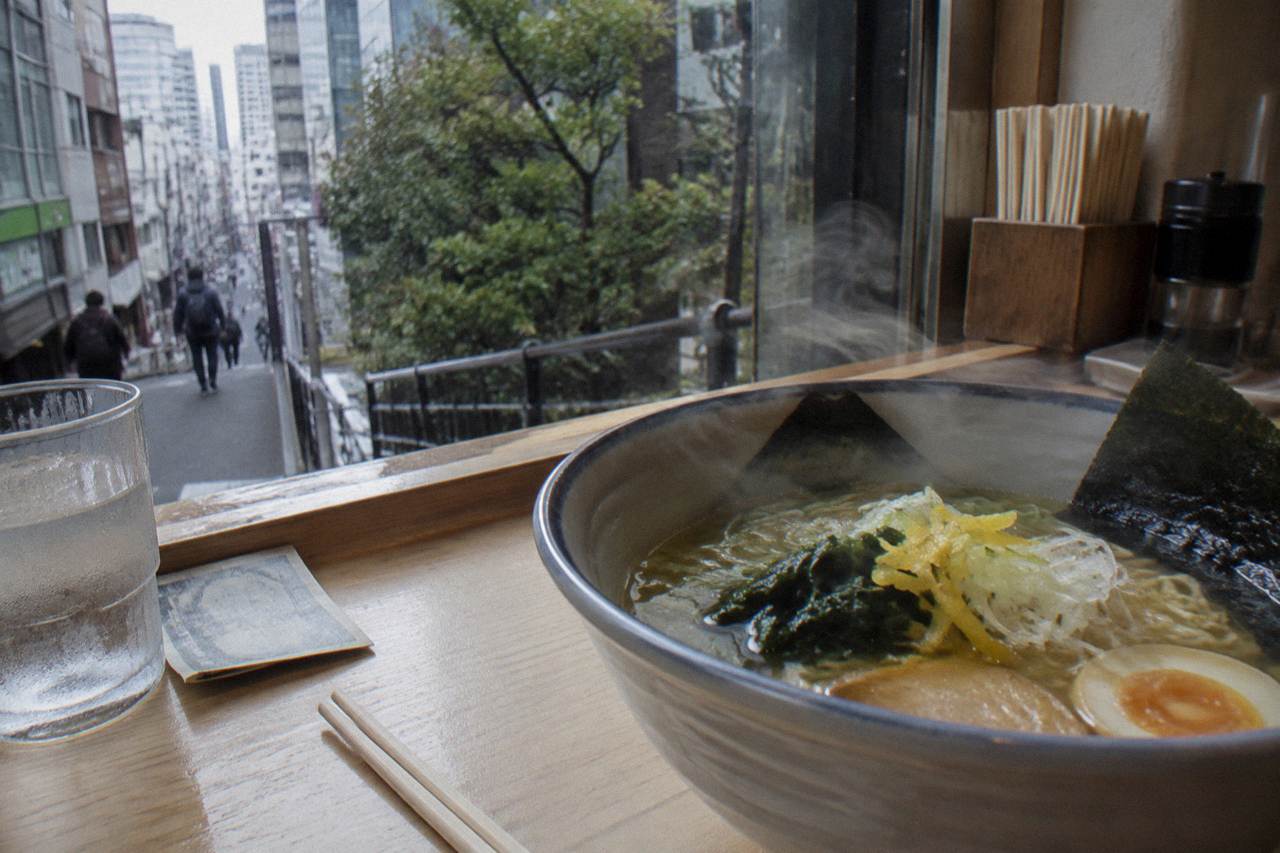
Tokyo ramen pricing has a headline number and a footnote. The national average price for one bowl of chūka soba, the category ramen belongs to, reached 750 yen at restaurants according to jpmarket-conditions.com, up from 561 yen a decade earlier. The footnote is that Tokyo spreads far wider than that average, from inexpensive counter shops where the bowl barely outpaces a convenience store onigiri run, to one very expensive Nakano shop where ramen becomes a full reservation first event. The 15 ramen records on Best Restaurants Tokyo split 11 inexpensive, 3 moderate and 1 very expensive, which tells you most bowls you will actually encounter sit at the cheap end of eating out in this city.
How Much Is One Bowl Of Ramen In Tokyo?
Most bowls in Tokyo cost the same as a mid priced sandwich in London or New York: the national restaurant average for a bowl of chūka soba is 750 yen according to jpmarket-conditions.com, and among the 15 ramen records on this site, 11 are labelled inexpensive, 3 moderate and 1 very expensive. Extra toppings, rice sides and a drink typically add a modest amount to the base bowl.
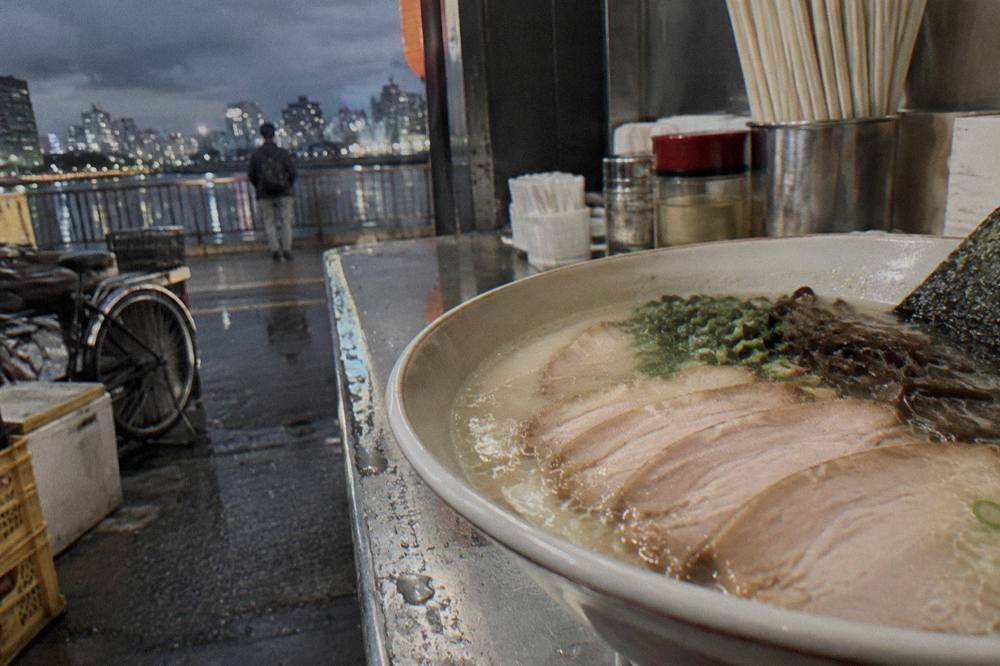
Drill into the spread and the pattern holds. Japan Ramen Guide's 2026 pricing analysis found that 33 percent of sampled Tokyo ramen shops offer bowls under 1,000 yen, while the majority fall in the 1,000 to 1,999 yen range and only a small tail pushes past 2,000 yen. So the realistic planning band for a single bowl, before extras, is roughly the price of a flat white and a pastry in a Western city centre, sometimes less.
Tokyo's tax rules nudge the total too, and not in the direction most visitors expect. Dine in meals carry 10 percent consumption tax while takeout food is taxed at the reduced 8 percent rate, and menus must show tax included prices, so the number on the wall is the number you pay. Ramen is nearly always eaten in, at a counter, from a ticket you bought at the door. If you're unsure whether you need to empty the bowl, this piece on leaving ramen unfinished and Japanese dining etiquette explains what genuinely causes offence at the counter.
If you want to see the full price picture across 980+ Tokyo restaurants, sorted by Google rating and price range with what to order at each one, our own guide The Tokyo Food List puts every bowl, skewer and sushi set side by side for picking by neighbourhood on a phone. For sushi on other days, open The Tokyo Food List on your phone, pick a neighborhood, and check Google ratings and what to order before you sit down.
| Price level | Ramen records | What it means for one bowl | Examples from the records |
|---|---|---|---|
| Inexpensive | 11 of 15 | The standard Tokyo bowl: counter, one dish, fast turnover | Jikasei MENSHO, Afuri Shibuya Dōgenzaka, Ramen Oyster And Shell |
| Moderate | 3 of 15 | Premium broths or wagyu toppings push the bowl up a band | Ichiryu, Ramen Thank Daimon, Tsujita Ochanomizu |
| Very expensive | 1 of 15 | Ramen as an event: booking usually required, top priced bowls | Ramen Minowaya Nakano Honten |
What Do The Best Rated Ramen Shops In Tokyo Charge?
Among the 15 ramen records here, ratings run from 4.3 to 5.0 on Google and price level does not track rating at all: the two highest rated bowls, UMAIR HALAL WAGYU RAMEN UENO-PARKTOKYO at 5.0 and Shinjuku-tei Yotsuya Halal Wagyu Ramen at 4.9, are both labelled inexpensive. The single very expensive record, Ramen Minowaya Nakano Honten, sits at 4.3, the lowest rating of the set.
In other words, paying more for ramen in Tokyo does not buy you a better reviewed bowl. Jikasei MENSHO, 4.8 on Google across 4,480 reviews, is labelled inexpensive and usually walk-in, with spicy miso ramen, vegan tantanmen and truffle ramen among its order tags. GYUMON Ueno, 4.8 across 4,254 reviews and also inexpensive, is one of the minority labelled booking recommended, and its order tags read gyukatsu, gyoza and wagyu, a bowl where the topping is doing the pricing work. If you would rather weigh the two biggest chain names against each other, this comparison of Ichiran and Ippudo in Tokyo covers ordering, customisation, hours and payment before pointing you toward independent alternatives.
Halal wagyu ramen tells its own price story. Shinjuku-tei Yotsuya Halal Wagyu Ramen in Shinjuku holds 4.9 across 3,552 Google reviews at an inexpensive label; its Asakusa sibling holds 4.8 across 3,457 reviews and is usually walk-in; the Shibuya branch holds 4.8 across 3,400 reviews with booking recommended. All three list wagyu among the order tags. Wagyu in the bowl, halal preparation, inexpensive band: for anyone weighing what a bowl buys, that combination is the best value play among the restaurants on this site.
At the other end, Ramen Minowaya Nakano Honten in Nakano is the set's outlier on every axis: very expensive, booking usually required, and its order tags are iekei ramen and salt pork bone ramen rather than luxury ingredients. Iekei is a rich Yokohama style, and this shop treats it as a destination rather than a quick meal. For everyone else, cheap and superbly reviewed coexist on nearly every high street.
How Do Ramen Ticket Machines Work?
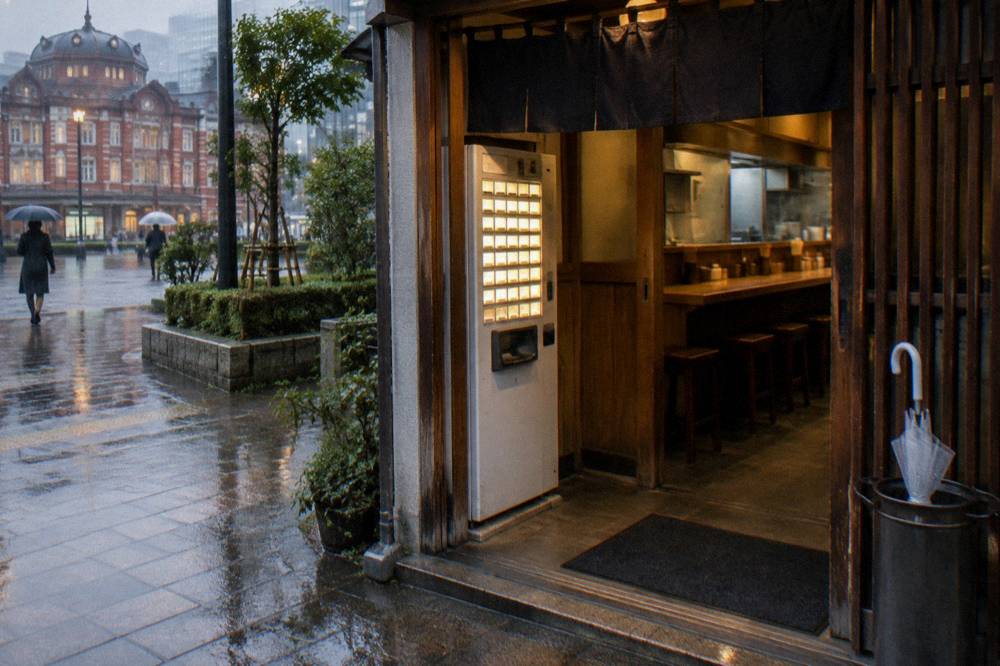
At most Tokyo ramen shops you buy a meal ticket from a vending machine, called a shokkenki, by the entrance before you sit down: insert cash, press the button for your bowl, take the small paper ticket and hand it to staff when seated. The machine is also why small shops often stay cash-only or cash plus IC card, as Japan Travel Notes reports there is no uniform card policy.
The machine looks more intimidating than it is. Japan Bites, which documents the ticket machine routine, notes that machines are increasingly IC card operated as well as cash operated, and that tourist oriented and chain shops increasingly use touch panel versions with an English, Chinese and Korean language toggle and photos for each item. Buttons light up only after you pay, so the sequence is always money first, choice second.
| Step | What you do | What trips people up |
|---|---|---|
| 1 | Find the machine just inside or outside the entrance | Some shops have it outside, easy to walk past |
| 2 | Insert cash, or tap an IC card where supported | Large notes can be refused; keep smaller bills |
| 3 | Press the lit button for your bowl and any toppings | Buttons only activate after payment |
| 4 | Take the printed ticket to your seat and hand it over | Do not bin it, it is your order |
| 5 | Eat and leave, no further payment at the table | Change comes from the machine, not staff |
Ichiran, the chain most visitors meet first, formalises this into a whole system: per Ichiran's own site, customers buy a ticket from a vending machine at the entrance, then customise flavour strength, richness, garlic, green onion and noodle firmness on a written order sheet, in solo partition booths with a bamboo curtain. The Standard Japan notes order sheets are available in English at most branches. The bowl price does not change with customisation, which is part of the appeal.
Which Extras And Toppings Change The Bill?
Extras raise a Tokyo ramen bill in small, visible steps: toppings such as extra chashu pork, a boiled egg or more noodles are bought as machine buttons beside the bowl itself, and sides like gyoza, rice bowls and fried chicken typically cost a fraction of the bowl. The order tags in the record set show what is worth adding at each shop.
Read the tags as a shopping list. At Afuri Shibuya Dōgenzaka, 4.8 on Google across 3,278 reviews, the tags are yuzu ramen, shio ramen and char siew rice, so the rice side is the documented pairing rather than a random extra. Afuri's own site lists both the Shibuya and Roppongi Hills branches if you want the current menu before you go. Ramen Oyster And Shell in Tsukiji, 4.7 across 3,715 reviews, tags oyster ramen, oyster broth and oyster rice, three ways to have the same ingredient.
Menya NOBUNAGA in Kyobashi tags chicken ramen, tori paitan ramen and spicy ramen, all variations within one shop rather than add ons. GYUMON Ueno tags gyoza alongside its ramen, the classic side order. At Ichiryu in Asakusa the tags run beef bone broth, wagyu ramen and tantanmen, a trio that explains its moderate label where most of the set is inexpensive: the wagyu bowl is the premium order, the other two keep the average down.
Toppings bought at the machine are sold as separate buttons, so the mental maths is straightforward: bowl price plus each button you press. Tipping does not exist in this economy, and staff may return money left behind, as japan-guide.com explains, so the ticket total is genuinely the whole bill. Nobody will bring anything else you did not pay for.
Is Ramen The Cheapest Full Meal In Tokyo?
Yes, by some distance: an inexpensive ramen bowl is a complete, hot, protein heavy meal at a price comparable to convenience store onigiri plus a drink, while the same money buys almost nothing sit down elsewhere in the city. For context on how the whole restaurant price ladder works, our sibling guide on meal costs covers every cuisine from standing soba to sushi counters.
The contrast with other records on this site is stark. Among the 16 sushi records, 4 are expensive, and those same 4 are also the ones labelled booking usually required, categories that barely exist in ramen, where 10 of 15 records are usually walk-in and only one asks for a booking as standard. Ramen Thank Daimon in Minato, 4.6 across 4,172 reviews and moderate, even tags risotto and potage alongside its chicken ramen, and remains usually walk-in.
Budget discipline still matters at the counter. The 10 percent dine in tax is already inside the displayed price, but drinks ordered at the machine, extra noodle portions and side dishes each add their own button, and a second bowl at a shop this good is a real temptation. Ticket machines and tiny counters often mean coins instead of plastic, so our guide to where cash still beats card at Tokyo restaurants explains which shops expect yen in hand and where a card works fine.
If you would rather understand the whole broth from the inside, there is a 90 minute Shibuya ramen cooking class that walks you through tonkotsu, shoyu and miso, the three mother styles behind most of the bowls above. It runs from $113.36 per person, holds a 5.0 rating across 259 reviews, includes the meal, and offers free cancellation. You can read more on the Shibuya ramen cooking class page or Check availability.
For a broader comparison of what every cuisine costs across the city, from tempura to tonkatsu, the Tokyo meal cost breakdown puts ramen in its place on the ladder, and our guide to the best ramen in Tokyo names the shops worth the queue citywide.
Where In Tokyo Are The Cheapest Good Bowls?
Shibuya and Minato hold the deepest runs of inexpensive, highly rated bowls. Shibuya's Google listings show Jikasei MENSHO at 4.8 across 4,480 reviews and the halal wagyu Shibuya branch at 4.8 across 3,400 reviews, while most of the halal wagyu bowls sit in Ueno and Asakusa. Every ward among our 100 picks except Nakano and Chiyoda has at least one inexpensive bowl at 4.6 or higher on Google.
| Ward or area | Records | Price spread | Standout record |
|---|---|---|---|
| Shibuya | 3 | all inexpensive | Jikasei MENSHO, 4.8, 4,480 reviews, usually walk-in |
| Taito (Ueno and Asakusa) | 3 | 2 inexpensive, 1 moderate | GYUMON Ueno, 4.8, 4,254 reviews, booking recommended |
| Minato | 3 | 2 inexpensive, 1 moderate | Afuri Roppongi Hills, 4.6, 3,464 reviews |
| Chuo | 2 | both inexpensive | Ramen Oyster And Shell, 4.7, 3,715 reviews |
| Shinjuku | 1 | inexpensive | Shinjuku-tei Yotsuya Halal Wagyu Ramen, 4.9, 3,552 reviews |
| Chiyoda | 1 | moderate | Tsujita Ochanomizu, 4.5, 3,657 reviews |
| Bunkyo | 1 | inexpensive | UMAIR HALAL WAGYU RAMEN UENO-PARKTOKYO, 5.0, 486 reviews |
| Nakano | 1 | very expensive | Ramen Minowaya Nakano Honten, 4.3, 1,998 reviews |
Ueno and Asakusa reward anyone staying on that side of town. Google listings put GYUMON Ueno at 4.8 across 4,254 reviews, Ichiryu in Asakusa at 4.8 across 4,092, the Asakusa halal wagyu branch at 4.8 across 3,457 and UMAIR in neighbouring Bunkyo at 5.0 across 486: four inexpensive or moderate bowls inside a short train hop, three of them usually walk-in. That density is why the area features in so many Tokyo cheap eats itineraries.
One crowd note from the labels: the halal wagyu branches are tagged tourist leaning crowds, while UMAIR tends to draw locals and the Afuri and Jikasei counters draw a mixed crowd, all crowd labels taken from the Google listings. None of that changes the price, but it changes the queue you should expect at 7pm on a Friday.
A guided walk is one way to shortcut the choice paralysis. The Shinjuku Local Eateries Walk runs 3 hours from $84.21 per person, capped at 12 travellers, with a meal and drinks included, free cancellation, and a 4.9 rating across 10,498 reviews. Details are on the Shinjuku local eateries walk page.
Between walks, classes and counters, the practical answer to the price question has not changed much: budget for an inexpensive bowl almost anywhere in the city, carry some cash or an IC card for the machine, and reserve your energy for choosing between broths rather than worrying about the bill. The Tokyo Food List, our own guide, keeps all 980+ records with reservation difficulty and booking links in one place if you want the full map before you go.
Common Questions About Ramen Prices In Tokyo
How Much Is One Bowl Of Ramen In Tokyo?
The national restaurant average for a bowl of chūka soba is 750 yen according to jpmarket-conditions.com. Among this site's 15 ramen records, 11 are labelled inexpensive, 3 moderate and 1 very expensive, so most bowls you meet sit at or below the average.
Do I pay at the table in a ramen shop?
Usually not. Most Tokyo ramen shops use a ticket vending machine by the entrance: pay first, press the button for your bowl, then hand the ticket to staff when seated. No further payment happens at the counter.
Can I pay by card at ramen shops?
There is no uniform policy. Many small ramen shops and counters remain cash-only or cash plus IC card, while chains and newer touch panel machines increasingly take cards and IC payments. Carry cash as a fallback.
Are toppings extra at ramen shops?
Yes. Extras such as more noodles, extra pork or a boiled egg are separate buttons on the ticket machine, each priced on its own. Sides like gyoza or rice are bought the same way.
Why is one ramen shop very expensive?
Ramen Minowaya Nakano Honten, the only very expensive record here, treats its iekei and salt pork bone bowls as a destination meal with booking usually required. Elsewhere in the record set, high ratings and inexpensive prices go together.
Is tax included in the price on the machine?
Yes. Dine in meals carry 10 percent consumption tax and menus and price tags must show tax included prices, so the number on the machine is the number you pay.