Which Restaurants In Tokyo Require Reservations?
The reservation labels explained: which Tokyo restaurants are booking usually required, which are booking recommended, and which you can walk into, with the seven curated records that need a booking.
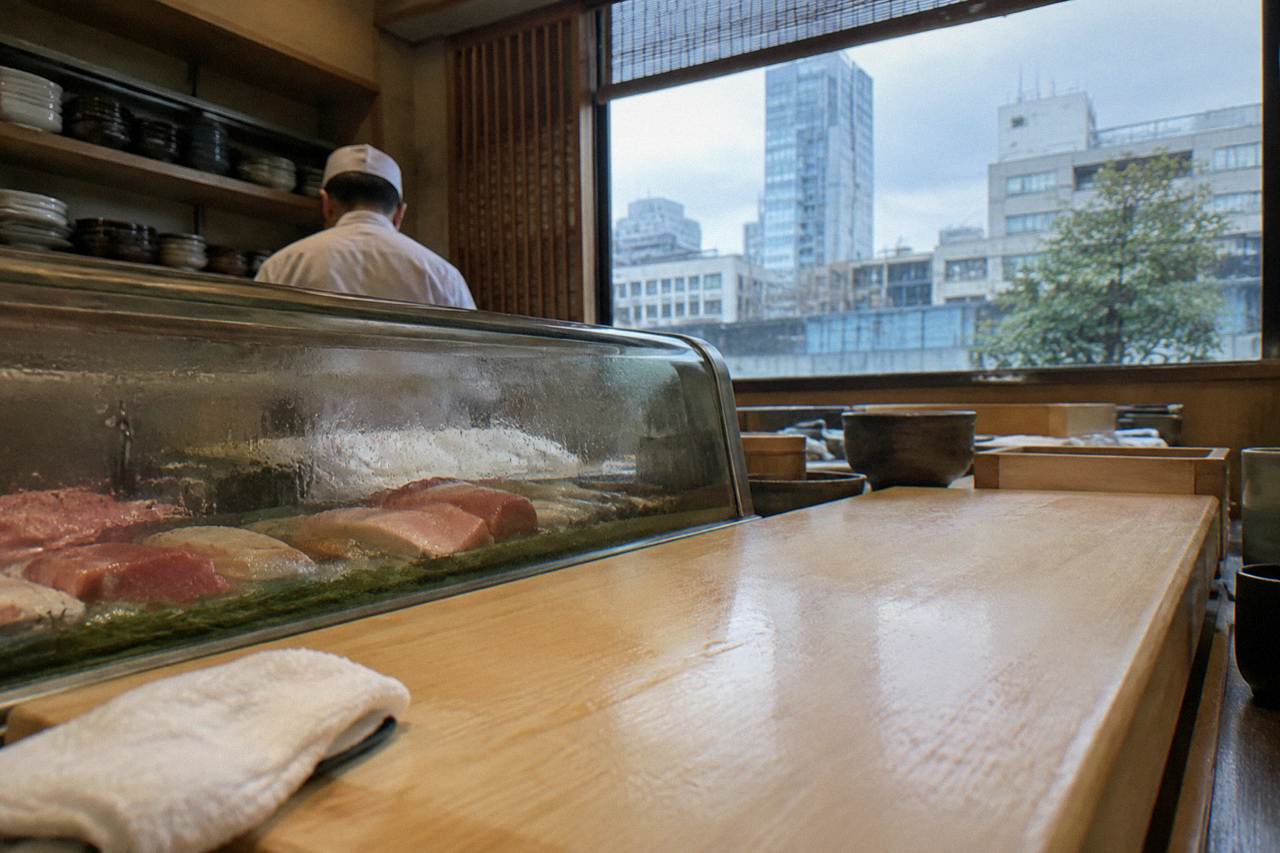
Only 7 of the 100 restaurants curated on this site carry a booking usually required label: Matsue Ebisu Head Store, Sushi Kuni, Sushi Yuu, Shabu Shabu & Sushi Hassan Roppongi, Ramen Minowaya Nakano Honten, Mikawa Zezankyo and Tonkatsu Narikura. Another 48 are labelled booking recommended and 45 are usually walk-in. The labels describe what usually happens at each restaurant rather than a fixed house policy. All seven are expensive or very expensive places, which is the clearest pattern of all. Since the restaurants most likely to need a booking are also the expensive ones, our comparison of typical sushi dinner prices in Tokyo shows what standing bars and omakase counters each cost.
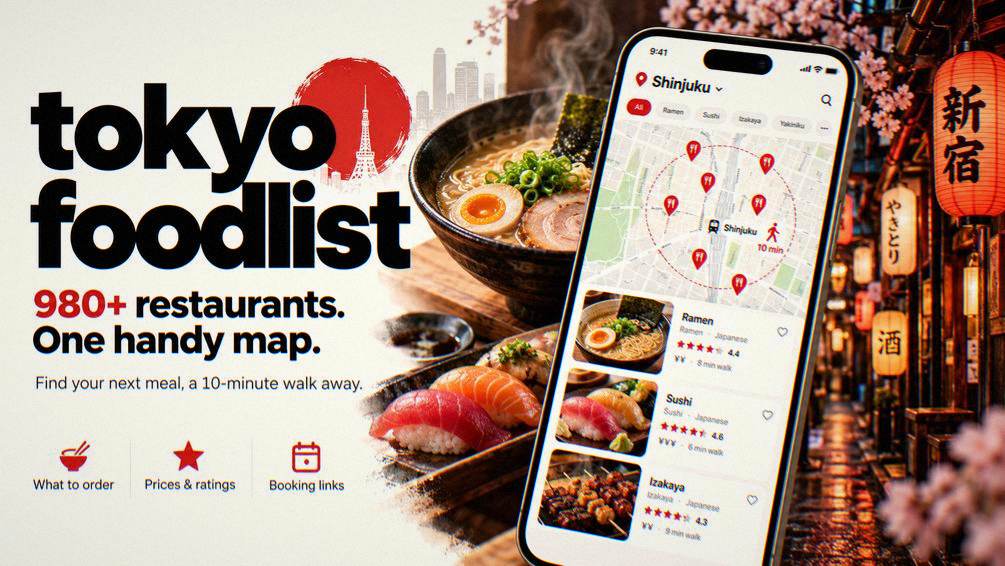
That split is the short answer, but the useful part is knowing what each label actually demands of you. A restaurant labelled booking recommended is not turning you away at the door if you have no booking, though you may wait or miss out at peak times. A booking usually required restaurant is a different animal: turning up without a booking is a gamble you will usually lose. Our own guide, The Tokyo Food List, carries a reservation difficulty label for every one of its 980+ Tokyo restaurants plus booking links, which is the fastest way to check a specific address before you commit an evening to it. To see the tough end of that scale in practice, the Sushi Jiro reservation guide walks through how the booking process actually works and which sushi counters make a realistic fallback.
Which Restaurants In Tokyo Require Reservations?
The seven curated records with the booking usually required label are Matsue Ebisu Head Store and Sushi Yuu (sushi), Sushi Kuni in Tsukiji, Shabu Shabu & Sushi Hassan Roppongi, Mikawa Zezankyo (tempura), Tonkatsu Narikura (tonkatsu) and Ramen Minowaya Nakano Honten, the only ramen record in the label. All seven are expensive or very expensive, and four tend to draw a local crowd. Every rating below is digit for digit from Google.
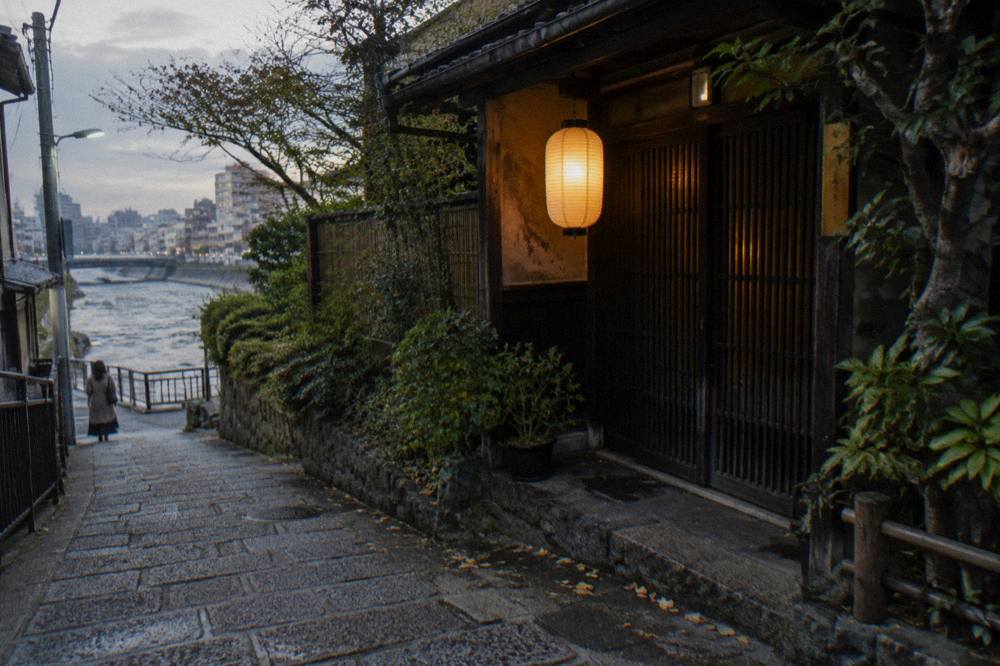
Two things stand out in that list. First, the cuisine mix is wider than most people expect: reservation-required dining in Tokyo is not only sushi counters, it also includes a tonkatsu specialist and a ramen shop. Second, review counts run from 504 to 1,998, so these are not obscure secrets. Sushi Yuu sits at 4.8 on Google across 504 reviews and is labelled as tending to draw locals, which usually signals a regular customer base that fills the counter week after week. The full record set looks like this:
| Restaurant | Cuisine | Area | Google rating | Reviews | Price level | Crowd label |
|---|---|---|---|---|---|---|
| Matsue Ebisu Head Store | sushi | Shibuya | 4.8 | 1,632 | expensive | mixed |
| Sushi Kuni | sushi | Chuo / Tsukiji | 4.3 | 1,463 | expensive | mixed |
| Sushi Yuu | sushi | Minato / Azabu | 4.8 | 504 | expensive | local |
| Shabu Shabu & Sushi Hassan Roppongi | sushi | Minato / Roppongi | 4.5 | 676 | expensive | local |
| Mikawa Zezankyo | tempura | Koto / Fukuzumi | 4.3 | 653 | very expensive | local |
| Tonkatsu Narikura | tonkatsu | Suginami / Naritahigashi | 4.2 | 609 | very expensive | local |
| Ramen Minowaya Nakano Honten | ramen | Nakano | 4.3 | 1,998 | very expensive | mixed |
If a counter omakase is the goal, Matsue Ebisu Head Store lists omakase, sea urchin and toro as its order highlights on its own site, and the restaurant's own page carries the booking details. For a fuller picture of the sushi scene beyond these four, our guide to the best sushi restaurants in Tokyo covers all 16 curated sushi records with the same booking labels. For the hard-to-get tables, The Tokyo Food List notes reservation difficulty and includes booking links, so you know what a booking will take.
What Does Booking Usually Required Actually Mean In Tokyo?
"Booking usually required" means the restaurant's Google listing shows it operates on reservations rather than walk-in demand, so arriving unbooked will typically be declined, especially at dinner; the label is a Food List reading of that listing, not a stated policy, and since seats are limited, often a single counter, same-day availability is rare.
The distinction matters because travellers often treat all of Tokyo as either fully bookable or fully casual, and neither is true. Among the 100 curated records, exactly 7 are booking usually required, 48 are booking recommended and 45 are usually walk-in. That is close to half the list in the middle category, which is where most planning effort actually goes. A booking recommended izakaya on a Friday night behaves almost like a required booking; the same izakaya at 5:30pm on a Tuesday may seat you instantly.
Cancellations are the other half of the equation. High-end and omakase restaurants commonly charge 30 to 50% of the course price for cancellations a few days ahead, rising to 100% for same-day cancellations and no-shows, so a booking made lightly can cost real money. That fee structure is exactly why the usually required label deserves respect: the restaurant is holding a scarce seat, and the penalty clauses reflect it.
Which Tokyo Cuisines Most Often Need A Reservation?
Across the curated 100, sushi is the most booking-dependent cuisine: 4 of 16 sushi records are usually walk-in, 8 are booking recommended and 4 are booking usually required. Ramen is the opposite, with 10 of 15 records usually walk-in. Yakitori is the strictest mid-range group: all 8 records are booking recommended with zero walk-ins. Izakaya sits at 10 of 12 booking recommended. No unagi, coffee, udon or dessert record requires a booking.
The pattern is simple once you see it: the scarcer the seats and the longer the meal, the stronger the booking label. Yakitori counters are small and the meal runs long, so every curated yakitori record carries at least booking recommended. Udon shops and coffee shops turn tables fast, so all of their records are usually walk-in, and two of the three dessert spots are too. Here is the full label split by cuisine from the curated 100:
| Cuisine | Usually walk-in | Booking recommended | Booking usually required |
|---|---|---|---|
| sushi | 4 | 8 | 4 |
| ramen | 10 | 4 | 1 |
| izakaya | 2 | 10 | 0 |
| wagyu | 1 | 9 | 0 |
| tempura | 4 | 3 | 1 |
| tonkatsu | 7 | 0 | 1 |
| yakitori | 0 | 8 | 0 |
| curry | 2 | 2 | 0 |
| soba | 3 | 1 | 0 |
| unagi | 3 | 1 | 0 |
| coffee | 3 | 0 | 0 |
| dessert | 2 | 1 | 0 |
| udon | 3 | 0 | 0 |
| breakfast | 1 | 1 | 0 |
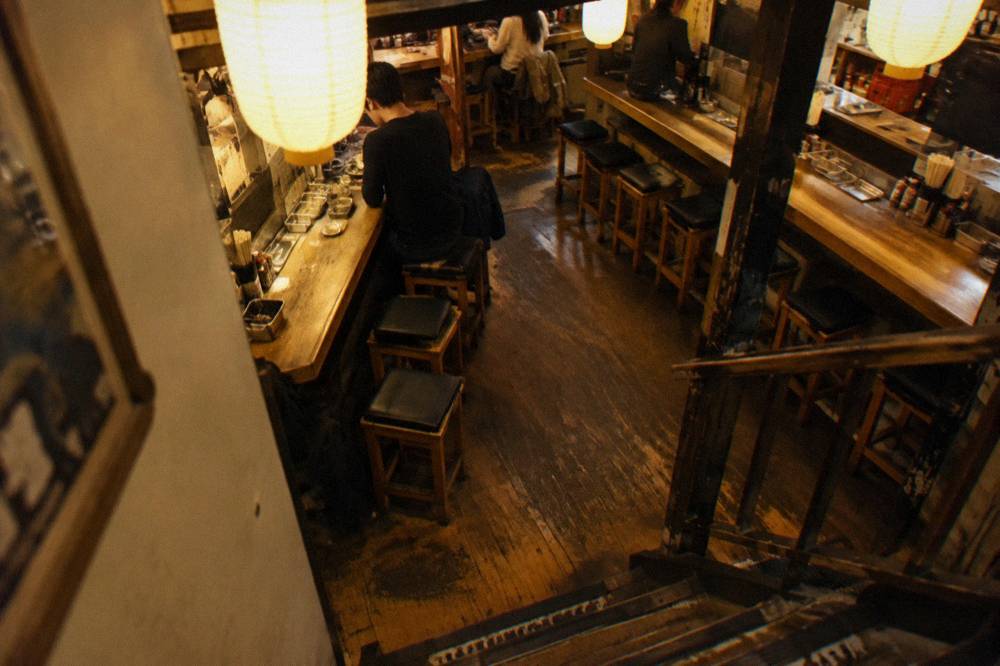
The one surprise in the table is Ramen Minowaya Nakano Honten, the single ramen record with a booking usually required label. Its Google listing shows 4.3 across 1,998 reviews and a very expensive price level, and its order tags are iekei ramen and salt pork bone ramen, which points to a premium seated experience rather than a ticket-machine counter. If you want to compare it with the walk-in majority, our piece on Tokyo ramen restaurants worth booking covers the full curated set.
What Should You Do For Each Booking Label In Tokyo?
For booking usually required, reserve before you fly: use an English-friendly booking service, a hotel concierge or the restaurant's own page. For booking recommended, book for weekend dinners and skip it for weekday lunches. For usually walk-in, arrive off-peak and keep a backup nearby. Booking services typically charge a small per-person fee and need a card, and many top places still require a Japanese phone number, which is where a concierge earns their keep.
The practical playbook, label by label:
| Label | Book or not | Best tactic | Watch out for |
|---|---|---|---|
| Usually walk-in | No booking needed | Arrive at opening or mid-afternoon | Peak queues at lunch and pre-dinner |
| Booking recommended | Book for weekends, groups and dinner | Book 3 to 7 days ahead, or try a weekday lunch walk-in | Long waits at peak times without a booking |
| Booking usually required | Always book | Book online or via concierge weeks ahead | Cancellation fees of 30 to 50%, rising to 100% same-day |
English-friendly booking routes exist and are worth naming, because the alternatives are harder. Tabelog's multilingual booking takes a per-person fee of about 440 yen with a card required, OMAKASE charges about 390 yen per seat with card registration, and TableCheck often needs a card for holds or prepayment. Many top places still need a Japanese phone number or a Japanese speaker for phone-only booking, and hotel concierges can bridge that gap. If you would rather skip the booking battle entirely, there is another route: a guided premium tasting walk. The Omakase Sushi and A5 Wagyu tour runs from $130.73 per person for 3 hours with a maximum of 8 travellers, includes a meal and drinks, carries free cancellation, and holds a 4.72 rating across 329 reviews. For travellers who cannot or will not book counters weeks ahead, it delivers the omakase and wagyu experience without the reservation chase.
A cheaper alternative in the same spirit is the Asakusa sushi making class with matcha and unlimited sake, from $44.93 per person for 90 minutes, 4.94 across 206 reviews, with a meal and drinks included and free cancellation. It is a class rather than a counter, but it removes booking difficulty completely.
How Far Ahead Should You Book Tokyo Restaurants?
For the booking usually required group, plan weeks ahead, not days. Seats at sought-after Tokyo counters typically open on a set schedule one to two months ahead, and popular omakase counters on reservation platforms tend to open bookings about two months out, with availability disappearing quickly. Booking recommended places are usually fine 3 to 7 days ahead. Cherry blossom and autumn foliage seasons compress every timeline, so book earlier if your trip overlaps either.
The mechanics of scoring a counter seat are worth understanding, because they explain why last-minute plans fail. The OMAKASE platform, the official Michelin Guide reservation partner for Tokyo, releases seats in timed drops, often preceded by raffles that give winners priority, and some venues stagger their releases in rounds or cap accounts at one booking every two months. Lunch slots may appear later even when the first release day shows nothing. You register with an SMS-capable mobile number and a credit card, the interface works in English, but the cancellation culture is strict and calculated from Japan Standard Time midnight, so a late cancel from another time zone still lands inside the penalty window. Those strict deposits and penalty windows are also part of why a seat costs what it does, and our breakdown of what drives omakase prices in Tokyo shows where the money actually goes.
If reading that makes your head hurt, you are not alone, and it is the honest argument for the reservation tools. The Tokyo Food List, our own guide, sorts its 980+ restaurants by reservation difficulty and attaches booking links to each one, so you can see at a glance which addresses need the two-month grind and which need nothing at all. It costs $9, updates stay on the same link, and it is built to open on a phone and pick by neighbourhood.
Do Walk-In Tokyo Restaurants Ever Turn You Away?
Yes, but for scheduling reasons rather than booking policy. Many Tokyo restaurants close between lunch and dinner service, stop taking last orders well before closing, and often close on Sundays, Mondays or national holidays, so a walk-in can arrive to a shut door even at a usually walk-in venue. Turning up at opening time, rather than an hour before close, is the single best protection. Check the restaurant's own page for closing days before walking across town.
This is the failure mode nobody warns you about. The walk-in label protects you from the reservation system, not from the calendar. A udon shop that is usually walk-in is still closed on its closing day, and a curry restaurant with no booking policy may still stop last orders an hour before the posted closing time. Among the curated 100, the 45 usually walk-in records are heavily weighted toward ramen, udon, tonkatsu and coffee, cuisines with fast turnover, so the walk-in plan works well in those families and needs more care in yakitori and wagyu, where almost every record wants at least a booking.
Timing beats booking for the middle category too. A booking recommended izakaya at 6pm on a Wednesday is a different proposition from 8pm on a Saturday. If the plan is flexible, aim for the first seating of the evening, which many Tokyo restaurants treat as a distinct slot, and keep a second choice within a ten-minute walk. For a broader walk-in strategy across price bands, our guide to cheap eats and walk-in dining in Tokyo covers the inexpensive end of the curated list, where 43 of the 100 records sit.
For most travellers the honest summary is this: book the seven required-booking addresses weeks out, book anything you care about on weekend nights, and walk in everywhere else with a sense of the clock. That, plus a willingness to check closing days, covers almost every situation the labels describe. Best Restaurants Tokyo keeps the curated 100 with booking labels attached, and the deeper Food List holds the same information for the full 980+.
Common Questions About Tokyo Restaurant Reservations
Which Restaurants In Tokyo Require Reservations?
Among the 100 curated restaurants on this site, seven carry the booking usually required label: Matsue Ebisu Head Store, Sushi Kuni, Sushi Yuu, Shabu Shabu & Sushi Hassan Roppongi, Mikawa Zezankyo, Tonkatsu Narikura and Ramen Minowaya Nakano Honten. A further 48 are booking recommended and 45 are usually walk-in. These labels describe what usually happens at each restaurant rather than a fixed policy.
Do most Tokyo restaurants take reservations?
Yes, but to different degrees. In the curated 100, 55 records either recommend or require a booking and 45 are usually walk-in. Sushi and yakitori skew heavily toward booking, while ramen, udon and coffee skew toward walk-in service. Booking is most useful for weekend dinners and anywhere with a counter of limited seats.
Can I walk into a Tokyo restaurant without a booking?
Usually, if the venue is labelled usually walk-in, which covers 45 of the curated 100. Arrive at opening or off-peak, and check closing days first, because many Tokyo restaurants close between lunch and dinner and often close on Sundays, Mondays or national holidays. At booking recommended places, a weekday lunch walk-in is far more realistic than a weekend dinner.
How far in advance should I book a Tokyo restaurant?
For booking usually required addresses, plan weeks ahead: seats at sought-after counters typically open on a set schedule one to two months ahead. Booking recommended venues are usually fine 3 to 7 days out. Cherry blossom and autumn foliage seasons compress every timeline, so book earlier if your trip overlaps either period.
What happens if I cancel a Tokyo restaurant booking?
High-end and omakase restaurants commonly charge 30 to 50% of the course price for cancellations a few days ahead, rising to 100% for same-day cancellations and no-shows. Platform fees, such as the per-seat booking fee on reservation services, are generally not refunded for user cancellations either. Penalties are typically calculated from Japan Standard Time midnight.