Is Ichiran Or Ippudo Better In Tokyo?
A comparison of Ichiran and Ippudo in Tokyo, covering format, ordering, customisation, hours and payment, plus independent ramen alternatives.
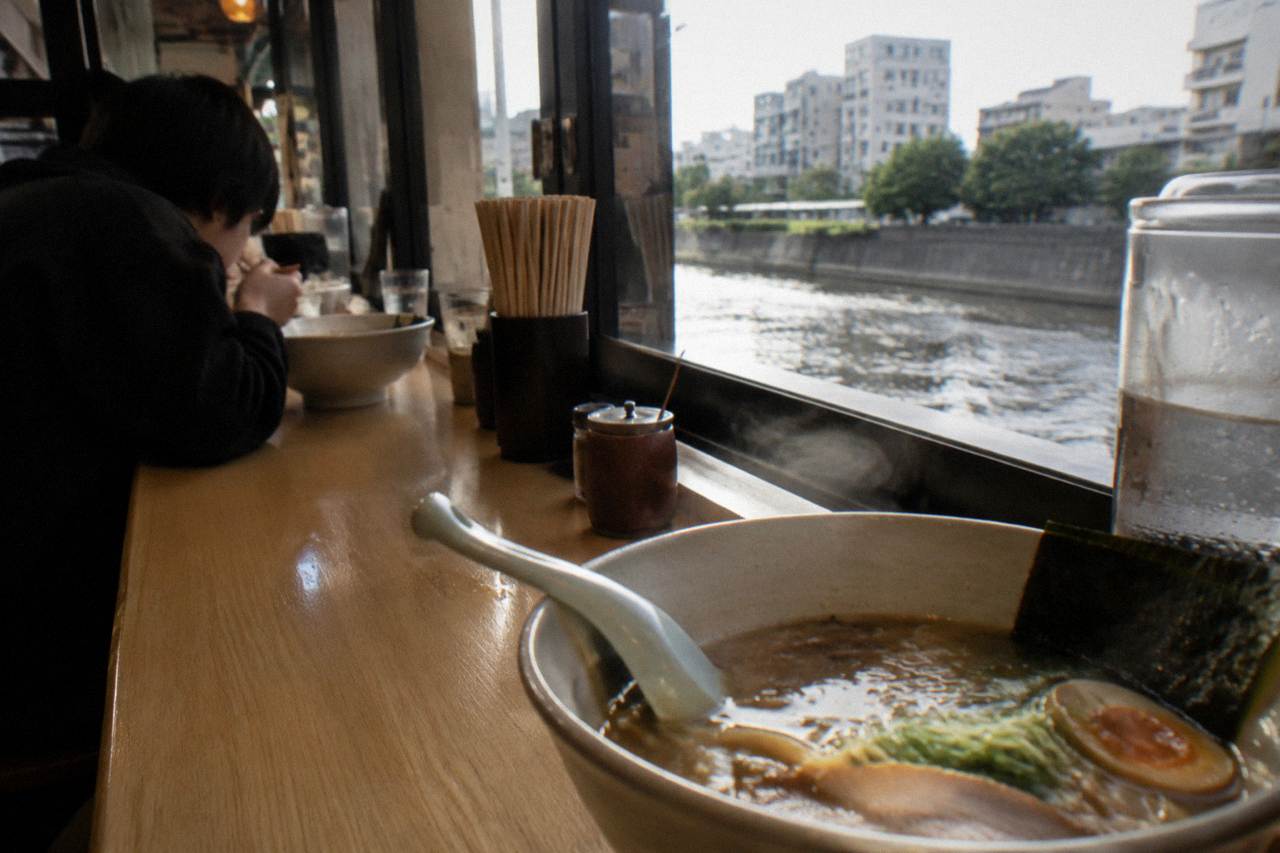
Ichiran and Ippudo are the two ramen chains most travellers in Tokyo already know by name, and the honest answer is that neither is objectively better on taste: this comparison rates them on fit. Ichiran gives you a solo booth, a vending machine ticket and a written customisation sheet, while Ippudo gives you table and counter seating, foreign language menus and a wide spread of cashless payment. Pick the one whose format matches your evening. Whichever chain you pick, if you're unsure whether you need to empty the bowl, our guide to leaving food behind at a Japanese ramen counter explains what actually causes offence.
Both chains are safe first stops in a city where many small ramen counters stay cash-only or cash plus IC card. The format, ordering and hours below come from each chain's own official pages, and the independent alternatives from their Google listings. Our own guide, The Tokyo Food List, covers the wider 980+ ramen and restaurant landscape for anyone who wants to go beyond the chains. For a deeper look at the cuisine as a whole, the best ramen shops in Tokyo guide covers the city's ramen landscape in depth.
Is Ichiran Or Ippudo Better In Tokyo?
Neither chain wins on taste in any verifiable way, and this article will not invent a verdict: the real difference is format. Ichiran's own site describes solo partition booths with a bamboo curtain, built for minimal interaction and a focused single bowl. Ippudo's official pages describe a proper sit-down restaurant with counter and table seating that works for groups. Everything else, ordering, customisation, hours and payment, follows from that split.
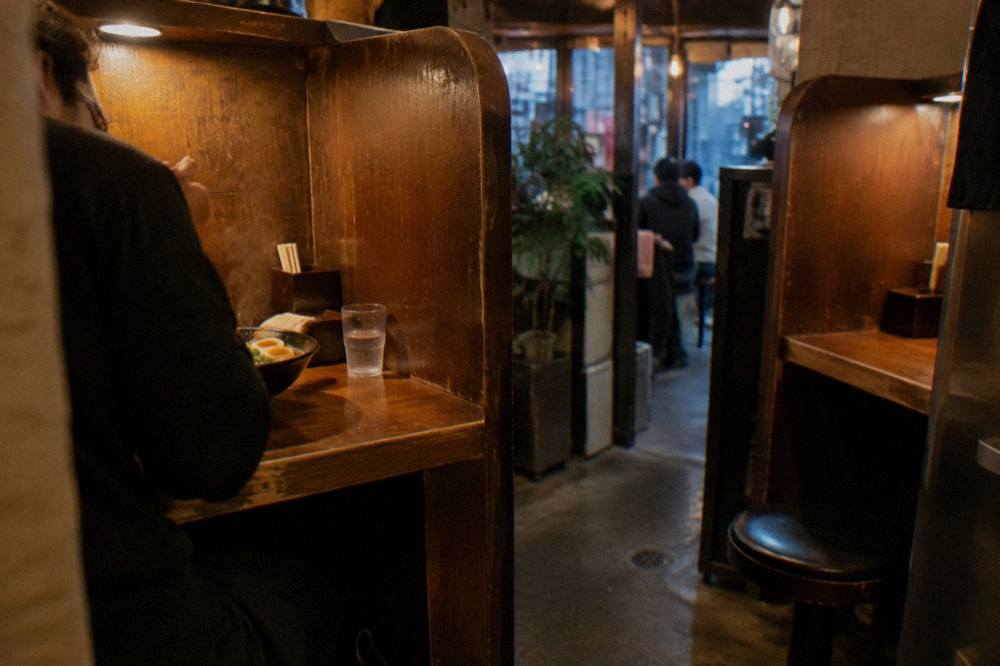
Start with the seating, because it decides the evening before the broth arrives. Ichiran's English site explains its "flavour concentration booths": side partitions and a small bamboo curtain in front of each seat, so the bowl arrives through the gap and the interaction with staff stays minimal. The Ichiran official page calls this privacy and full focus on your bowl of ramen. Solo travellers, shy diners and anyone eating at an odd hour tend to fit this format naturally, and it is the single most documented difference between the two chains anywhere on their own pages.
Ippudo runs the opposite model. Its official store pages list counter seating and table seating, and a Japan Trip Navi comparison notes that unlike Ichiran's solo-booth design, Ippudo operates as a proper sit-down restaurant. Couples, families and small groups fit that layout far better, because nobody eats alone behind a curtain. If your trip involves sharing meals with a partner or children, that structural fact settles the Ichiran or Ippudo question before broth style even enters the conversation. For more restaurant picks beyond this table, The Tokyo Food List adds 980+ places sorted by cuisine, Google ratings and price ranges.
There is also a question of scale. Ippudo's official store locator lists 31 stores in Tokyo, so you will rarely be far from one. Ichiran publishes individual branch pages rather than a single stated Tokyo total, so plan by specific branch rather than by count. Neither chain publishes a quality ranking of its own branches, and no verified source here supports claims that one branch beats another, so choose by location and hours instead.
How Do You Order At Each Chain?
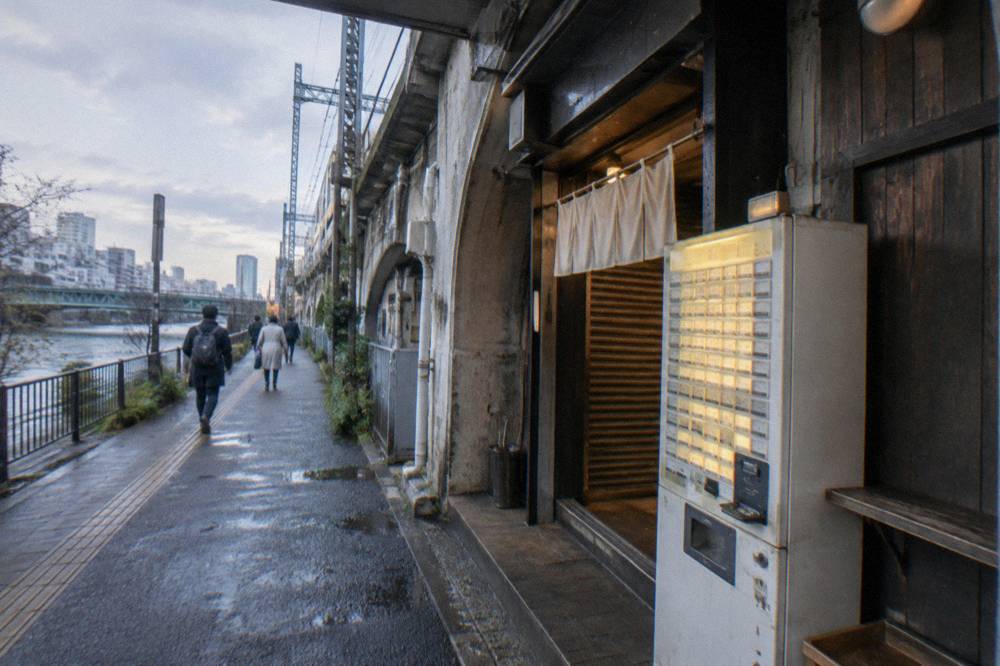
Ichiran orders run through a vending machine at the entrance, then a paper customisation sheet at your booth: you buy a ticket first, sit down, and circle your preferences for flavour strength, richness, garlic, onion, chashu, sauce and noodle firmness. Ippudo skips both steps, you order from staff at a table or counter, with foreign language menus available. The chains are opposites here, and neither is hard.
The ticket machine is the part that catches first-time visitors, and it is not unique to Ichiran. The general mechanic is the same at most ramen shops: you buy a meal ticket from a vending machine by the entrance and hand it to staff when seated. Ichiran's own branch pages, for example the Shinjuku Central East Exit listing, show the machines accept cash, mobile payments, credit cards and IC cards, so the old advice about carrying coins for Ichiran is outdated at those branches. Touch-panel machines with an English language toggle and photos are increasingly common at tourist-oriented shops generally, Japan Bites notes, so the machine experience keeps getting friendlier. If you're wondering what all those button presses will set you back, our guide to ramen prices in Tokyo explains how the ticket machine choices and extras shape the final bill.
Once seated, the customisation sheet does the fine tuning. Ichiran's official system page explains that you circle preferences on the order sheet, from flavour strength to noodle texture, covering richness, garlic, green onion, chashu and the red spicy sauce. The Standard Japan reports the sheets are available in English, Chinese and Korean at most branches, which removes the language fear almost entirely. A first-timer can read every option before committing, which is arguably more customisation control than Ippudo's menu offers.
Ippudo's flow is conventional restaurant ordering. Staff take the order at your seat, and Ippudo's official Tokyo store pages list foreign language menus among branch services, so the menu itself does the translating. If you are travelling with children or with someone who finds vending machines stressful, that difference matters more than any broth detail.
The comparison table below pulls the differences together from each chain's own official pages.
| Feature | Ichiran | Ippudo |
|---|---|---|
| Seating format | Solo partition booths with bamboo curtain | Counter and table seating, sit-down restaurant |
| Ordering | Vending machine ticket at entrance | Staff order at seat |
| Customisation | Written order sheet for broth, garlic, noodle firmness | Standard menu choices |
| Language help | Order sheets in English at most branches | Foreign language menus listed on branch pages |
| Tokyo footprint | Branch pages listed individually, no stated total | 31 stores listed on official locator |
Which Chain Is Easier For Payment In Tokyo?
Ippudo's official Tokyo store pages list credit cards, transportation IC cards, QR code payments and electronic money, making it the smoother cashless option of the two. Ichiran's ticket machines at branches such as Shinjuku Central East Exit accept cash, mobile payments, credit cards and IC cards too, so both chains handle cashless, but Ippudo's setup is documented across its Tokyo stores.
Put simply, neither chain will trap a card-only traveller, which is worth stating because the same is not true of Tokyo ramen generally. Many small ramen shops and counters in Tokyo remain cash-only or cash plus IC card, while others take cards, and there is no uniform policy across venues. Inside the two chains, payment is a solved problem. At an independent counter, it may not be, so carry a fallback.
An IC card such as Suica or PASMO covers a surprising amount of ground, and JapanNook notes IC cards are accepted at all major convenience store chains and many fast food chains and coffee shops, beyond transit. Loading one before a ramen-heavy trip is reasonable planning, since the same card then covers the train to the ramen street and the bowl at the end of it.
What Are The Opening Hours At Ichiran And Ippudo?
Ichiran's official hours table lists multiple Tokyo branches, including Shimbashi, Shibuya and Shinjuku Central East Exit, as open 24 hours, which makes it the chain for very late or very early bowls. Ippudo publishes standard branch hours without confirmed 24-hour Tokyo locations, so treat Ippudo as a daytime and evening option and check the specific branch's page before heading out at 3am.
The hours split mirrors the format split. Ichiran's booth design suits the solo late-night diner, and the 24-hour branch list on its own site is the evidence: if your plans end in Shinjuku or Shibuya at midnight, the nearest Ichiran on that list is the safe bet. The JapanNook IC-card point matters here too, since a late-night vending machine that takes IC payment removes the cash question at the door.
Ippudo's store pages list per-branch hours and show no confirmed 24-hour Tokyo location, so do not plan around one. A safe pattern for a ramen-centred day: an independent shop from the records below at lunch, Ippudo for an early group dinner, and Ichiran's 24-hour list as the fallback. Note also that late-night prices at some Japanese chains run slightly higher than daytime ones, so a 1am bowl can cost a little more than the same bowl at noon. Check the menu at your branch before ordering.
Which Independent Ramen Shops Match The Chains In Tokyo?
Five curated independent shops beat the chains on one axis each: Jikasei MENSHO in Shibuya holds 4.8 on Google across 4,480 reviews with usually walk-in access, Afuri Shibuya Dōgenzaka does yuzu ramen at 4.8 across 3,278 reviews, and Tsujita Ochanomizu in Kanda specialises in tsukemen at 4.5 across 3,657 reviews. All five are usually walk-in except Menya NOBUNAGA, which is labelled booking recommended.
The chains are reliable, but Tokyo's ramen depth sits in shops like these, and every figure below comes from the curated Google records. Jikasei MENSHO sits in Shibuya ward, 4.8 on Google across 4,480 reviews, inexpensive, usually walk-in, with a mixed crowd, and its order tags point to spicy miso ramen, vegan tantanmen and truffle ramen, an unusual spread of three very different bowls under one roof. Its own site is menya-shono.com.
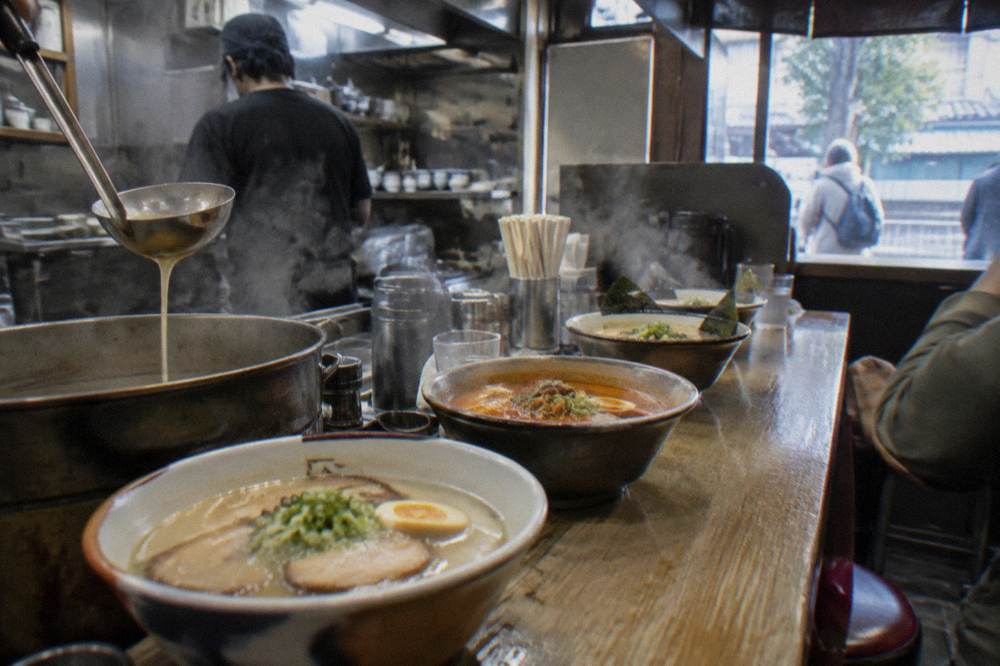
Afuri Shibuya Dōgenzaka, also in Shibuya ward, holds 4.8 on Google across 3,278 reviews, inexpensive and usually walk-in, with yuzu ramen, shio ramen and char siew rice as its order tags, and afuri.com as its own site. Tsujita Ochanomizu in Chiyoda's Kanda area is the tsukemen pick: 4.5 across 3,657 reviews, moderate, usually walk-in, with sudachi and togarashi listed alongside the dipping noodles. Menya NOBUNAGA in Kyobashi, 4.8 across 3,090 reviews and inexpensive, is the one shop here where booking is recommended rather than optional, with chicken ramen and tori paitan among its order tags. Ichiryu in Asakusa, 4.8 across 4,092 reviews and moderate, lists beef bone broth, wagyu ramen and tantanmen.
| Shop | Ward | Google rating | Reviews | Price level | Booking label | Signature order tags |
|---|---|---|---|---|---|---|
| Jikasei MENSHO | Shibuya | 4.8 | 4,480 | inexpensive | usually walk-in | spicy miso ramen, vegan tantanmen, truffle ramen |
| Afuri Shibuya Dōgenzaka | Shibuya | 4.8 | 3,278 | inexpensive | usually walk-in | yuzu ramen, shio ramen, char siew rice |
| Tsujita Ochanomizu | Chiyoda | 4.5 | 3,657 | moderate | usually walk-in | tsukemen, sudachi, togarashi |
| Menya NOBUNAGA | Chuo | 4.8 | 3,090 | inexpensive | booking recommended | chicken ramen, tori paitan ramen, spicy ramen |
| Ichiryu | Taito | 4.8 | 4,092 | moderate | usually walk-in | beef bone broth, wagyu ramen, tantanmen |
For context, the curated 100 restaurants on this site, of which these five are part, are a subset of the 980+ in The Tokyo Food List, our own $9 guide, which sorts by cuisine, Google rating and price range and shows what is within a 10-minute walk of where you are standing. If you are choosing between a chain branch and an independent counter by neighbourhood, that sorting is exactly the decision it helps with. It also carries reservation difficulty flags and booking links for each listing, which matters for the one shop in the table above that wants a reservation.
What If You Want To Make The Ramen Yourself?
A Shibuya ramen cooking class covers tonkotsu, shoyu and miso, the three broth styles both chains are built on, in a 90-minute session from $113.36 per person, rated 5.0 across 259 reviews with a maximum of 20 travellers. A meal is included and free cancellation applies, so it works as a booked anchor for a ramen-focused trip rather than a walk-in dinner.
Understanding what tonkotsu, shoyu and miso actually are changes how you read both chains' menus, and the class covers all three in one session. At $113.36 per person with a 5.0 rating across 259 reviews, it sits at the premium end of a ramen day, but it replaces dinner and leaves you with a framework for every bowl that follows, chain or independent. Free cancellation means the booking does not lock your itinerary in place if plans shift.
How Do You Fit The Chains Into A Tokyo Eating Plan?
Use Ichiran for solo late-night bowls at its 24-hour branches, Ippudo for group dinners where card payment and English menus matter, and the five independent shops above for the bowls Tokyo is actually famous for. Menya NOBUNAGA is the only one of the five independents that needs a booking, which makes a spontaneous ramen crawl easy to arrange on the day.
Booking difficulty, not quality, is the planning axis worth worrying about. Among the five independents, four are usually walk-in, so you are free to wander. If you would rather have a guide make the choices for an evening, a Shinjuku local eateries walk runs 3 hours from $84.21 per person, rated 4.9 across 10,498 reviews, with a maximum of 12 travellers, a meal and drinks included and free cancellation. It is a different shape of evening from a booth at Ichiran, but for a first night in Shinjuku it removes every ordering and payment question at once.
For budget travellers, the cheapest meals across Tokyo guide handles the inexpensive end of the city's dining, where most of the ramen records above sit. This article sits inside Best Restaurants Tokyo, where every listing carries its Google rating, review count, price band and booking label, so the comparison you just read can be repeated across the whole curated set.
Common Questions About Ichiran Or Ippudo
Is Ichiran Or Ippudo Better?
There is no honest taste verdict between them. Ichiran suits solo diners who want a booth, a ticket machine and a customisation sheet, with several Tokyo branches open 24 hours. Ippudo suits groups who want table seating, foreign language menus and broad cashless payment. Pick by format, then explore the independent shops.
Does Ichiran take cards at its ticket machines?
Yes at the branches that document it: Ichiran's own Shinjuku Central East Exit page lists cash, mobile payments, credit cards and IC cards on the vending machine. Ippudo's Tokyo store pages list cards, IC cards, QR payments and electronic money.
Can you sit together at Ichiran?
Not really. Ichiran's own site describes solo partition booths with side dividers and a bamboo curtain, designed for one diner per booth. Ippudo's counter and table seating is the group-friendly format.
Is Ichiran open 24 hours in Tokyo?
Several Tokyo branches are, including Shimbashi, Shibuya and Shinjuku Central East Exit, according to Ichiran's official hours table. Ippudo lists standard hours with no confirmed 24-hour Tokyo locations, so check the branch page.
Are there good alternatives to both chains?
Yes. Jikasei MENSHO, Afuri Shibuya Dōgenzaka, Tsujita Ochanomizu, Menya NOBUNAGA and Ichiryu all hold Google ratings from 4.5 with review counts in the thousands, and four of the five are usually walk-in.