Best Sushi In Tokyo: Counter, Conveyor And Standing Bars By How You Book
Tokyo sushi is easier to sort by how you get a seat than by any ranking. Here are the 16 sushi records in the curated 100, grouped by booking label and price level, with the booking routes that work from overseas.
Short answer
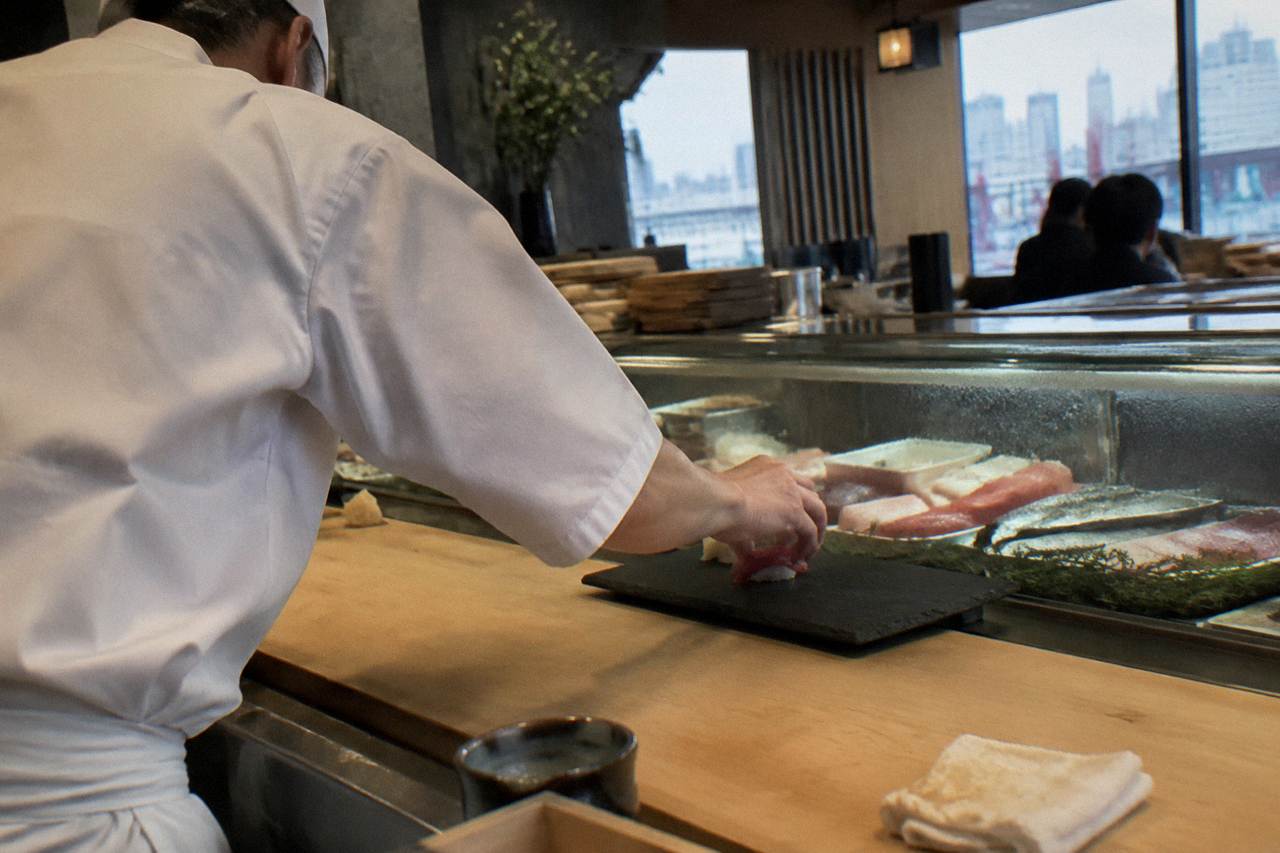
Among the curated 100, 16 records are sushi: 4 usually walk-in, 8 booking recommended and 4 booking usually required. Twelve of the 16 sit at inexpensive or moderate price levels, so booking discipline matters more than budget. Booking routes that work in English include Tabelog multilingual booking, OMAKASE and TableCheck.
Rankings are the wrong tool for Tokyo sushi. The same city holds expensive counters where booking is usually required, a Shinjuku spot such as Uogashi Nihon-Ichi that usually takes walk-ins, and KINKA Sushi Bar Izakaya in Shibuya, a sushi izakaya hybrid where booking is recommended. What decides your evening is not which place tops a list, it is which booking mode fits the night you are having. If the mood is beef rather than fish, the wagyu and teppanyaki guide to Tokyo covers the steakhouses, the yakiniku rooms, and what those marble grades actually tell you.
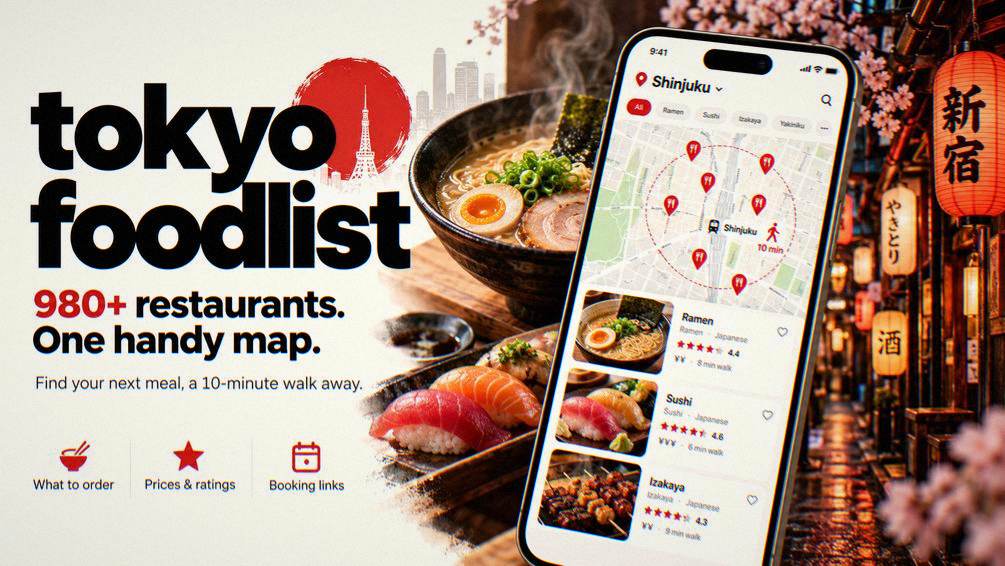
Among the curated 100 records on this site, 16 are sushi restaurants, each with a Google rating of 4.2 or higher and at least 300 reviews. They split almost evenly across booking labels: 4 usually walk-in, 8 booking recommended and 4 booking usually required. Twelve of the 16 fall at inexpensive or moderate price levels, which surprises visitors who expect every sushi counter in Tokyo to be expensive. If you want to see the full picture beyond this subset, our own guide, The Tokyo Food List, holds 980+ Tokyo restaurants sorted by cuisine, Google rating and price range, with reservation difficulty and booking links for each one.
This guide sorts the 16 records the way you will actually use them: by how you get a seat, then by what that seat costs in the broader market. We do not rank quality. Google ratings are printed beside their review counts, and booking labels are phrased as tendencies rather than confirmed policy. Cancellation terms, lunch pricing and booking platforms are covered once each, in their own sections, so nothing repeats.
How Do You Sort Sushi In Tokyo By Booking?
Sushi in Tokyo sorts into three booking modes: counters where booking is usually required, restaurants where a booking is recommended, and standing or casual bars that are usually walk-in. Among the 16 curated sushi records, 4 fall in the walk-in group, 8 in the recommended group and 4 in the required group. Price level does not predict booking difficulty, since walk-in records range from inexpensive to moderate and required records from moderate to expensive. If you want to apply that same walk-in versus booked counter logic beyond sushi, our guide to Shibuya's evening dining scene covers everything from standing bars to counters worth reserving.
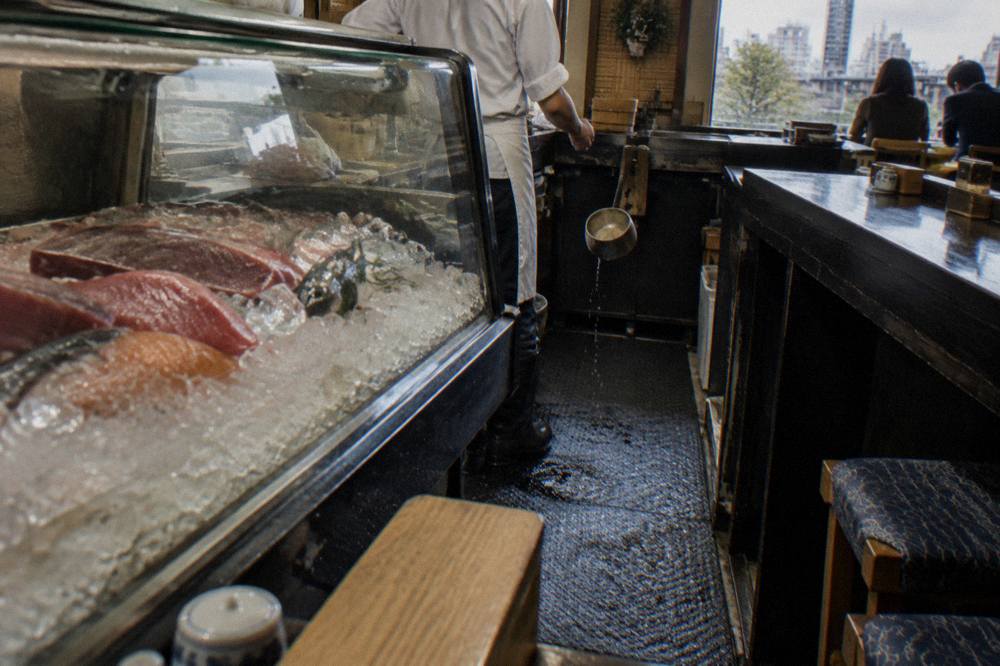
The interesting pattern is where those labels overlap with price. Inexpensive does not mean walk-in: sushi fish bar in Kanda is inexpensive, 5.0 on Google across 666 reviews, and still carries a booking recommended label, and its crowd label says it tends to draw locals. Sushi Mon Shinjuku is inexpensive at 4.7 across 1,552 reviews and is usually walk-in, but the crowd label flags it as tourist-leaning. Meanwhile Matsue Ebisu Head Store in Shibuya, 4.8 across 1,632 reviews, is expensive and booking usually required, with omakase, sea urchin and toro among its order tags. For sushi on other days, open The Tokyo Food List on your phone, pick a neighborhood, and check Google ratings and what to order before you sit down.
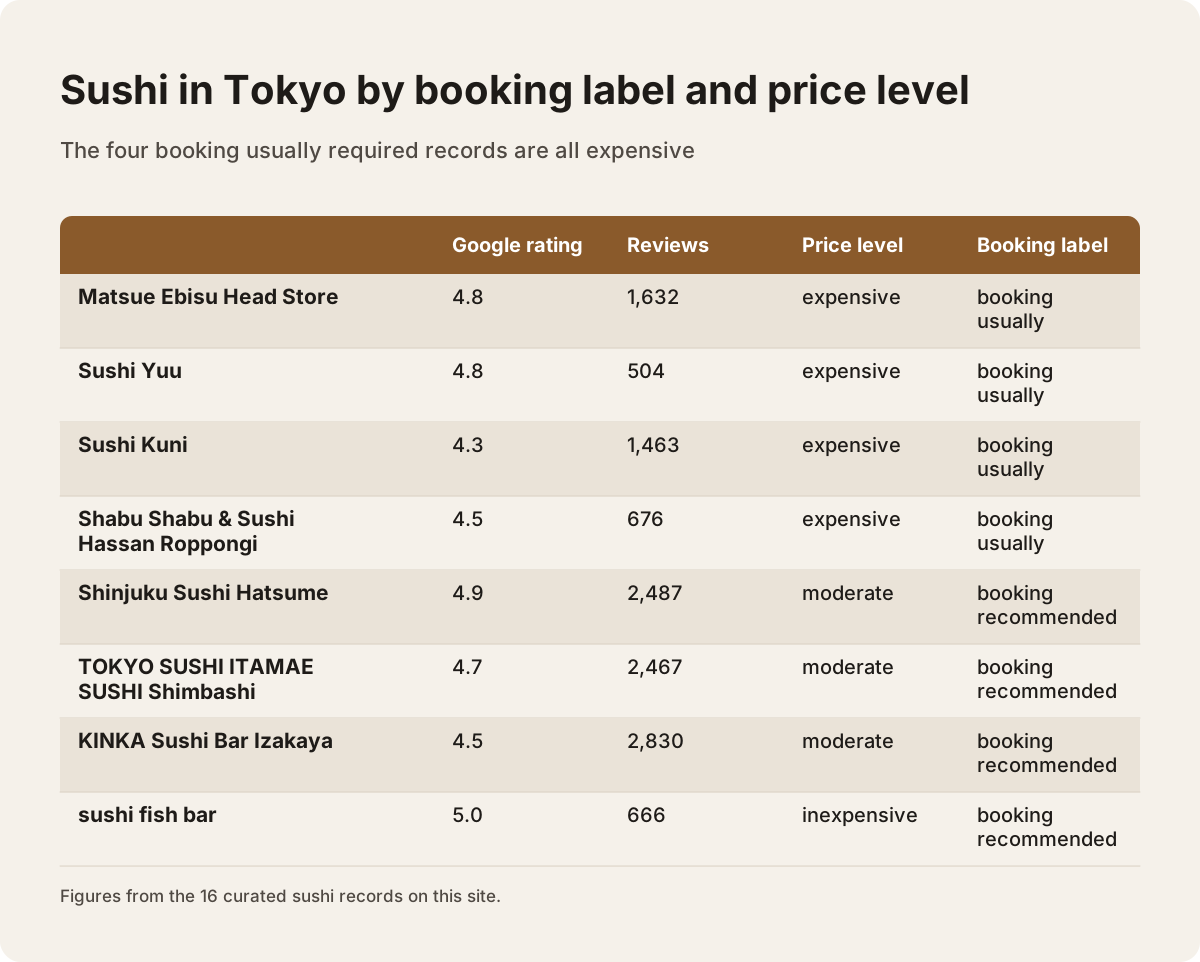
The full spread of all 16 records, sorted by booking label and price level, looks like this:
| Restaurant | Google rating | Reviews | Price level | Booking label |
|---|---|---|---|---|
| Shinjuku Sushi Hatsume | 4.9 | 2,487 | moderate | booking recommended |
| TOKYO SUSHI ITAMAE SUSHI Shimbashi | 4.7 | 2,467 | moderate | booking recommended |
| KINKA Sushi Bar Izakaya | 4.5 | 2,830 | moderate | booking recommended |
| Matsue Ebisu Head Store | 4.8 | 1,632 | expensive | booking usually required |
| Uogashi Nihon-Ichi | 4.5 | 2,629 | moderate | usually walk-in |
| Sushi Mon Shinjuku | 4.7 | 1,552 | inexpensive | usually walk-in |
| sushi fish bar | 5.0 | 666 | inexpensive | booking recommended |
| Sushi Teppen Shibuya | 5.0 | 618 | moderate | booking recommended |
| R/Q | 4.9 | 680 | moderate | usually walk-in |
| Sushi Kuni | 4.3 | 1,463 | expensive | booking usually required |
| Sushi Tooden Ninoya Shinbashishiodomemise | 4.8 | 644 | inexpensive | booking recommended |
| Sushi Gen Akasaka | 4.8 | 614 | moderate | booking recommended |
| Ebisu Sushi Hatsume | 4.8 | 613 | moderate | booking recommended |
| Yakata-bune and Sushi Komagata | 4.8 | 600 | inexpensive | usually walk-in |
| Sushi Yuu | 4.8 | 504 | expensive | booking usually required |
| Shabu Shabu & Sushi Hassan Roppongi | 4.5 | 676 | expensive | booking usually required |
Read that table by its columns, not its rows. The four expensive records sit at the hardest end of the booking scale, all four booking usually required, which matches how top counters work: fewer seats, more demand, more planning. But the moderate band straddles everything, from R/Q in Kanda, 4.9 across 680 reviews and usually walk-in, to Ebisu Sushi Hatsume, 4.8 across 613 reviews and booking recommended. Price level alone will not tell you whether to book.
Sushi in Tokyo by booking label and price level
For context beyond the sushi set, the curated 100 as a whole breaks down as 45 usually walk-in, 48 booking recommended and 7 booking usually required, and by price, 43 inexpensive, 38 moderate, 16 expensive and 3 very expensive. Sushi is one of the more booking-heavy cuisines in the set, holding four of the seven booking-usually-required records, though yakitori is stricter still, with no walk-in record at all. If you are weighing sushi against another cuisine for a same-night dinner, the izakaya and yakitori guide covers the grill side of that trade-off.
Which Bookable Counters Sit In The Curated 100?
Four curated sushi records carry the booking usually required label: Matsue Ebisu Head Store, Sushi Kuni, Sushi Yuu and Shabu Shabu & Sushi Hassan Roppongi, all expensive, with Google ratings from 4.3 to 4.8. A second tier of eight carries booking recommended, including three records above 4.8. Together they cover omakase counters, a Tsukiji seafood-bowl institution and a Shibuya sushi izakaya.
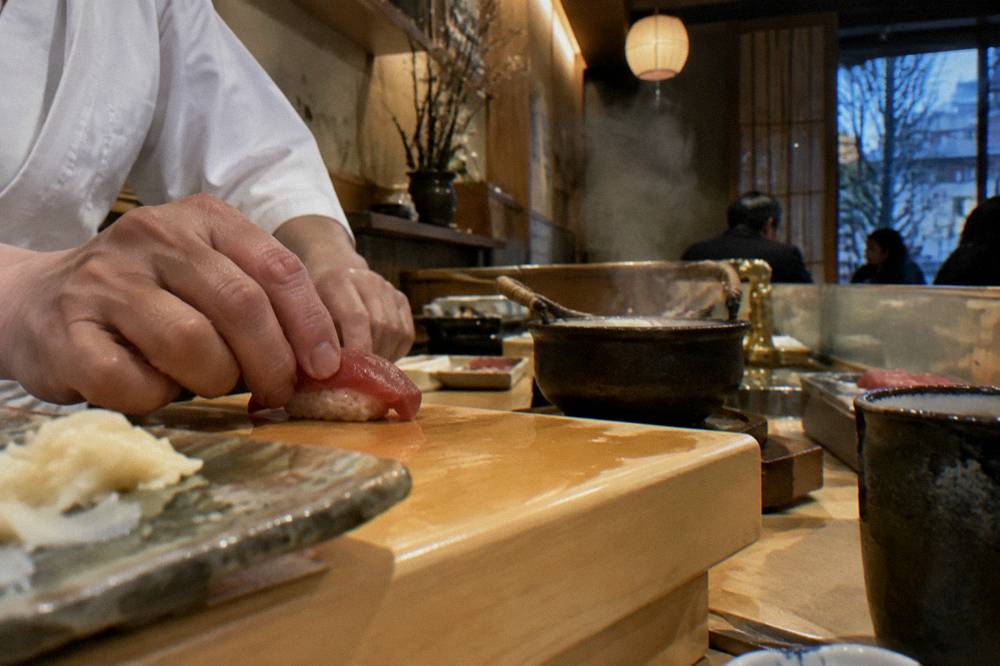
Start with the counters. Sushi Yuu sits in Azabu, Minato ward, 4.8 on Google across 504 reviews, expensive, with omakase and fatty tuna among its order tags and a crowd label that says it tends to draw locals. Matsue Ebisu Head Store in Shibuya, 4.8 across 1,632 reviews, lists omakase, sea urchin and toro. Both are booking usually required rather than booking recommended, so treat them as plan-ahead dinners, not spontaneous stops.
Sushi Kuni is a different animal in the same tier. It sits in Tsukiji, Chuo ward, 4.3 across 1,463 reviews, expensive, and its order tags are unidon, salmon roe bowl and seafood bowl rather than a counter progression. The restaurant's own page confirms the address and concept. Shabu Shabu & Sushi Hassan Roppongi, 4.5 across 676 reviews, expensive, rounds out the group with sea urchin on its order tags.
The booking recommended tier is where most visitors will land, and it is strong. Shinjuku Sushi Hatsume, 4.9 across 2,487 reviews, moderate, with omakase as its order tag, is the second most-reviewed sushi record in the curated 100, after KINKA Sushi Bar Izakaya and its 2,830 reviews. TOKYO SUSHI ITAMAE SUSHI Shimbashi, 4.7 across 2,467 reviews, lists bluefin tuna, fatty tuna and omakase, and the restaurant's own shop page carries its current menu details. KINKA Sushi Bar Izakaya in Shibuya, 4.5 across 2,830 reviews, brings seared sushi, aburi sushi and karaage onto one menu, a sushi izakaya hybrid rather than a pure counter.
Two 5.0 records sit in this tier and deserve a note on honesty: sushi fish bar in Kanda has 5.0 across 666 reviews and a crowd label that tends local, and Sushi Teppen Shibuya has 5.0 across 618 reviews with omakase, negitoro and sea urchin among its order tags. Perfect scores on pools of that size mean "very well liked by the people who found it", not a universal verdict, which is exactly why this site prints the review count beside every rating.
If reading sixteen booking labels one by one sounds like homework, The Tokyo Food List does this sorting for all 980+ listings, with reservation difficulty and booking links on each record and a map of what is within a 10-minute walk of where you are staying.
What Are Standing Sushi Bars And Walk-In Counters?
Four curated sushi records are usually walk-in: Uogashi Nihon-Ichi and Sushi Mon Shinjuku in Shinjuku, R/Q in Kanda and Yakata-bune and Sushi Komagata in Asakusa, with Google ratings from 4.5 to 4.9. Uogashi Nihon-Ichi is a standing sushi bar per its order tags, the classic tachigui format where you eat at the counter, often without chairs, and move on.
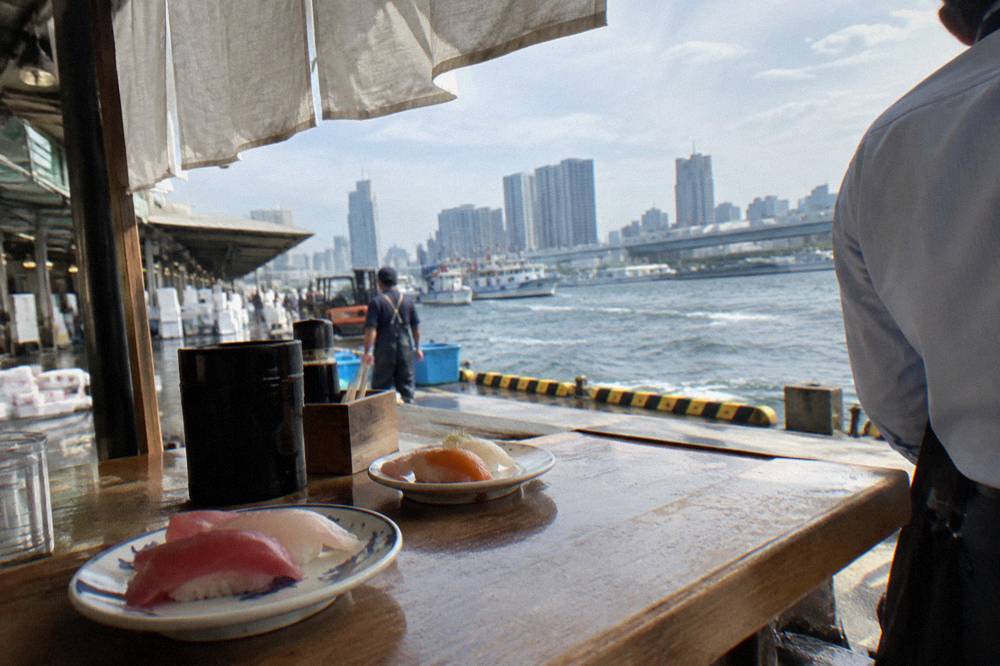
Uogashi Nihon-Ichi is 4.5 on Google across 2,629 reviews, moderate, and its order tags point to eel among the offerings; its listing notes the standing format. This is the tier where sushi becomes a fast, cheap, everyday meal rather than an event. Sushi Mon Shinjuku, 4.7 across 1,552 reviews and inexpensive, lists ochazuke and omakase among its order tags, an unusual pairing that signals a casual, flexible menu. Yakata-bune and Sushi Komagata in Taito ward, 4.8 across 600 reviews and inexpensive, combines omakase and eel with a boat restaurant concept, and the crowd label says it tends to draw locals.
R/Q in Kanda deserves its own sentence. It is 4.9 on Google across 680 reviews, moderate, usually walk-in, and its record carries no clean dish tags, which is itself information: the best play at a place like this is to sit at the counter if there is one, point at what looks best that day, or ask for the chef's selection. That advice travels well to any counter in this guide.
A few mechanics make the walk-in tier easier. Turnover at standing bars is fast, so a queue at the door usually clears in one seating cycle rather than one hour. Many small counters in Tokyo stay cash-only or cash plus IC card, while others take cards; there is no uniform policy, so carry some cash for this tier. And conveyor-belt formats have their own rule worth knowing: once your hand touches a plate on the belt, that plate is yours and must not go back, and many newer locations run order-only systems without a continuous belt at all. If you warm to this casual, walk-in way of eating, the guide to Tokyo's tempura, tonkatsu, and unagi specialists points you to counter shops where the same house rules tend to apply.
Is Lunch Cheaper Than Dinner At A Tokyo Sushi Counter?
Yes, typically by a wide margin. Japan Brand Collection gives one concrete example: a single Ginza counter where lunch runs about 9,000 yen and dinner about 20,000 yen for the same style of menu, a difference of more than half. The pattern, lunch courses at a fraction of dinner omakase, holds across the market and makes lunch the accessible way into a serious counter.
That 9,000 versus 20,000 yen figure is one venue, reported by Japan Brand Collection, and should be read as "for example", not as a rule. But the mechanic behind it is real: counters are staffed by the same chef at midday, seats are easier to fill at noon, and set lunches price accordingly. If a booking usually required counter from the earlier table feels out of reach at dinner, the same kitchen at lunch is a genuinely different proposition. The full index of guides sits on Best Restaurants Tokyo.
| Meal at the same counter | Typical pattern | Example from one Ginza venue |
|---|---|---|
| Lunch set | Fraction of dinner price, same kitchen | about 9,000 yen |
| Dinner omakase | Full course, peak demand | about 20,000 yen |
Two other timing facts from the verified file shape a sushi day. Many Tokyo restaurants close between lunch and dinner service, so the gap between about 15:00 and 17:00 can be a dead zone with nothing open, and last orders come well before closing time. Many places also close on Sundays, Mondays or national holidays, which catches weekend visitors off guard. Check the restaurant's own page for the specific days before building an itinerary around one counter. Our omakase in Tokyo guide covers the full omakase format and its pricing logic in more depth.
One caution on cancellation once you do book a serious counter. High-end and omakase restaurants commonly charge 30 to 50 percent of the course price for cancellations a few days ahead, rising to 100 percent for same-day cancellations and no-shows, according to SHOKU NOREN's guide to Japanese restaurant cancellation policy. Some counters on booking platforms operate on full course prepayment at reservation, which removes the question entirely. Treat a booked counter seat the way you would treat a theatre ticket.
How Do You Book Sushi In Tokyo From Overseas?
Three English-friendly booking routes work from overseas: Tabelog multilingual booking, OMAKASE and TableCheck, with a Japanese phone number or hotel concierge as fallbacks for phone-only counters. Each platform handles payment differently, card holds or prepayment, and each may add a small per-seat booking fee on top of the meal price. Popular omakase counters typically open reservations about two months ahead, and availability disappears quickly.
| Booking route | How it works | What to expect |
|---|---|---|
| Tabelog multilingual booking | English interface, card required | per-person fee, generally non-refundable if you cancel yourself |
| OMAKASE | Official MICHELIN Guide reservation partner for Tokyo | per-seat fee, registration with SMS-capable number and credit card, strict cancellation terms |
| TableCheck | Direct online reservations, some restaurants | card often needed for holds or prepayment |
| Hotel concierge or phone | The route many top counters still require | needs Japanese or a concierge willing to call |
The per-seat figures behind that table are worth quoting precisely. The booking guide at tokyo.how lists a fee of about 440 yen per person for multilingual Tabelog and about 390 yen per seat for OMAKASE, both separate from the meal price and generally not refunded if you cancel for your own reasons. OMAKASE is the official MICHELIN Guide reservation partner for Tokyo, and TableCheck's partnership with the guide enables direct online reservations at participating listed restaurants. Booking for starred restaurants should typically be made one to two months ahead, and one practical note from reservation research: cancellation policies on these platforms are calculated from Japan Standard Time midnight, regardless of when you confirmed.
If all of that sounds like more ceremony than you want on a holiday, a sushi-making class flips the equation: you sit down immediately and the booking is one click. The Sushi Class with Unlimited Sake in Asakusa runs 1 hour 30 minutes, from $44.93 per person, rated 4.94 across 206 reviews, with a meal and drinks included and free cancellation. It is a class rather than a counter, but it removes every booking mechanic described above while still putting rice and fish in your hands.
The Food List's booking links, by the way, map each of its 980+ records to whichever of these routes fits, so the decision of "which platform for which restaurant" is already made on each record.
Where Can I Get The Best Sushi In Japan?
Tokyo is the best answer for most sushi seekers, with Shinjuku Sushi Hatsume at 4.9 across 2,487 reviews for a bookable counter, sushi fish bar and Sushi Teppen Shibuya at 5.0 for smaller local pools, and Uogashi Nihon-Ichi for a walk-in standing bar, and no other single city in Japan matches Tokyo's depth across price tiers.
The honest framing matters here. Every "best sushi" answer is really an answer about booking mode, budget and appetite for queuing, which is why this guide refuses to crown one winner. A traveller who will not book ahead should be sent to R/Q or Yakata-bune and Sushi Komagata, not to a counter they cannot get into. A traveller celebrating something should be sent to Matsue Ebisu Head Store or Sushi Yuu, with a booking made well before the flight. The question "where" always hides the question "how".
A guided route exists for the middle case, the visitor who wants premium sushi and wagyu without managing reservations at all. The Omakase Sushi and A5 Wagyu tour runs 3 hours, from $130.73 per person, rated 4.72 across 329 reviews, capped at 8 travellers, with a meal and drinks included and free cancellation. It covers both the sushi and the premium-beef side of a Tokyo food night in one booked seat.
For market-context sushi, the Tsukiji Outer Market lanes never relocated and continue separate operations from the Toyosu wholesale market, which took over the tuna auction functions in 2018, so a Tsukiji morning walk still delivers market sushi, including Sushi Kuni's seafood bowls in the curated set. The market is closed on Wednesdays, Sundays and national holidays, with most stores operating primarily 9:00 to 13:00 when busiest, per the official GO TOKYO listing, so time that walk for a weekday morning.
Is Sushi Cheaper In Japan Than The US?
Yes, generally, especially at the low and middle tiers. Among the 16 curated sushi records, 12 sit at inexpensive or moderate price levels, with the remaining four in the higher price bands. At the top tier the comparison reverses: high-end omakase in Tokyo competes with fine dining anywhere in the world on price, though lunch sets typically price at a fraction of dinner.
The reasons are structural. Japan's supply chain for tuna and other core fish is shorter and domestic, mid-range sushi volume is enormous, and the standing-bar and conveyor formats strip out service cost entirely. A visitor eating at Sushi Mon Shinjuku or Uogashi Nihon-Ichi is getting fish at a price level US cities rarely match for the same quality band. Taxes matter too: dine-in meals in Tokyo carry 10 percent consumption tax while identical takeout is taxed at 8 percent, so even the tax line nudges the comparison.
| Tier in the curated 16 | Records | Price levels | Booking reality |
|---|---|---|---|
| Standing and walk-in | 4 | inexpensive to moderate | show up, expect fast turnover |
| Booking recommended | 8 | inexpensive to moderate | book, but same-week seats plausible |
| Booking usually required | 4 | all expensive | book well ahead, mind cancellation terms |
Tipping completes the US comparison. Tipping is not customary in Japanese restaurants, and staff may return money left behind; some higher-end and hotel restaurants add an automatic service charge of 10 to 15 percent instead. So the sticker experience in Tokyo is the menu price plus consumption tax, full stop, with no arithmetic at the table. Whether you find sushi cheaper than back home depends mostly on which of the three tiers above you eat in.
For the wider picture of eating well across every cuisine, Best Restaurants Tokyo is the hub, and the what to eat in Tokyo guide places sushi in the full context of ramen, tempura, tonkatsu and unagi.
Common Questions About Sushi In Tokyo
Where can I get the best sushi in Japan?
Tokyo for most travellers, and within Tokyo the answer depends on booking mode: bookable counters like Shinjuku Sushi Hatsume (4.9 on Google, 2,487 reviews) for a reserved seat, standing bars like Uogashi Nihon-Ichi for a walk-in, and small local favourites like sushi fish bar (5.0, 666 reviews) for something in between.
Is sushi cheaper in Japan than the US?
Generally yes at the low and middle tiers: 12 of the 16 curated sushi records are inexpensive or moderate, so a good sushi dinner in Tokyo does not have to be expensive. Top-tier omakase is comparable to fine dining anywhere, though lunch sets typically cost a fraction of dinner at the same counter.
Do I need a reservation for sushi in Tokyo?
It depends on the record: among the curated 16, four are usually walk-in, eight carry a booking recommended label and four are booking usually required. These labels describe what usually happens rather than a fixed policy, so a booking recommended place may still seat you on a quiet Tuesday.
How far ahead should I book an omakase counter?
Typically one to two months for sought-after counters, with reservations often opening on a set schedule and availability disappearing quickly. Cherry blossom and autumn foliage seasons compress timelines further.
What happens if I cancel a sushi reservation?
High-end and omakase restaurants commonly charge 30 to 50 percent of the course price for cancellations a few days ahead, rising to 100 percent for same-day cancellations and no-shows. Some counters operate on full prepayment at booking.
Are standing sushi bars worth it?
Yes, if you want quality fish without ceremony. Uogashi Nihon-Ichi is 4.5 on Google across 2,629 reviews and moderate, and the format rewards quick decisions and fast eating. Expect turnover to be rapid and consider carrying cash, as some counters remain cash-only or cash plus IC card.