Izakaya And Yakitori In Tokyo: Where To Go, What To Order And How The Evening Works
An izakaya evening in Tokyo runs on a mechanism most first-time visitors meet halfway through: a small dish you did not order, a table charge you did not expect, and an ordering rhythm that rewards slow rounds over one big order. Here is how it works, with the records to match.
Short answer
An izakaya is a Japanese drinking-and-eating pub where you order in rounds and pay a small per-person table charge called otoshi, typically a few hundred yen. Among the curated 100 records here, 12 izakaya and 8 yakitori listings span inexpensive to expensive; most sit in Shinjuku, Ginza and Asakusa and most carry a booking recommended label.
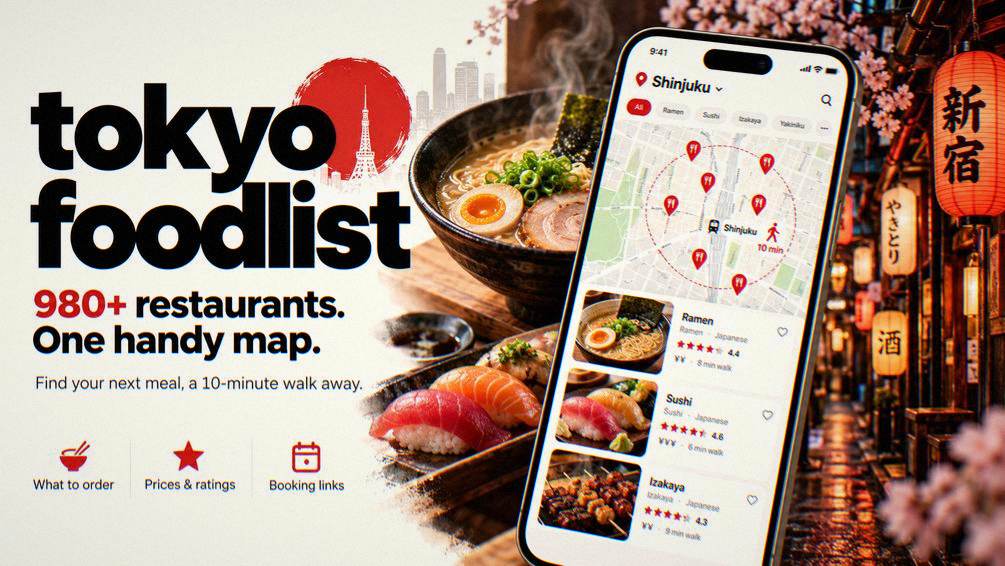
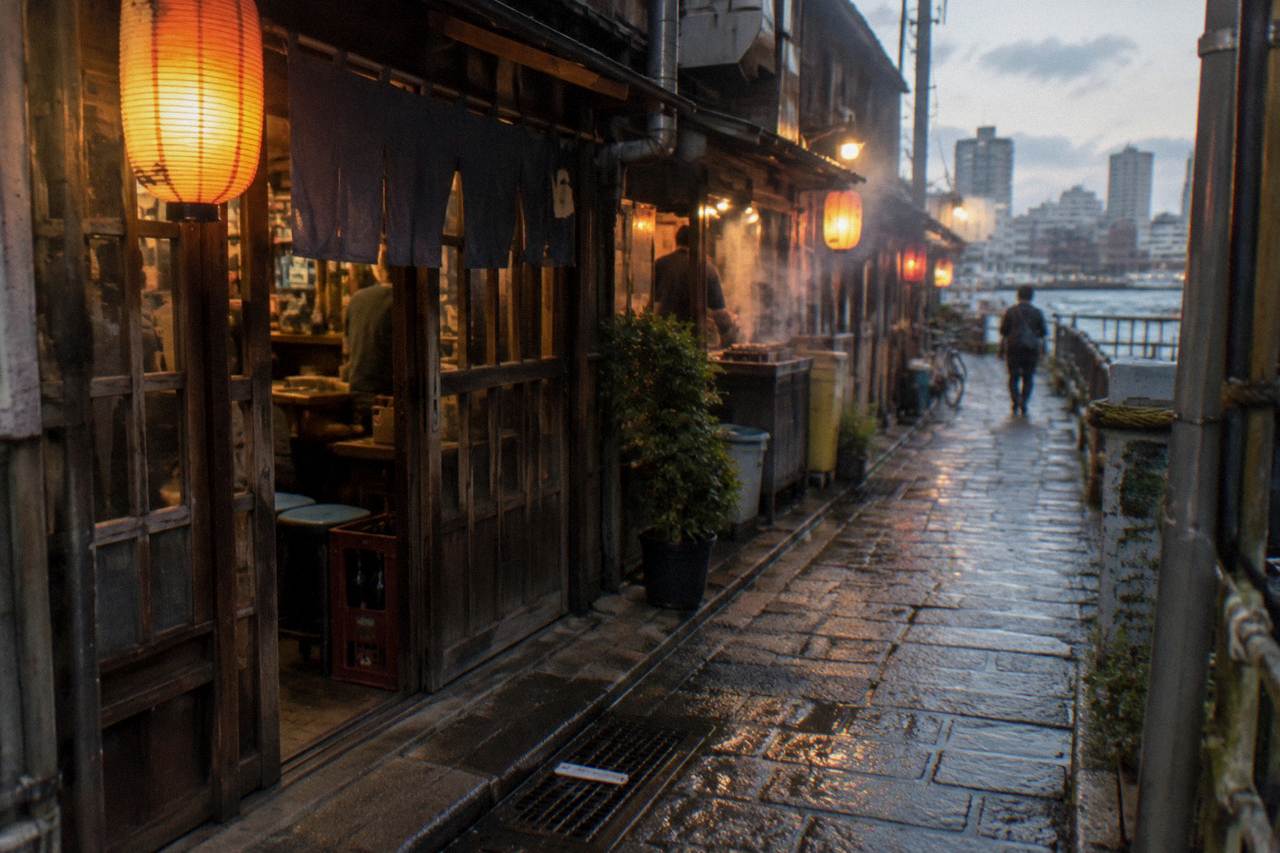
Omoide Yokocho in Shinjuku holds about 80 shops, roughly 60 of them bars and restaurants, mostly yakitori and offal grills, according to its official site, and the Shinjuku merchants association warns that some set a 90-minute limit per group. That is the izakaya evening in miniature: compact, fast-turning, charged by the seat, and best understood as a mechanism rather than a single meal. The curated 100 records on this site include 12 izakaya and 8 yakitori listings, and among the izakaya the booking labels split 2 usually walk-in and 10 booking recommended, which tells you most evenings need a little planning. For everything from reservation difficulty to what to order, our own guide, The Tokyo Food List, covers the wider 980+ with booking links and map pins, and the 100 here are a curated subset rated 4.2 or higher on Google with at least 300 reviews.
What Is Izakaya Tokyo?
An izakaya in Tokyo is a casual pub that serves drinks and small dishes together, ordered in rounds across the evening rather than as one set meal. Most add a small automatic appetizer called otoshi that works as a per-person table charge, typically a few hundred yen and up to about 1,000 yen at nicer places, and many close between lunch and dinner service or rest on fixed weekdays.
The word describes a category, not a price point. On this site's records the izakaya run from inexpensive, such as Kushikatsu Tanaka Higashi-Ginza Store at 4.8 on Google across 4,494 reviews, to expensive, like Dynamic Kitchen & Bar Hibiki Shinagawa at 4.5 across 2,826 reviews. The food is built for drinking: Sakaba Totoya in Asakusa lists mentaiko, aji fry and beef tendon stew as its order tags, while Tsumugido Shinjuku leans on beef tongue, boiled tongue and what the listing calls drinkable gyoza. None of these are courses. They arrive as you order them, a plate or two at a time, and the table fills gradually. For yakitori evenings beyond this street, The Tokyo Food List covers 980+ restaurants sorted by cuisine, with Google Maps pins and tourist favorites next to local spots.
The rhythm matters more than the menu. A typical izakaya visit starts with a drink order for everyone, moves to two or three shared dishes, then repeats. Japan Brand Collection reports that many Tokyo restaurants stop taking last orders before closing time and often close on Sundays, Mondays or national holidays, so an izakaya that looks open on a map may have finished its kitchen service an hour before the bar shuts. Planning around last orders, not closing time, is the single biggest timing adjustment for visitors.
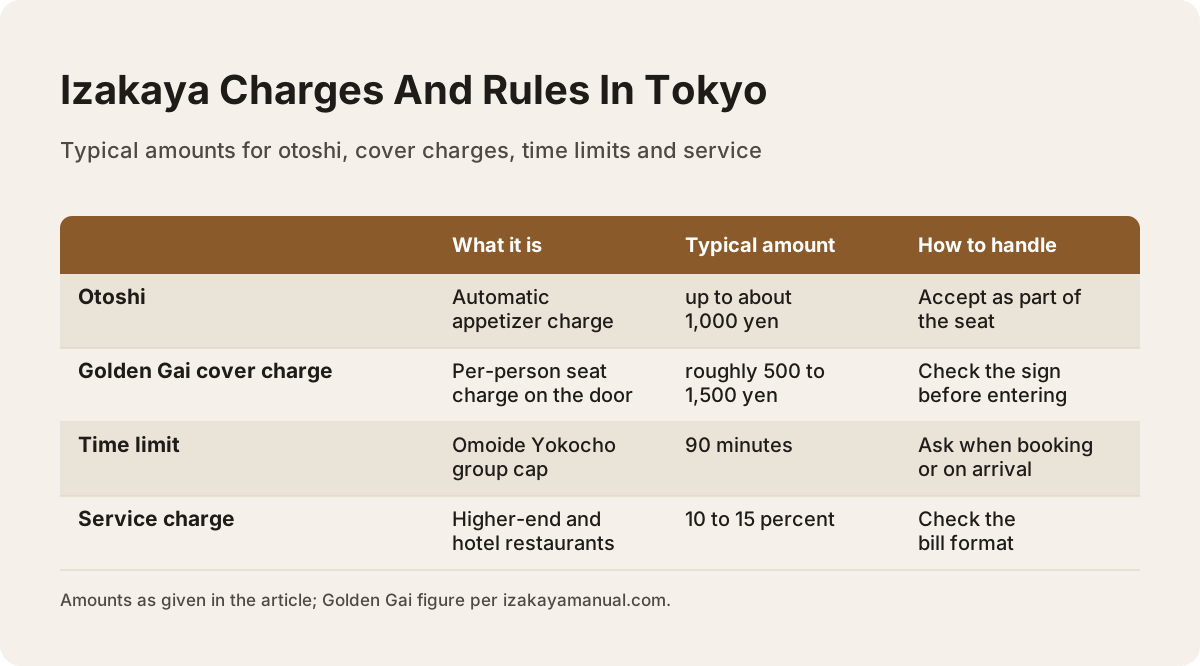
Tipping sits outside the mechanism entirely. Tipping is not customary in Japanese restaurants, and staff may return money left behind, though some higher-end and hotel restaurants add an automatic service charge of 10 to 15 percent, as japan-guide.com's dining guide explains. Between that, the otoshi and the tax-included prices printed on menus, the bill holds few surprises for anyone who reads it.
Where Are The Best Izakayas In Tokyo?
By the records, the izakaya spine of Tokyo runs through Shinjuku, Ginza and Nihonbashi, with strong outliers in Asakusa, Shibuya, Kanda and Shinagawa. Among the 12 izakaya records here, 10 carry a booking recommended label and only 2 are usually walk-in, so the decision is less about finding a seat and more about booking the right seat.
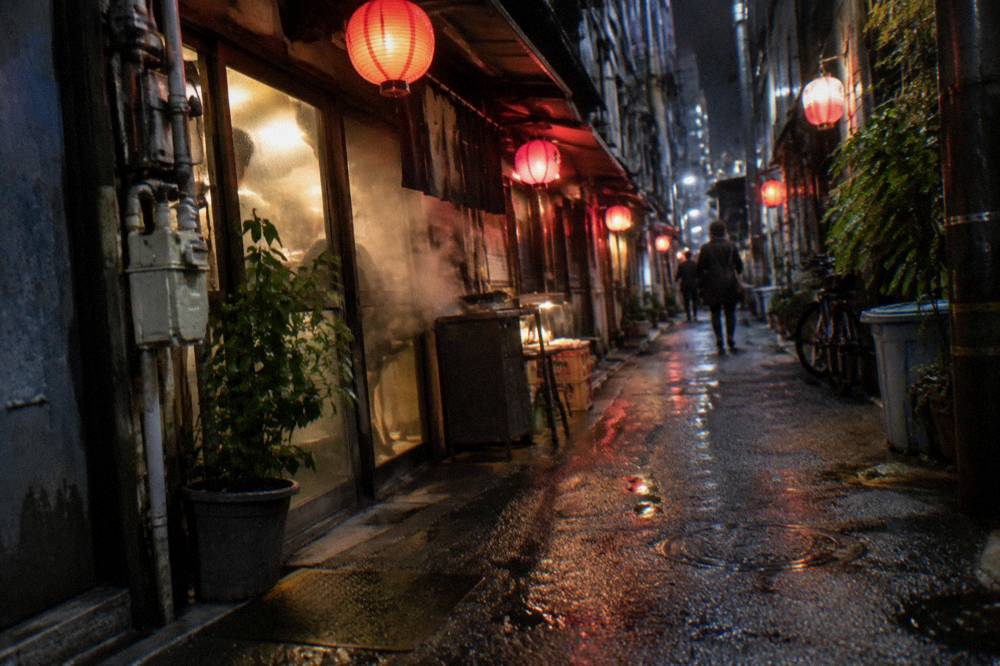
Shinjuku is the deepest ward. Tsumugido Shinjuku (4.7 on Google across 3,800 reviews, inexpensive, booking recommended) and zekkocho teppen (4.8 across 2,493 reviews, moderate, booking recommended) both sit in the ward that also hosts Omoide Yokocho and Golden Gai, where around 280 bars pack six narrow alleys and many seat five or six people. Yakitori Haretsubame Shinjuku higashiguchi, at 4.6 across 3,814 reviews with dashi-rolled omelette, chicken soup and duck tsukune among its order tags, gives the same neighbourhood a sit-down counter option when the alleys feel tight.
| Izakaya record | Ward / area | Google rating | Reviews | Price level | Booking label |
|---|---|---|---|---|---|
| Kushikatsu Tanaka Higashi-Ginza Store | Chuo / Ginza | 4.8 | 4,494 | inexpensive | booking recommended |
| Sakaba Totoya | Taito / Asakusa | 4.7 | 3,964 | moderate | usually walk-in |
| Tsumugido Shinjuku | Shinjuku | 4.7 | 3,800 | inexpensive | booking recommended |
| Kushikatsu Tanaka Shibuya Hyakkendana | Shibuya | 4.7 | 3,469 | inexpensive | booking recommended |
| zekkocho teppen | Shinjuku | 4.8 | 2,493 | moderate | booking recommended |
| Tsukada Nojo Akihabara Chuo Dori | Chiyoda / Kanda | 4.7 | 2,943 | inexpensive | booking recommended |
| Uomori Coredo Muromachi Terrace | Chuo / Nihonbashi | 4.6 | 3,501 | moderate | booking recommended |
| Kushikatsu Tanaka Shimo-Kitazawa Store | Setagaya | 4.7 | 2,619 | inexpensive | booking recommended |
| Dynamic Kitchen & Bar Hibiki Shinagawa | Minato / Takanawa | 4.5 | 2,826 | expensive | booking recommended |
Two patterns are worth reading off that table. First, price does not track rating: the most expensive record, Hibiki Shinagawa, has the lowest rating of the nine, while several inexpensive records sit at 4.7 and 4.8. Second, Ginza and Nihonbashi izakaya tend toward moderate pricing, while the chain branches in Shibuya and Shimokitazawa stay inexpensive. Kushikatsu Tanaka is a chain and appears here as three separate branch records, each with its own Google listing; treat them as one familiar option in three neighbourhoods rather than three different restaurants.
If the choice is really about which neighbourhood to base an evening in, the Shinjuku restaurant guide covers the ward's full spread beyond the izakaya records, and the question of which Tokyo restaurants require reservations goes deeper on booking mechanics. For picking by neighbourhood on the night itself, The Tokyo Food List is built to open on a phone, show what is within a 10-minute walk, and sort by Google rating and price range.
What Does "Izakaya" Mean In Japanese?
The word breaks down as "i" (stay), "sakaya" (sake shop): literally a sake shop where you stay and drink, which is how the category began, customers lingering at the liquor counter until shops added seating and food. It is not a brand or a chain style but a licensing-and-custom label for any pub that serves food alongside alcohol, from a six-seat counter to a multi-floor dinner house.
That origin still shapes the economics. Because the seat itself is the product, many izakaya monetise it directly: the otoshi appetizer arrives unbidden and appears on the bill as a per-person charge, and in Golden Gai many bars post a separate seat or cover charge on the door, which izakayamanual.com's Golden Gai guide puts at roughly 500 to 1,500 yen per person. Some shops go further and require each customer to order one drink and one food item on entry, a rule the Omoide Yokocho merchants association asks visitors to check before sitting down.
Not every operator charges the same way. The yakitori chain Torikizoku states on its own website that it charges no otoshi, no table fee and no late-night surcharge, as tokyo.how's guide to Tokyo restaurant charges records. So the mechanism is common but not universal, and the honest answer to "will I be charged for the little dish" is: probably at an independent izakaya, often not at a value chain, and the menu or door sign usually settles it.
| Charge or rule | What it is | How to handle it |
|---|---|---|
| Otoshi | Small automatic appetizer, works as a per-person table charge, typically a few hundred yen, up to about 1,000 yen at nicer places | Accept it as part of the seat; you can sometimes decline politely before eating, but often it is tied to the seat |
| Golden Gai cover charge | Posted seat charge at many small bars, roughly 500 to 1,500 yen per person per izakayamanual.com | Look for the sign on the door before entering |
| One drink, one food | Some Omoide Yokocho shops require it per customer on entry | Check before sitting, as the association advises |
| Time limit | Some shops cap groups at 90 minutes | Ask when booking or on arrival |
| Service charge | 10 to 15 percent at some higher-end and hotel restaurants, not typical at izakaya | Check the bill format; tipping is not customary |
What Should You Order At A Yakitori Counter In Tokyo?
Yakitori means grilled chicken skewers, but a Tokyo yakitori record covers the whole bird plus pork belly, beef skewers and side dishes; the eight records here range from inexpensive to moderate, and every single one carries a booking recommended label, so this is a booked dinner, not a walk-in gamble. Order in twos and small rounds, and let the counter set the pace.
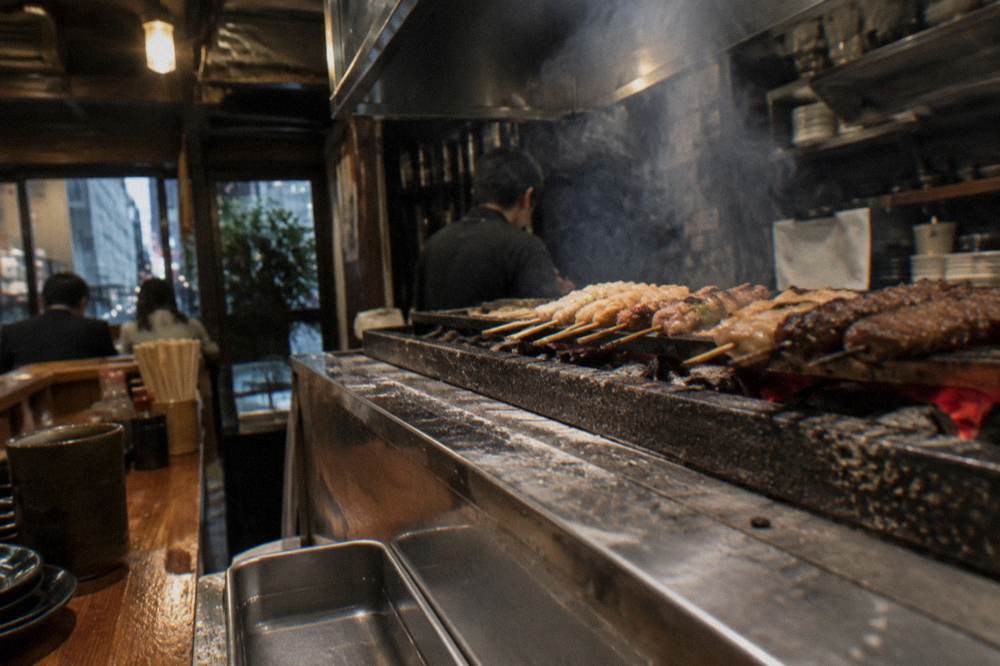
At Omoide Yokocho, most shops sell skewers in twos rather than singly, and saying omakase hands the choice to the counter, which is how most regulars order, according to the Shinjuku guide shinjukujapan.com. The same logic applies at the sit-down records. Fukumimi Hanare in Shinjuku, 4.9 on Google across 2,688 reviews and moderate, lists skewers, chicken meatball and tsukune; its sibling Fukumimi Ginza 1, at 4.9 across 1,865 reviews and inexpensive, adds potato salad, chub mackerel and fried onion. A round of skewers plus one or two sides per person is a normal first order, with more rounds to follow.
| Yakitori record | Ward / area | Google rating | Reviews | Price level | Order tags |
|---|---|---|---|---|---|
| Fukumimi Hanare | Shinjuku | 4.9 | 2,688 | moderate | skewers, chicken meatball, tsukune |
| IZUMO Asakusa Yokocho | Taito / Asakusa | 4.8 | 2,897 | inexpensive | deopbap, eel rice bowl, gyeran-mari |
| Yakitori Haretsubame Shinjuku higashiguchi | Shinjuku | 4.6 | 3,814 | moderate | dashi-rolled omelette, chicken soup, duck tsukune |
| Fukumimi Shinjuku | Shinjuku | 4.7 | 2,933 | moderate | chicken skewers, beef skewers, pork belly |
| Hinotori | Shinjuku | 4.8 | 2,403 | inexpensive | sake, toro liver, potato salad |
| Fukumimi Ginza 1 | Chuo / Ginza | 4.9 | 1,865 | inexpensive | potato salad, chub mackerel, fried onion |
| Bistro Fukumimi Ginza COREDO Shop | Chuo / Ginza | 4.8 | 2,140 | moderate | skewers, fried onion, chicken porridge |
| Kushiyaki Bistro Fukumimi Ginza | Chuo / Ginza | 4.5 | 2,856 | moderate | skewers, fried onion, pork belly |
Note what the order tags actually say, because two of these records are not strictly chicken counters. IZUMO Asakusa Yokocho lists deopbap, eel rice bowl and gyeran-mari, Korean comfort dishes, and the Ginza trio of Fukumimi-branded records shares a family style built on skewers, fried onion and potato salad. If you want a pure yakitori progression from breast to skin to tsukune, Fukumimi Hanare or Hinotori, whose tags include toro liver and sake, are the cleaner fits. When in doubt at any counter, omakase is the word that hands the sequence to the kitchen, and the izakaya etiquette question covers the rest of the table manners.
What Are Some Foreigner-Friendly Izakaya In Tokyo?
The foreigner-friendliest records here are the inexpensive, high-volume ones: Kushikatsu Tanaka's branches and Sakaba Totoya, which are either usually walk-in or easy to book. IZUMO Asakusa Yokocho and the Fukumimi branches also draw a mixed crowd by label. Do foreign visitors get turned away? At these records there is no sign of it; the crowd labels say mixed throughout.
All 20 izakaya and yakitori records here carry a mixed crowd label, meaning both locals and visitors rather than a tourist-only trade. The label describes what usually happens, not a fixed policy. That matters because stories about izakaya refusing foreign guests tend to involve tiny Golden Gai bars that seat five or six people, with cover charges and regulars' expectations, not a large Ginza branch or a busy Asakusa pub. The question do izakayas allow foreigners tackles the alley-bar version directly, but at the records in this guide the practical barrier is language and ordering, not entry.
For a first night with zero Japanese, three records stand out. Sakaba Totoya in Asakusa is the only usually walk-in izakaya in the set, so it removes booking entirely, and its order tags, mentaiko, aji fry and beef tendon stew, point at shareable dishes rather than a counter ritual. Kushikatsu Tanaka Higashi-Ginza Store runs takoyaki and kushikatsu at an inexpensive price level, and its own site, the Higashi-Ginza branch page, carries the menu and booking detail in one place. And Hinotori in Shinjuku pairs inexpensive food with a sake-forward tag list, so the drink order explains itself.
If the anxiety is the ordering rather than the welcome, a guided first evening removes it. The Bar Hop, Free Flow Full Dinner walk in Shinjuku costs from $109.35 per person, runs 3 hours with a maximum of 7 travellers, includes a meal and drinks, and holds a 4.9 rating across 4,086 reviews, with free cancellation. A guide who handles Golden Gai's cover charges and the one-drink-one-food rules costs less than a confused night of trial and error.
The same logic applies to Shinjuku's back streets more broadly. The Shinjuku Local Eateries Walk, from $84.21 per person, 3 hours, up to 12 travellers, a meal included, 4.9 across 10,498 reviews and free cancellation, moves through the neighbourhood's standing bars and grill counters with someone who knows which ones post time limits. Between the two, the bar hop is the smaller, drink-focused group and the eateries walk is the broader, cheaper introduction.
Walk-In Or Booked: How Do Tokyo Izakaya Reservations Work?
Across the curated 100, booking labels split 45 usually walk-in, 48 booking recommended and 7 booking usually required; within this guide's 20 izakaya and yakitori records, almost everything is booking recommended and only two izakaya are usually walk-in. Practically: book anything you have your heart set on, walk in only where the label says you can.
The booking and crowd labels describe what usually happens rather than a fixed policy, so read them as strong tendencies. Izakaya as a cuisine run toward booked tables: 10 of the 12 izakaya listed here are labelled booking recommended, none require it, and two welcome walk-ins. Yakitori records are more uniform, 8 of 8 booking recommended. Compare that with ramen, where 10 of 15 curated records are usually walk-in, and the pattern is clear: the more the meal depends on a seat for the whole evening, the more the restaurant manages that seat in advance.
| Category (curated 100) | Usually walk-in | Booking recommended | Booking usually required | Total |
|---|---|---|---|---|
| Izakaya | 2 | 10 | 0 | 12 |
| Yakitori | 0 | 8 | 0 | 8 |
| Ramen | 10 | 4 | 1 | 15 |
| Sushi | 4 | 8 | 4 | 16 |
How you book depends on the restaurant. English-friendly platforms exist in Tokyo dining; NativeCall names Tabelog's multilingual booking, OMAKASE and TableCheck as the common routes, each with its own per-person fee and card requirement, while many top places still need a Japanese phone number or a speaker, and hotel concierges can bridge the gap. Cancellation is the part people miss: high-end and omakase venues commonly charge 30 to 50 percent of the course price for cancellations a few days ahead, rising to 100 percent for same-day cancellations and no-shows. For a moderate izakaya that risk is usually smaller, but a booked room for six that empties out is the kind of thing that ends up on a bill, so cancel properly if plans change.
Our own guide, The Tokyo Food List, records reservation difficulty and booking links for each of its 980+ listings, which is exactly the detail that decides whether Thursday's dinner gets planned on Tuesday or winged on the night.
What Does An Izakaya Evening Actually Look Like?
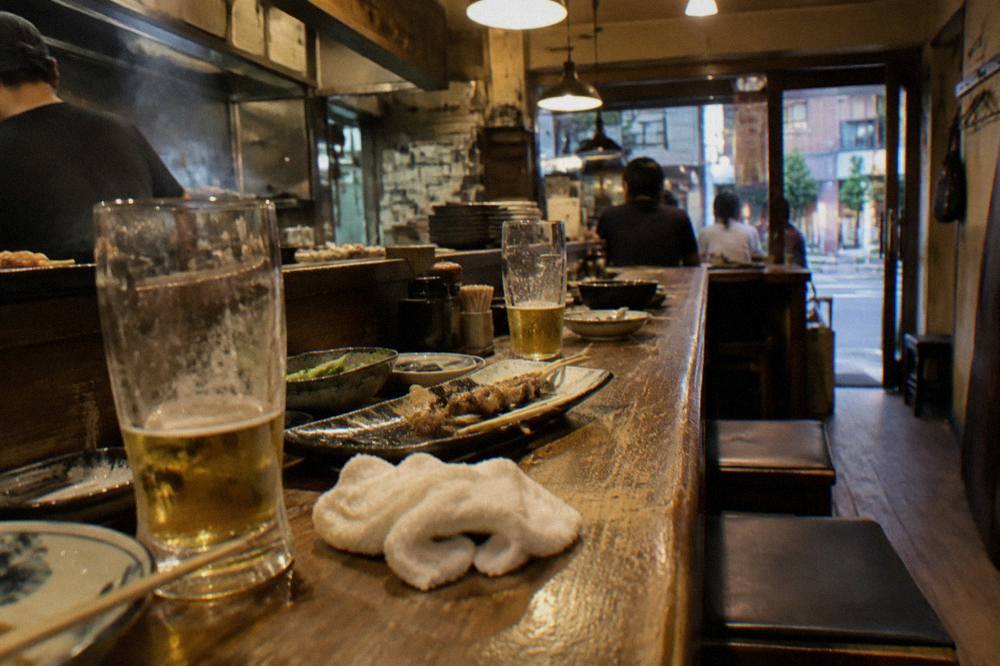
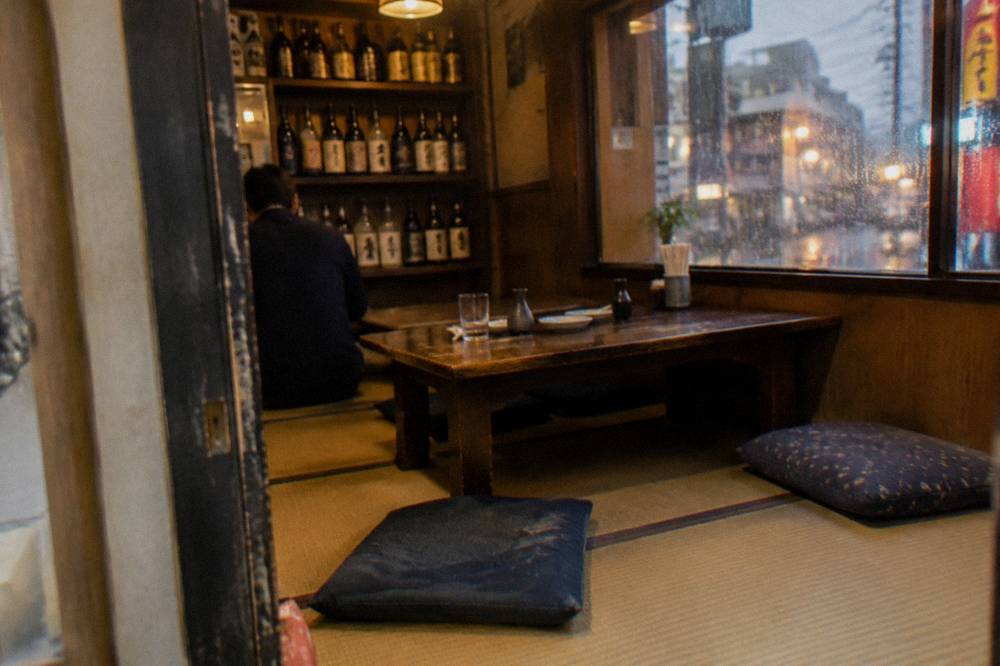
A standard Tokyo izakaya evening runs two to three hours: a drink order on sitting, otoshi arriving unasked, then rounds of shared dishes ordered two or three at a time, with nomihoudai drink plans often capped at 90 or 120 minutes and last order called 15 to 30 minutes before the plan ends. The table empties, the bill arrives tax-included, and nobody tips.
Time structures the whole night. The Standard Japan's nomihoudai guide records the standard format: 90 or 120 minutes from when you start, with last order 15 to 30 minutes before the end. That single mechanic explains why an izakaya group orders its first round almost immediately, why the kitchen sends dishes out as they are ready rather than in sequence, and why lingering long past the last plate reads oddly. The Omoide Yokocho association's 90-minute group limits fit the same pattern: the seat is rented by the block, not the evening.
Between the rounds, the evening's small rules do the work. The otoshi arrives first and is eaten, not queried. Dishes land as they finish, so the table builds outward rather than course by course. Smoking indoors is prohibited by default under Tokyo's ordinance in force since April 2020, with signage showing each venue's status, which is why the alley smoking bans and the shop-by-shop rules coexist. And when the izakaya closes between services or rests on a Monday, that is the standard Tokyo pattern, not a one-off.
The records pick up the thread. Tsukada Nojo Akihabara Chuo Dori, 4.7 across 2,943 reviews and inexpensive, is the family-friendly version of the evening, its order tags led by pudding and chicken nanban. Uomori Coredo Muromachi Terrace, 4.6 across 3,501 reviews in Nihonbashi, runs a calmer iteration with yuzu, taimeshi and ochazuke. Dynamic Kitchen & Bar Hibiki Shinagawa, expensive and booking recommended, turns the same structure into a whiskey-and-butajiru night. One mechanism, three price levels, and every one of them booked in advance.
Izakaya Charges And Rules In Tokyo
Which Izakaya Or Yakitori Record Fits Your Evening?
Match the record to the night you want: a wing-it Asakusa walk-in at Sakaba Totoya, a booked Shinjuku yakimoto counter at Fukumimi Hanare or Hinotori, an inexpensive chain night at any Kushikatsu Tanaka branch, or an expensive seated dinner at Hibiki Shinagawa. Price level and booking label, not rating, are the two fields that actually change your plans.
Ratings sit in a tight band here, from 4.5 to 4.9, so they barely discriminate. Price and booking do. A traveller who does not want to book anything has two walk-in izakaya in the set, Sakaba Totoya in Asakusa, moderate, and the Ueno motsuyaki shop Yariki, inexpensive, plus the ramen and standing-soba universe beyond them, which the cheap eats guide maps out. A traveller celebrating something has Hibiki Shinagawa and the moderate yakitori counters, all booked. A group that just wants skewers and beer inexpensively has plenty of choice: eight of the 12 izakaya and three of the 8 yakitori records are inexpensive.
| If your evening is... | Best-fit records | Price level | Booking |
|---|---|---|---|
| Spontaneous, no booking | Sakaba Totoya (Asakusa) | moderate | usually walk-in |
| Classic yakitori counter | Fukumimi Hanare, Hinotori (Shinjuku) | moderate, inexpensive | booking recommended |
| Cheap skewers and beer | Kushikatsu Tanaka branches (Ginza, Shibuya, Shimokitazawa), Fukumimi Ginza 1 | inexpensive | booking recommended |
| Fish-forward drinking food | zekkocho teppen, Uomori Coredo Muromachi Terrace | moderate | booking recommended |
| Seated dinner with drinks | Dynamic Kitchen & Bar Hibiki Shinagawa | expensive | booking recommended |
The Food List framing from the top of this page is the same one Best Restaurants Tokyo uses across every cuisine guide: records with a Google rating of 4.2 or higher and at least 300 reviews, drawn from the 980+ in the full list. For izakaya nights, where the difference between a great and a mediocre evening is mostly booking timing and neighbourhood logistics, sorting by reservation difficulty and price range does more work than any ranking. Pick the ward, pick the price band, book where the label says recommended, and let the otoshi do its job.
Common Questions About Izakaya And Yakitori In Tokyo
What is izakaya Tokyo?
An izakaya is a casual Japanese pub serving drinks and small dishes ordered in rounds, with a per-person otoshi table charge typically a few hundred yen. In Tokyo the curated records run from inexpensive chain branches to expensive seated dinner houses, and most carry a booking recommended label.
Where are the best izakayas in Tokyo?
By this site's records, Shinjuku is the deepest ward, with Tsumugido Shinjuku and zekkocho teppen among the izakaya and four yakitori counters nearby. Ginza and Nihonbashi add moderate options like Uomori Coredo Muromachi Terrace, and Asakusa's Sakaba Totoya is the set's main walk-in.
What are some foreigner-friendly izakaya in Tokyo?
The inexpensive, high-volume records are the easiest entry: Kushikatsu Tanaka's Ginza, Shibuya and Shimokitazawa branches, Sakaba Totoya in Asakusa, and Hinotori in Shinjuku. All 20 records in this guide carry a mixed crowd label, so nothing here suggests foreign visitors are turned away.
What does "izakaya" mean in Japanese?
It combines "i" (stay) with "sakaya" (sake shop): originally a liquor shop where customers stayed to drink, which grew seats and kitchens. The word covers any pub serving food with alcohol, from a six-seat counter to a multi-floor restaurant.
Do you need a reservation at Tokyo izakaya?
Usually, yes. Among the 12 izakaya records here, 10 are labelled booking recommended and 2 usually walk-in, and all 8 yakitori records recommend booking. Book through the restaurant's own site, an English-friendly booking service, or your hotel concierge.