What Is Anthony Bourdain's Favorite Restaurant In Tokyo?
The Tokyo restaurants Anthony Bourdain actually ate at on camera, where each pick was documented, and what booking each one looks like today.
What Is Anthony Bourdain's Favorite Restaurant In Tokyo?
The best documented answer is Sukiyabashi Jiro, the Ginza sushi counter Bourdain visited for the Tokyo episode of No Reservations, alongside Sushi Karaku, which he featured in the first episode of A Cook's Tour, and nothing else in the city has a stronger claim on the title. He never crowned a single favourite in print, so the honest answer rests on what the cameras recorded: two sushi restaurants, both filmed, both named in episode documentation rather than in fan lore or recycled listicles. Each has a very different booking reality today, and neither is a casual walk-in stop on a first Tokyo trip, which is why this piece also names three places you can actually eat tonight.
The Jiro visit is logged in the IMDb locations record for the No Reservations Tokyo episode, which lists the restaurant's address in the Tsukamoto Sogyo Building basement in Ginza. The Karaku visit is documented on the official YouTube channel, which hosts A Cook's Tour Season 1 Episode 1 under the title A Taste of Tokyo. Those two records are the whole evidence base, and both are worth treating as history rather than a current to-do list. If you are still working out where to eat in Tokyo, The Tokyo Food List lays out 980+ restaurants with what to order and Google Maps pins.
That matters because Tokyo's dining landscape moves. Restaurants close, booking systems change, and a counter that welcomed a film crew years ago may now be one of the hardest seats in the city to obtain. This piece separates the documented picks from the practical present, then offers three walk-in-friendly alternatives drawn from this site's curated records, places where a traveller can actually eat tonight without a concierge and a two-month lead time. Our own guide, The Tokyo Food List, covers reservation difficulty for 980+ Tokyo restaurants, and it is the fastest way to see which famous names are realistically bookable and which are not. If the price of a famous counter matters as much as the booking, our breakdown of affordable Michelin-starred dining in Tokyo shows how lunch service puts starred cooking within a normal budget.
Sukiyabashi Jiro: The No Reservations Pick
Sukiyabashi Jiro is the Tokyo restaurant most reliably tied to Bourdain, filmed for the No Reservations Tokyo episode and listed in that episode's location record on IMDb, which places the filming at the basement counter of the Tsukamoto Sogyo Building in Ginza. The episode put the famously austere counter in front of Western audiences at a moment when few sushi restaurants outside Japan had any name recognition at all. For many viewers it was the first time omakase service had been shown as it actually works, piece by piece at a counter, and the segment remains the single most cited piece of Bourdain Tokyo lore. The address on the restaurant's own site matches the IMDb record exactly. Since counters like this one often expect payment in yen, our guide to using cash or card in Japan covers which Tokyo restaurants still demand bills and which take cards without fuss.
What the episode documented was less a meal than a performance of discipline: a small counter, a chef working at speed, and a progression of nigiri served one piece at a time. That format, omakase, is described in more detail in our guide to omakase dining in Tokyo, because the word itself simply means leaving the choices to the chef, and it covers everything from conveyor-belt prices to very expensive counters.
The restaurant's standing has shifted since filming. Sukiyabashi Jiro was left out of the Michelin Guide Tokyo starting with the 2020 edition because, as the food site SHOKU NOREN explains, it no longer accepts reservations from the general public. The 2026 guide lists 12 three-star, 26 two-star and 122 one-star restaurants across Tokyo, per The Japan Times, and Jiro is not among them despite its history in the guide. Losing the stars said nothing about the food and everything about access, which is the practical point for anyone planning a trip around Bourdain's footsteps.
Sushi Karaku: The A Cook's Tour Pick
Sushi Karaku is the second documented pick, featured in the first episode of A Cook's Tour, which the official channel hosts under the title A Taste of Tokyo, making it the first Tokyo restaurant Bourdain ever ate at on television. A Cook's Tour came years before No Reservations and caught Bourdain in a scrappier mode: a working chef eating his way through unfamiliar cities with a camera crew and no safety net. The Tokyo episode opened the entire series, so Karaku holds a small but real place in food television history, and the documentation for it is stronger than most celebrity-restaurant claims manage. If Bourdain's picks have you curious about where to eat tonight, our guide to how Tokyo's top restaurant rankings actually work explains why Michelin, Tabelog, and everyday reviewers so often crown different winners.
The documentation sits on the official YouTube channel, which carries the full episode listing. That is a stronger source than most celebrity-restaurant claims, which usually trace back to a magazine listicle or a second-hand interview quote. Here the primary record exists and names the venue, so Karaku belongs on any evidence-based Bourdain map of the city. Anything beyond these two venues is speculation, and there is plenty of it online.
Karaku also represents a different tier of sushi than Jiro. Where the No Reservations pick is a formal counter with a reservation system designed to filter visitors, a neighbourhood sushi restaurant of the kind Bourdain favoured early in his career tends to be inexpensive or moderate, easier to enter, and easier to enjoy without ceremony. Our best sushi in Tokyo guide covers the full spread of the city's sushi records, from inexpensive walk-in counters to expensive book-ahead destinations, and it is worth reading before committing to any single famous name.
How Hard Is It To Book Sukiyabashi Jiro Today?
Very hard, and deliberately so. According to the restaurant's own website, reservations are accepted by phone only, and overseas guests must book exclusively through the concierge at the hotel where they are staying. Guests must also present photo ID at the door, adding one more hurdle to an already strict booking process. There is no public online booking form, no third-party calendar, and no walk-in option. If you are not staying at a hotel with a concierge willing to make Japanese-language phone calls, the route is effectively closed, and even with a concierge nothing is promised. This is the single most important practical fact on the whole Bourdain trail.
This is where the broader booking landscape becomes useful context. English-friendly reservation platforms do exist in Tokyo: Tabelog's multilingual booking, OMAKASE and TableCheck all serve international diners, with card registration and small per-seat booking fees that the Tokyo guide site tokyo.how documents in detail. Many of the most sought-after counters still require a Japanese phone number or a Japanese speaker calling on your behalf, which is exactly the gap a hotel concierge fills.
Cancellation terms deserve attention too. High-end and omakase restaurants commonly charge 30 to 50 percent of the course price for cancellations a few days ahead, rising to 100 percent for same-day cancellations and no-shows, per the reservation guide SHOKU NOREN. Anyone booking a starred or near-starred counter through a concierge should confirm the cancellation window before committing, because a schedule change late in a trip can otherwise cost the full price of a meal never eaten.
The practical summary for a Bourdain pilgrimage: Jiro needs a concierge, patience and photo ID, and even then availability is not promised. Karaku's current booking reality is not documented in the sources behind this article, so treat it as a maybe until you confirm independently. For everything bookable, The Tokyo Food List flags reservation difficulty for each entry alongside Google ratings and price bands, so you can build a Bourdain-adjacent itinerary that does not collapse because one counter said no.
What To Eat Instead: Walk-In Friendly Alternatives In Tokyo
If the documented picks are fully booked or simply out of reach, you can still eat in the same spirit: three walk-in friendly records on this site, Sakaba Totoya in Asakusa, Kushikatsu Tanaka Higashi-Ginza, and Fukumimi Hanare in Shinjuku, offer that experience without the booking fight. None of them is a sushi counter, but all three deliver the thing Bourdain actually celebrated in Tokyo: small rooms, honest food and a mixed local crowd rather than a showcase for visitors. Each carries a Google rating of 4.7 or higher across thousands of reviews in this site's curated records, so the quality floor is high, and none demands a concierge or a two-month lead time.
Sakaba Totoya sits in Taito ward in Asakusa, rated 4.7 on Google, and is moderate in price and usually walk-in. The order tags worth targeting are mentaiko, aji fry and beef tendon stew, a spread that reads like a Bourdain paragraph: cheap cuts, salted roe and fried horse mackerel in a neighbourhood drinking room with a mixed crowd.
Kushikatsu Tanaka Higashi-Ginza, in Chuo ward, is rated 4.8 on Google across 4,494 reviews, inexpensive, and labelled booking recommended rather than walk-in, though its chain scale makes same-week tables realistic. The order tags are kushikatsu skewers and takoyaki, fried food and beer food, the kind of counter Bourdain would have chosen over a tasting menu any night of the week. The restaurant's own listing page carries current store details.
Fukumimi Hanare in Shinjuku is the closest in spirit to a filmed segment: a yakitori specialist rated 4.9 on Google across 2,688 reviews, moderate, booking recommended, with skewers, chicken meatball and tsukune as its order tags. Its Tabelog listing shows the live picture. Yakitori counters move fast, and a mixed crowd means solo travellers are unremarkable.
| Restaurant | Ward and area | Google rating | Reviews | Price level | Booking label |
|---|---|---|---|---|---|
| Sakaba Totoya | Taito, Asakusa | 4.7 | 3,964 | moderate | usually walk-in |
| Kushikatsu Tanaka Higashi-Ginza | Chuo, Ginza | 4.8 | 4,494 | inexpensive | booking recommended |
| Fukumimi Hanare | Shinjuku | 4.9 | 2,688 | moderate | booking recommended |
Compare that with the documented picks and the trade becomes obvious: give up the name recognition, gain a table tonight. For a fuller field of candidates, our cheap eats in Tokyo guide works through the inexpensive end of the curated records, and among the city's 15 ramen records on this site, 10 are labelled usually walk-in, so the no-reservation lane is wide. Booking language matters here more than most travellers expect, because the difference between usually walk-in and booking usually required decides whether an evening is spontaneous or planned weeks ahead.
| Documented pick | Source and episode | Booking reality today |
|---|---|---|
| Sukiyabashi Jiro, Ginza | No Reservations Tokyo episode, IMDb locations record | Phone only, overseas guests via hotel concierge with photo ID |
| Sushi Karaku | A Cook's Tour Season 1 Episode 1, official channel | Not documented in the sources behind this article, confirm independently |
Can You Follow Bourdain's Route Around Tokyo Today?
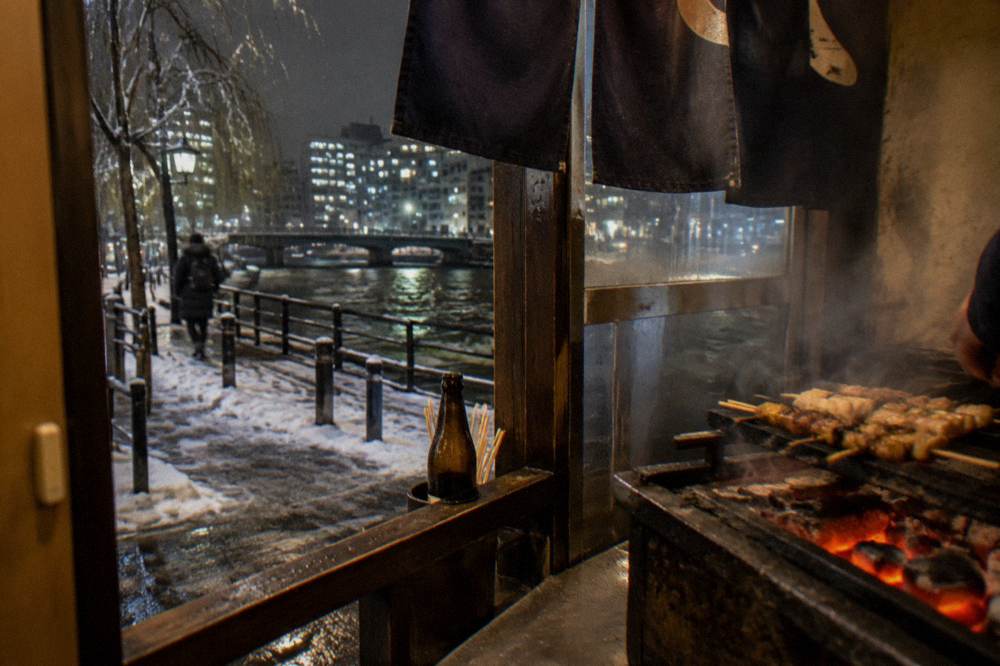
Partly, and only if you treat it as a mood rather than a checklist: the Jiro stop requires a concierge and luck, the Karaku stop needs independent confirmation, and the gaps between them are best filled with guided eating walks and walk-in records rather than a rigid itinerary. Bourdain's Tokyo was never a list of venues anyway; it was an attitude, favouring cramped rooms, late hours and cooks over maître d's. That attitude survives everywhere in the city, from standing bars near Shinjuku Station to the lanes of Golden Gai, and it does not require a two-month booking lead to experience.
A guided walk is one honest way to compress the learning curve. The Shinjuku Local Eateries Walk runs three hours with a maximum of 12 travellers, includes a meal and drinks, and costs from $84.21 per person, with free cancellation; it holds a 4.9 rating across 10,498 reviews. Check availability if a first night in Shinjuku sounds better spent with someone who knows the alleys. The same logic applies to Tsukiji, where the outer market lanes were never relocated and still operate separately from the Toyosu wholesale market, per the Tokyo guide The Ondo Tokyo. The Tsukiji Market tour with 5 tastings runs three hours, caps groups at 20, includes a meal, and costs from $97.17 per person with free cancellation.
For the drinking half of the Bourdain route, Golden Gai in Shinjuku holds roughly 280 small bars across six narrow alleys, many seating five or six people, per the count GO TOKYO keeps. The lanes are private roads, so filming and photography need the association's permission, a detail worth knowing before you point a camera. The Bar Hop tour through Shinjuku and Golden Gai pairs a free-flow dinner with the bar crawl, three hours, maximum seven travellers, from $109.35 per person with free cancellation, a 4.9 rating across 4,086 reviews.
However you assemble the night, the booking question is the one that decides the trip. A helpful companion piece is our article on which Tokyo restaurants require reservations, which maps the booking labels across the curated records. And if one sentence on this site can serve as a compass, it is this: Best Restaurants Tokyo exists to narrow 980+ restaurants down to the ones that fit your dates, your budget and your patience for reservation systems.
Common Questions About Bourdain's Tokyo Picks
What Is Anthony Bourdain's Favorite Restaurant In Tokyo?
The best documented answer is Sukiyabashi Jiro, filmed for the No Reservations Tokyo episode, alongside Sushi Karaku from the first episode of A Cook's Tour. Bourdain never named a single favourite in print, so the answer rests on those two filmed visits.
Did Anthony Bourdain eat at Sukiyabashi Jiro?
Yes. The No Reservations Tokyo episode filmed at the Ginza counter, and the episode's IMDb locations record lists the Tsukamoto Sogyo Building basement address in Chuo ward.
Can tourists book Sukiyabashi Jiro?
Only through a narrow channel. The restaurant's own site states that reservations are phone only and that overseas guests must book exclusively through their hotel concierge, presenting photo ID. There is no public online booking.
Why is Sukiyabashi Jiro no longer in the Michelin Guide?
The restaurant was left out from the 2020 Tokyo edition because it stopped accepting reservations from the general public, as the food site SHOKU NOREN explains. The exclusion reflects access policy, not a reassessment of the food.
What is a realistic alternative to the Bourdain sushi counters?
Sakaba Totoya in Asakusa, usually walk-in, 4.7 on Google across 3,964 reviews; Kushikatsu Tanaka Higashi-Ginza, inexpensive and booking recommended; and Fukumimi Hanare in Shinjuku, a 4.9-rated yakitori counter with booking recommended. All three fit the small-room spirit without a concierge.
What was Anthony Bourdain's first Tokyo restaurant on television?
Sushi Karaku, featured in A Cook's Tour Season 1 Episode 1, the series opener hosted on the official channel under the title A Taste of Tokyo.