Is It Better To Use Cash Or Card In Japan?
A restaurant-by-restaurant look at where cash still rules in Tokyo, where a card is unavoidable, and how tax and service charges already sit inside the menu price.
Is It Better To Use Cash Or Card In Japan?
The practical answer is to carry both cash and a card in Japan, then let the venue decide which one you use. Many small ramen counters and standing shops typically stay cash-only or cash plus IC card, while booking platforms and finer restaurants assume you hold a credit card, so matching the method to the door is what wins.
That nuance matters because Tokyo dining spans two worlds that sit a few streets apart. A ticket-machine ramen counter in Shibuya may take nothing but coins and a Suica tap, while a sushi counter two stations away holds your seat against a credit card and charges a cancellation fee to it. Between those poles sit convenience stores, chain gyudon shops, izakaya and hotel restaurants, each with their own habits.
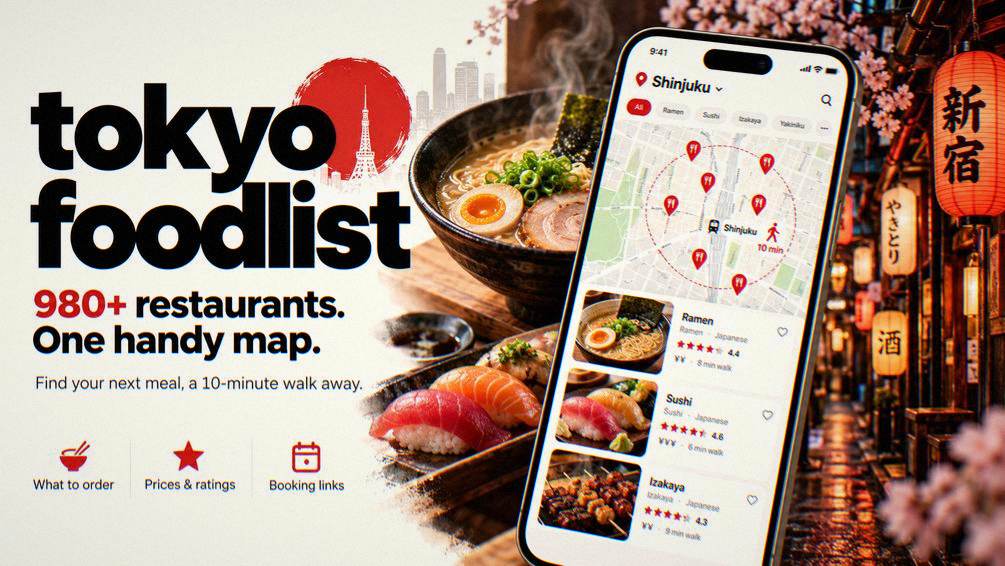
The rules below cover Japanese payment practices, Tokyo restaurant charge conventions and official tax guidance, applied specifically to restaurants rather than to shopping or transit generally. Where a claim rests on a single venue or niche source, the wording stays hedged, because payment policy genuinely varies shop to shop. For a broader eating plan across neighbourhoods and price bands, our own guide, The Tokyo Food List, sorts 980+ Tokyo restaurants by cuisine, Google rating and price range, and notes booking difficulty for each one. If you're still deciding which city deserves most of your eating budget, our guide to Japan's real food capital compares the leading contenders. If you are still working out where to eat in Tokyo, The Tokyo Food List lays out 980+ restaurants with what to order and Google Maps pins.
Which Tokyo Restaurants Typically Still Want Cash?
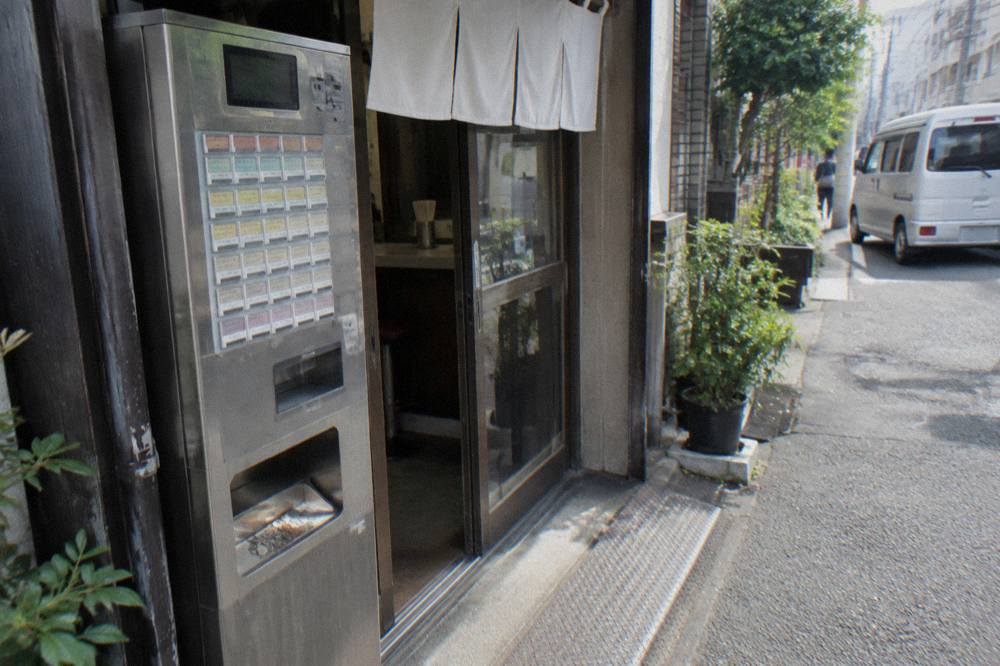
Independent small counters are where cash expectation concentrates. Many small ramen shops and standing venues typically remain cash-only or cash plus IC card, while larger restaurants, chains and hotel dining generally accept cards, and there is no uniform policy anywhere in the city. At most ramen shops you buy a meal ticket from a vending machine by the entrance, hand it to staff when seated, and turnover is fast. Slurping is normal, lingering is not.
The ticket machine is the tell. If there is a shokkenki beside the door, assume coins, notes and possibly an IC card tap at the machine itself, and assume nothing else. The ramen restaurants on this site illustrate the pattern. Jikasei MENSHO in Shibuya, 4.8 on Google across 4,480 reviews and labelled inexpensive and usually walk-in, is exactly the kind of counter where the machine decides how you pay. Afuri Shibuya Dōgenzaka, 4.8 on Google across 3,278 reviews and also inexpensive and usually walk-in, runs the same format. Tsujita Ochanomizu in Chiyoda, 4.5 on Google across 3,657 reviews and moderate, is another walk-in counter where the machine or the till wants ready money.
The pattern is not a rule, and no reliable figure exists for how many Tokyo restaurants accept cards. Still, a tendency holds: the smaller and more counter-focused the shop, the more likely cash or IC card is the realistic answer. Chain restaurants behave differently, and convenience stores accept IC cards across the board. JapanNook's payment guide notes that IC cards such as Suica or PASMO are accepted at all major convenience store chains plus many fast-food chains and coffee shops, which makes an IC card the single most useful instrument for casual eating.
| Venue type | Typical payment reality | Basis |
|---|---|---|
| Small independent ramen counter | Cash only, or cash plus IC card at the ticket machine | Typical pattern, not a fixed rule |
| Standing soba and udon shops near stations | Cash and increasingly IC card, fast turnover | Basis: Japan Travel Notes and TripGuide.Tokyo |
| Convenience stores and chain gyudon shops | IC cards widely accepted, cards often accepted | Source: JapanNook payment guide |
| Mid-range izakaya and family restaurants | Mixed, cards commonly but not universally accepted | No uniform policy across venues, so ask ahead |
| Hotel restaurants and higher-end dining | Card expected, often required to hold the booking | Basis: NativeCall booking-platform guide |
A budget side-note for the cash-inclined: Tripguide.tokyo's cheap-eats guide reports Yoshinoya's regular gyudon at 498 yen to eat in versus 489 yen to take away, the gap being the tax difference, and Fuji Soba serving kake soba at around 430 to 450 yen. Those venues sit firmly in the cash-and-IC-card world, and they are covered in more depth in our Tokyo cheap eats guide.
Where Does A Card Become Necessary Rather Than Optional?
Reservations are where cash stops being an option. English-friendly booking routes typically require a card: Tabelog's multilingual booking takes a card and charges a per-person fee, OMAKASE requires card registration, and TableCheck often needs a card for holds or prepayment. Many sought-after counters still want a Japanese phone number or a speaker of Japanese for phone-only booking, and hotel concierges bridge that gap.
This is the mirror image of the ticket machine. The moment a restaurant takes bookings, payment and reservation collapse into one system, and that system runs on cards. Tabelog's multilingual booking typically runs at roughly 440 yen for each person, OMAKASE at roughly 390 yen for each seat, both fees separate from the meal, and TableCheck holding seats against a card. For practical purposes that means a traveller with no credit card can eat wonderfully at walk-in counters but will struggle to secure a seat anywhere that books out.
The booking difficulty question is bigger than payment alone, and it is worth reading our piece on which Tokyo restaurants require reservations alongside this one. The short version for payment purposes: booking usually required almost always means card required, while usually walk-in almost always means cash or IC card is enough.
| Booking route | Card requirement | What else to know |
|---|---|---|
| Tabelog multilingual booking | Card required, per-person fee applies | Fee is separate from the meal price |
| OMAKASE | Card registration required, per-seat fee | Official Michelin Guide reservation partner for Tokyo |
| TableCheck | Card often needed for holds or prepayment | Some venues switched from holds to full prepayment |
| Phone-only booking | No card, but often a Japanese speaker needed | Hotel concierges can make these calls |
| Walk-in counter | No card involvement at all | Cash or IC card at the ticket machine |
Cancellation policy follows the card. SHOKU NOREN's guide to Japanese restaurant cancellation policies notes that high-end and omakase restaurants commonly charge 30 to 50 percent of the course price for cancellations a few days ahead, rising to 100 percent for same-day cancellations and no-shows, charged to the registered card. That is the real reason venues insist on cards: the card guarantees the seat. Cash is anonymous and cannot hold anything.
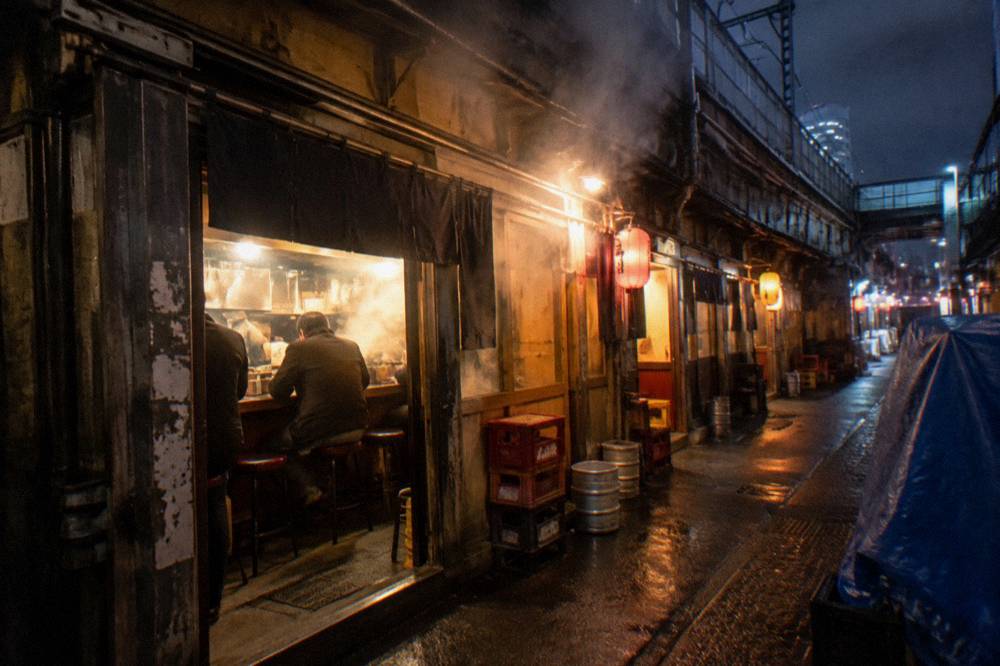
For travellers who want the cash-only backstreet experience without working it out alone, a guided walk earns its price precisely in these alleys. The Shinjuku Local Eateries Walk runs three hours from $84.21 per person, 4.9 across 10,498 reviews, capped at 12 travellers with a meal and drinks included and free cancellation, and its value lies in the stalls a first-time visitor would never identify, let alone pay at. Anyone weighing the ramen side of the equation against the bowl price can also read our answer to how much one bowl of ramen costs in Tokyo.
What Is Already Included In The Price On The Menu?
Tax and any service charge are the two items to understand. Japanese menus and price tags must display tax-included prices, with dine-in subject to 10 percent consumption tax and takeout to a reduced 8 percent. Tipping is not customary and staff may return money left behind, though some higher-end and hotel restaurants add an automatic service charge of 10 to 15 percent, and most izakaya add a small otoshi appetiser that works as a table charge.
The tax split matters more than visitors expect, because it changes with where you stand. Kisaragi's immigration and daily-life guide explains the dine-in 10 percent versus takeout 8 percent rule, and NHK reporting confirms the takeout rate is slated to fall further, to 1 percent, from April 2027 for two years. Convenience stores apply the same logic: the same lunch box is taxed at 8 percent carried out but 10 percent eaten at the store's eat-in counter, with the rate set at the register depending on what you say. None of this changes what you hand over, since displayed prices are tax-inclusive, but it explains why the eat-in and takeaway prices of the same gyudon differ by a few yen.
| Charge | Where it appears | What to expect |
|---|---|---|
| Consumption tax | Every restaurant menu | Included in the displayed price, 10 percent dine-in, 8 percent takeout |
| Service charge | Some higher-end and hotel restaurants | Automatic 10 to 15 percent on the bill |
| Otoshi table charge | Most izakaya | Small automatic appetiser, typically a few hundred yen |
| Cover charge at bars | Many Golden Gai bars | Posted on the door, per person |
| Booking platform fee | Tabelog and OMAKASE reservations | Per person or per seat, separate from the meal |
For a sense of how these charges fit into the final bill, this breakdown of Tokyo restaurant meal prices walks through every price tier, from budget noodle counters to splurge dinners.
Tipping is the item visitors most often get wrong in the generous direction. Japan-guide's etiquette page is blunt: tipping is not customary in Japanese restaurants, and staff may chase you down to return money left on the table. The otoshi at izakaya is not a tip and cannot simply be refused, since it is tied to the seat; tokyo.how's guide to restaurant charges explains the mechanic. None of these charges require cash specifically, but otoshi often lands on the bill at cash-friendly places, so budget for it in whatever form you are paying. For choosing those izakaya in the first place, our own guide, The Tokyo Food List, includes reservation difficulty and booking links alongside what to order, which settles the cash-versus-card question per venue before you leave the hotel. If you're also wondering whether those cash-friendly counters will even seat you, our guide to izakaya access for foreign visitors lays out what door policy, menus and charges actually look like in practice.
A Practical Payment Plan For Eating In Tokyo
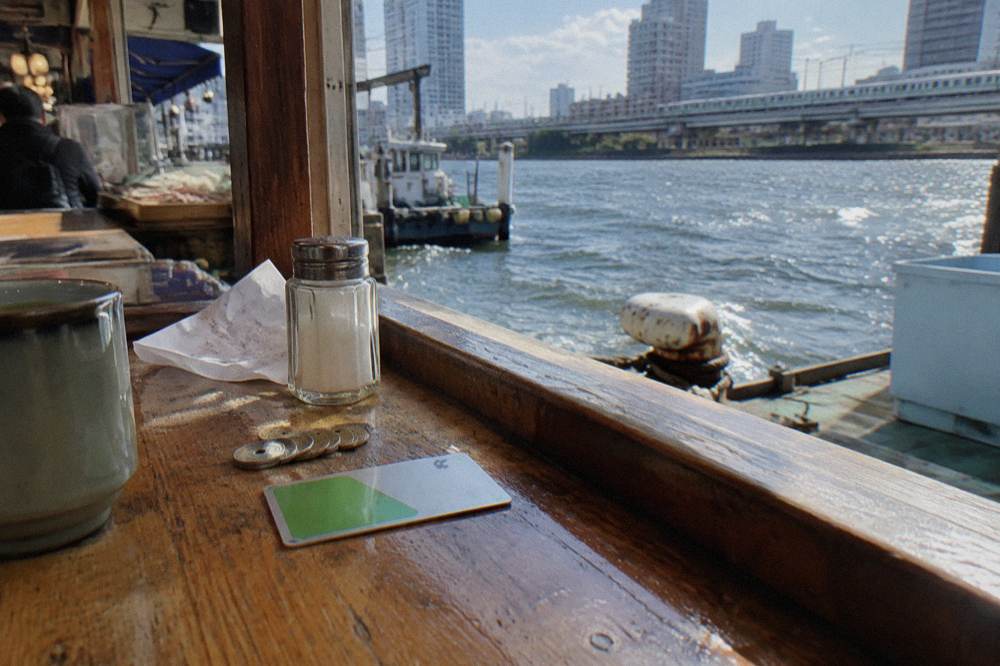
Load an IC card, keep some notes and coins, and carry one credit card for bookings. That trio covers every restaurant scenario in Tokyo: the IC card handles convenience stores, chains and many ticket machines, cash covers the cash-only counters, and the card exists to hold reservations and absorb cancellation fees. Checking a venue's booking label before you go tells you which instrument that door will want.
Day to day, the decision tree is short. Booking usually required means the card is already involved before you arrive. Booking recommended usually means the card is optional but the venue is card-capable. Usually walk-in, especially at ramen counters, means cash or IC card, and a few thousand yen in coins and small notes removes all risk. The booking labels on this site come from the Google listings, so they give you that walk-in versus booking signal at a glance, which is most of the payment answer before you ever see a till.
Evening drinking adds one wrinkle: the small bars of Golden Gai. Izakaya Manual's Golden Gai guide notes most bars there charge a seat or cover charge of a few hundred to about 1,500 yen per person, usually posted on the door, and those charges plus small tabs often settle in cash. A guided route through that world exists too: the Bar Hop free-flow dinner tour runs three hours from $109.35 per person, 4.9 across 4,086 reviews, capped at 7 travellers, with meal and drinks included and free cancellation, which sidesteps both the cover-charge arithmetic and the payment question at each stop.
Two practical footnotes close the plan. First, tax-free shopping does not apply to restaurant meals: Tokyo Cheapo's guide to the system is explicit that services, meals and delivery charges sit outside the scheme, so do not expect a tourist refund on dinner. Second, do not treat any of this as a war on cards. The point of carrying all three instruments is that you stop thinking about payment at all, and start thinking about which counter, which bowl and which neighbourhood, which is the conversation worth having on Best Restaurants Tokyo and across our what to eat in Tokyo guide.
Common Questions About Cash And Card In Tokyo
Is It Better To Use Cash Or Card In Japan?
Both, matched to the venue. Many small ramen counters and standing shops typically stay cash-only or cash plus IC card, while bookings and higher-end dining assume a credit card. An IC card, some cash and one credit card together cover every restaurant situation in Tokyo.
Do Tokyo ramen shops take credit cards?
Many do not. Small ramen shops and counters typically remain cash-only, or accept cash plus an IC card, while others take cards; there is no uniform policy from shop to shop. Where a ticket vending machine sits at the entrance, TripGuide.Tokyo notes the machines are typically cash-first, so plan on cash or an IC card.
Can I reserve a Tokyo restaurant without a credit card?
It is difficult through online systems. Tabelog multilingual booking, OMAKASE and TableCheck all typically involve a card for fees, holds or prepayment. Phone-only booking avoids the card but often needs Japanese, which is where hotel concierges help.
Is tipping expected in Tokyo restaurants?
No. Tipping is not customary in Japanese restaurants and staff may return money left behind. Some higher-end and hotel restaurants add an automatic service charge of 10 to 15 percent instead, and izakaya add a small otoshi appetiser as a table charge.
Does a Suica or PASMO card work at restaurants?
Frequently, yes. IC cards are accepted at all major convenience store chains and many fast-food chains and coffee shops, and at a growing share of ramen ticket machines. They do not help with reservations, which need a credit card.
Is the price on the menu the price I pay?
Yes. Japanese menus and price tags must display tax-included prices, with 10 percent tax on dine-in and 8 percent on takeout already baked in. What can be added is a service charge at some finer venues or the otoshi table charge at izakaya.