What Is The Cheapest Michelin Star Restaurant In Tokyo?
Which Michelin-starred Tokyo restaurants can be eaten at cheaply, why lunch is the budget route, and lower-priced bookable alternatives without a star claim.
What Is The Cheapest Michelin Star Restaurant In Tokyo?
Tokyo has no official cheapest Michelin starred restaurant because the Michelin Guide publishes no price ranking, so any venue labeled "cheapest" online reflects a reported claim rather than a designation. What is verifiable from the 2026 Tokyo guide, which lists 160 starred restaurants, is that lunch service at a starred kitchen typically costs a fraction of dinner at the same counter and is the cheapest realistic route in. Once you've settled on lunch as your way in, the guide to Michelin-starred Tokyo restaurants you can actually book narrows the field to counters with realistic availability.
The honest answer starts with a correction of the question. Michelin does not rank by price, so no restaurant holds the title of cheapest starred venue in Tokyo. What the guide does publish is a selection split into star tiers and the Bib Gourmand, its label for good food at moderate prices, and the 2026 edition carries 114 Bib Gourmand entries across the official Michelin Guide Tokyo 2026 listing. Travel writers who name a specific cheapest starred restaurant are reporting their own meal or a price they saw once, and prices at these kitchens move with the season and the market. To eat well without overspending, The Tokyo Food List lists price ranges so you can see what a meal will cost before you commit.
That does not leave a budget traveller stuck. The structure of Tokyo dining does most of the work for you. Lunch at a starred counter typically runs at a fraction of the same establishment's dinner omakase, a pattern Japan Activity, a Tokyo dining guide, describes as making lunch the more accessible way to try a starred kitchen on a tighter budget. Combine that with the 114 Bib Gourmand addresses and you have hundreds of meals in guide-listed kitchens that cost less than a typical dinner at an unlisted mid-range restaurant elsewhere in the city.
Booking is the other half of the equation, and it rewards planning rather than money. Seats at the most sought-after counters typically open on a set schedule one or two months ahead, according to traveljapan-together, a Japan travel guide. Our own guide, The Tokyo Food List, handles this exact problem for the 980+ restaurants it tracks, with reservation difficulty labels and booking links for each one, so you can see at a glance which guide-listed or neighbourhood kitchens need a booking two months out and which are usually walk-in.
How The Michelin Guide Tokyo 2026 Breaks Down
The 2026 Tokyo guide selects 526 restaurants in total: 12 hold three stars, 26 hold two, 122 hold one, 114 sit in Bib Gourmand, 252 are listed as Selected and 13 carry a Green Star. Tokyo has held the world lead in total starred restaurants for 19 consecutive editions. The Bib Gourmand tier, not the star list, is where the moderate-price eating lives, and it spans 37 culinary categories.
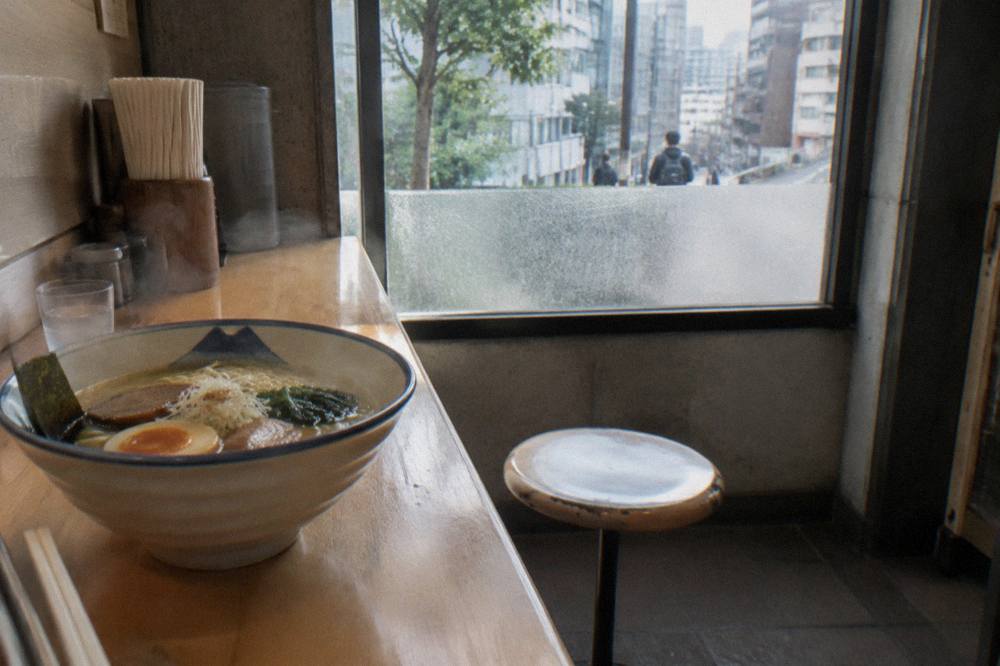
The star counts matter less for a budget question than the tier beneath them. Bib Gourmand is Michelin's marker for establishments serving good quality food at moderate prices, and in Tokyo 2026 it covers 114 addresses ranging from ramen counters to creative dessert courses. A separate analysis of the ramen entries by the Japanese guide site xn--e-3e2b.com counted exactly 16 Bib Gourmand ramen shops in the 2026 edition and no starred ramen at all, which tells you something useful: in Tokyo the cheapest guide-listed meals are frequently noodle soups, and none of them carry a star.
The wider selection, the 252 restaurants Michelin lists as Selected without a star or Bib label, is also fair game for a budget eater. These are kitchens the inspectors considered worth listing, and many are moderate neighbourhood places rather than splurge destinations. The guide's own numbers page is the primary source for all of this, and it is where the counts in the table below come from.
| Tier | Restaurants in Tokyo 2026 | What it means for a budget diner |
|---|---|---|
| Three stars | 12 | Exceptional cooking, typically very expensive, booked months ahead |
| Two stars | 26 | Excellent cooking, usually expensive at dinner |
| One star | 122 | High quality, lunch is often the affordable entry point |
| Bib Gourmand | 114 | Good food at moderate prices, the cheapest guide-listed tier |
| Selected | 252 | Worth a visit, many moderate neighbourhood kitchens |
| Green star | 13 | Sustainability recognition, sits alongside other tiers |
For context on scale, our sibling guide to Michelin star restaurants in Tokyo walks through the starred tiers in more depth, while this article stays on the money question. The short version: if your goal is a guide-listed meal under dinner prices, aim one tier down from the stars and aim at the lunch slot.
Why Lunch Is The Cheapest Route To A Starred Meal
Lunch tasting menus at Michelin-starred Tokyo restaurants typically cost a fraction of the same establishment's dinner omakase, and the kitchen, the chef and the ingredients are largely the same. This is the single most reliable money-saving mechanic in Tokyo fine dining, and it needs no insider contact, only a booking made at the right time of day.
The pattern is consistent enough that multiple guides state it plainly. Japan Activity's Tokyo dining guide calls lunch the more accessible way to try a starred kitchen on a tighter budget, and the same lunch-versus-dinner gap shows up across tempura, sushi and teppanyaki counters citywide. Guide2Japan, writing on wagyu dining, reports that lunch courses at premium Tokyo venues are frequently around half the price of the equivalent dinner course using the same ingredients and the same chef. The saving is structural, not a discount.
Lunch also solves the booking problem. Dinner slots at popular counters disappear fastest, and availability compresses further during cherry blossom season in late March and early April and autumn foliage season from mid-October to late November, a pattern the booking guide STAYGO describes for Tokyo omakase counters. Lunch services get less demand from both locals and visitors, which means a table booked a few weeks out rather than two months, at a price that is typically far below dinner.
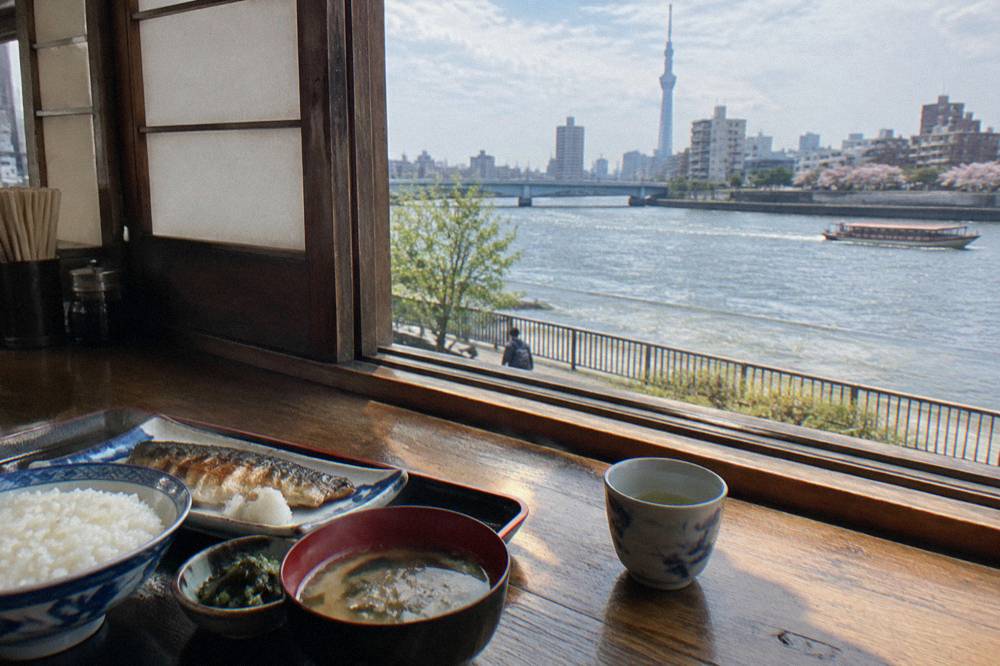
One habit worth borrowing from the set-meal tradition: a teishoku tray arrives with rice, soup, a main and sides all at once, and japanmanners.com, a Japanese dining etiquette guide, notes diners are expected to move between the components rather than finish each one in sequence. Lunch at mid-range and guide-listed places often takes this form, which is part of why it stays cheap: fixed components, fixed price, fast table turnover.
If you want the sensory experience of a high-end counter without the starred-counter bill, the Omakase Sushi and A5 Wagyu tour is one structured way in. It runs three hours with a maximum of eight travellers, includes a meal and drinks, rates 4.72 across 329 reviews, and costs from $130.73 per person, with free cancellation. That is less than many single dinner omakase seats in Ginza, and it bundles the premium ingredients into a guided format.
How Booking Works, And What Cancelling Costs
Starred restaurant bookings in Tokyo should typically be made one to two months ahead, and the practical routes are online booking services, a hotel concierge or the guide's official reservation partner. Cancellations are expensive: high-end and omakase restaurants typically charge 30 to 50 percent of the course price for cancelling a few days ahead, rising to 100 percent for same-day cancellations and no-shows.
The timing rule comes with a caveat. The one-to-two-month window is what travel guides and booking services report as typical practice for the most sought-after counters, not a rule Michelin states as its own advice, so treat it as a planning norm rather than a guarantee. Some counters release seats in staggered rounds, and STAYGO notes that at certain venues each account can book only once every two months, with lunch slots sometimes appearing later even if they are absent on the initial release day. More of these guides are collected on Best Restaurants Tokyo.
Payment and cancellation are where budget planning matters. The booking platform OMAKASE, which serves as the official Michelin Guide reservation partner for Tokyo, Kyoto and Osaka, requires registration with an SMS-capable mobile number and a credit card, and the SHOKU NOREN reservation guide describes timed release drops often preceded by raffles that give winners priority. Multilingual Tabelog and TableCheck are the other English-friendly routes, and each carries its own per-person booking fee that is separate from the meal and generally not refunded if you cancel for your own reasons. Booking fees move, so check the live listing before you commit. If you're still weighing whether Tokyo beats Osaka or Kyoto for serious eating, our breakdown of Japan's food capital debate compares the three cities on stars, rankings and sheer dining depth.
| Route | Typical notice needed | Cancellation exposure |
|---|---|---|
| Hotel concierge | 1 to 2 months for top counters | Hotel policy, meal charge may apply |
| OMAKASE platform | Seats often released 2 months ahead | Per-restaurant card charge, fee per seat |
| Multilingual Tabelog | Varies by restaurant | Per-person fee generally non-refundable |
| TableCheck | Varies, card hold common | Card charged per policy |
| Walk-in lunch counters | Same day | None, but availability is chance |
For a deeper treatment of the mechanics, our existing blog post on how to make restaurant reservations in Japan covers concierge routes and platform fees in detail. The budget takeaway here is simpler: never book a starred counter you might cancel, because the cancellation cost can exceed the entire cost of a cheaper alternative meal.
Lower-Priced Bookable Alternatives Without A Star Claim
None of the restaurants on this site carry a Michelin star claim, and we make no such claim for them. What they offer is the same mechanic that makes starred lunches cheap, a modest set price at a well-reviewed counter, without the booking lead time or cancellation exposure. The six below are lower-priced bookable alternatives, each with a Google rating of 4.6 or higher and 300 or more reviews. Before you settle on a counter, our guide to Tokyo's competing restaurant rankings explains why Michelin, Tabelog, and Google reviewers so often disagree.
The restaurants on this site include all six. Our own guide, The Tokyo Food List, costs $9 and covers 980+ restaurants, with every entry showing its Google rating, price range, what to order and how hard a table is to secure. Google listings price two of these as inexpensive and four as moderate or above, and all six carry the booking recommended label, so reserve ahead instead of arriving on the off chance.
| Restaurant | Area | Google rating | Reviews | Price level | Booking label |
|---|---|---|---|---|---|
| Sushi Tooden Ninoya Shinbashishiodomemise | Minato, Shinbashi | 4.8 | 644 | inexpensive | booking recommended |
| Satoumisatoyama Tempura | Shinjuku | 4.8 | 504 | inexpensive | booking recommended |
| Sushi Gen Akasaka | Minato, Akasaka | 4.8 | 614 | moderate | booking recommended |
| Sushi Teppen Shibuya | Shibuya | 5.0 | 618 | moderate | booking recommended |
| Shinjuku Sushi Hatsume | Shinjuku | 4.9 | 2,487 | moderate | booking recommended |
| Tempura Miyashiro | Meguro | 4.6 | 305 | expensive | booking recommended |
The two inexpensive entries are the budget story. Sushi Tooden Ninoya in Shinbashi, listed on its own page, serves eel and radish dishes in a neighbourhood that tends to draw a local crowd, and Google listings show 4.8 across 644 reviews. Satoumisatoyama Tempura in Shinjuku, on its own site, turns out tendon, kakiage and even tempura ice cream, at 4.8 across 504 reviews. An inexpensive tempura set in Shinjuku and an inexpensive eel meal in Shinbashi are precisely the meal formats that cost multiples more under a starred roof.
The moderate sushi counters fill the gap between those and a starred omakase. Shinjuku Sushi Hatsume holds 4.9 on Google across 2,487 reviews and lists omakase among its order tags, and Sushi Teppen Shibuya sits at a perfect 5.0 across 618 reviews with omakase, negitoro and sea urchin among its dishes. Sushi Gen Akasaka, at 4.8 across 614 reviews, lists Pacific bluefin tuna and maki. None of these is a starred meal, and none should be booked as one, but each delivers the counter-sushi format at a fraction of a Ginza omakase price.
For a hands-on alternative that sits below every restaurant bill in this section, the Sushi Class with Unlimited Sake in Asakusa teaches you to make the meal yourself. It runs 90 minutes, includes a meal and drinks, costs from $44.93 per person, and rates 4.94 across 206 reviews, with free cancellation and no stated group cap.
What A Budget-Focused Tokyo Eating Strategy Looks Like
A realistic cheap-but-excellent Tokyo plan layers three tiers: Bib Gourmand counters and standing shops for most meals, one starred lunch as the single splurge, and inexpensive well-reviewed counters like the six above for the rest. Booking effort goes only to the starred lunch and the two or three restaurants labelled booking recommended, while everything else stays walk-in.
The arithmetic favours this shape. A 2026 price analysis by Japan Ramen Guide found that 33 percent of sampled Tokyo ramen shops offer bowls under 1,000 yen, with the majority in the 1,000 to 1,999 yen band, and the national average price of a bowl of chuka soba reached 750 yen in September 2026, according to market data reported by jpmarket-conditions.com. Standing soba shops near stations complete meals in minutes at chain prices that tripguide.tokyo, a local budget guide, documents in detail. Against that baseline, one starred lunch and a handful of moderate counter dinners still leave most days cheap.
Timing tricks stretch the budget further. Dine-in meals carry 10 percent consumption tax while identical takeaway is taxed at 8 percent, a differential NHK WORLD-JAPAN reports will widen further for takeout from April 2027, so the same gyudon at a chain counter costs less to take away than to eat in, as tripguide.tokyo shows with chain menu prices. Tipping, for the record, is not customary anywhere in the chain, and hinomaru.one's Tokyo travel guide notes staff may return money left behind, so the printed price is the full price.
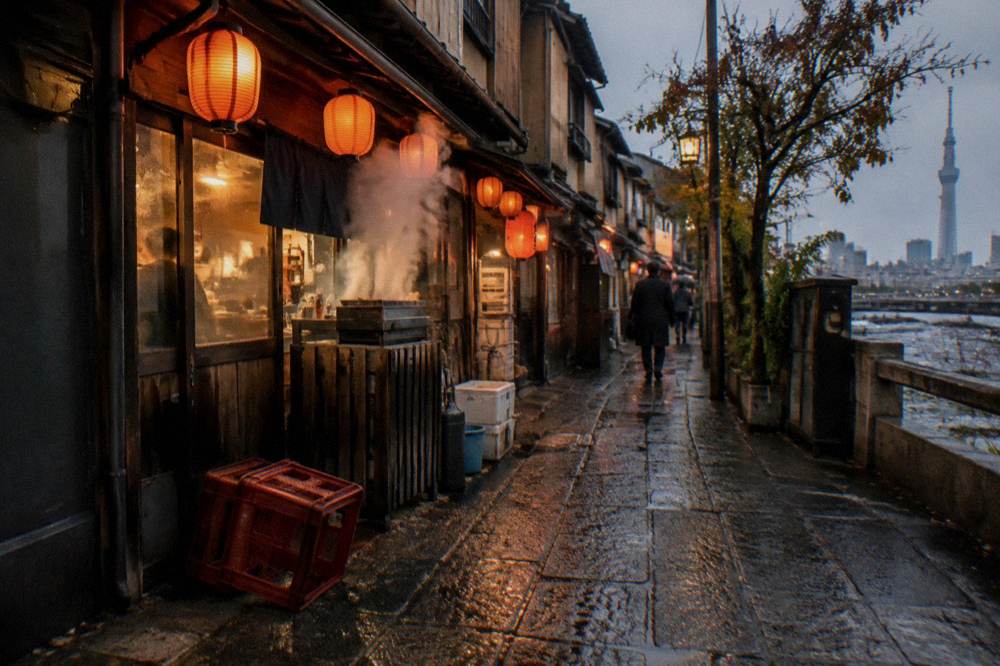
For choosing between neighbourhoods, the restaurants above already sketch a route: Shinbashi and Shinjuku for the inexpensive counters, Shibuya and Akasaka for moderate sushi. Want a fuller map of where each cuisine concentrates? Our guide to what to eat in Tokyo and the piece on a typical sushi dinner price in Tokyo cover the ground cuisine by cuisine. The Tokyo Food List also maps what sits within a 10-minute walk of any spot you are considering, the fastest way to keep a cheap plan cheap rather than trekking across the city for one bowl.
A guided market morning slots neatly into the front of such a day. The Tsukiji Market walk with five tastings runs three hours with up to 20 travellers, includes a meal, rates 4.9 across 3,868 reviews and costs from $97.17 per person, with free cancellation. It is a sampling tour rather than a starred meal, but it anchors a day in the market lanes where many of the city's cheapest good meals begin.
So the cheapest Michelin-star meal in Tokyo is less a single address than a matter of timing and level. Go at lunch. At many sushi counters the midday omakase or lunch set typically costs far less than dinner, and Japan Brand Collection, in collaboration with japan-guide.com, notes the same gap at one Ginza counter. Round out the week with Bib Gourmand picks and modest counters. The Google booking and crowd labels on our 100 picks tell you more than any star count, and a single dinner at a two-star counter can easily cost more than a whole week built this way.
Common Questions About Cheap Michelin Dining In Tokyo
What Is The Cheapest Michelin Star Restaurant In Tokyo?
There is no official cheapest starred restaurant. Michelin publishes no price ranking, so any single name given online is a reported claim. The verified route to a cheap starred meal is the lunch service, which typically costs a fraction of dinner at the same kitchen, or the 114 Bib Gourmand addresses in the 2026 guide.
How Many Starred Restaurants Does The Tokyo 2026 Guide List?
The 2026 edition lists 160 starred restaurants: 12 three-star, 26 two-star and 122 one-star, alongside 114 Bib Gourmand entries and 252 Selected restaurants, for a total selection of 526.
How Far Ahead Should I Book A Starred Restaurant In Tokyo?
Typically one to two months ahead for the most sought-after counters, with seats released on a set schedule and some platforms running timed drops and raffles. Lunch slots are easier to catch than dinner and often appear later in the release cycle.
What Happens If I Cancel A Starred Restaurant Booking?
High-end and omakase restaurants typically charge 30 to 50 percent of the course price for cancellations a few days ahead, rising to 100 percent for same-day cancellations and no-shows. Platform booking fees are generally non-refundable even earlier.
Is Bib Gourmand Cheaper Than A Starred Meal?
Yes, that is its purpose. Bib Gourmand marks good food at moderate prices, and the 2026 Tokyo list spans 37 categories including 16 ramen shops. Many Bib meals cost less than a single course at a starred dinner.
Can I Eat Well In Tokyo Without Any Bookings?
Yes. Among our 100 picks, 45 are labelled usually walk-in are labelled usually walk-in, concentrated in ramen, udon and standing formats. Reserve the starred lunch and the booking-recommended counters, and leave the rest open.