What Is The Number One Restaurant In Tokyo?
Why Tokyo's rankings disagree, what Michelin, Tabelog and Google reviewers each reward, and how to pick the right restaurant for your own night.
There is no single number one restaurant in Tokyo, because the major rankings measure different things and never agree. The 2026 Michelin Guide Tokyo lists 160 starred restaurants, Asia's 50 Best ranks the city's high-concept dining rooms, and Google reviewers score neighbourhood counters most people have never heard of. A sushi counter in Azabu with a 4.8 Google rating and booking usually required tops none of those lists, yet for many diners it is the best night out in the city. When the rankings disagree this much, a single trusted appetite can cut through the noise, and the Tokyo counters where Anthony Bourdain was filmed eating still works as a shortlist.
The honest answer is that "number one" depends on which scoreboard you trust, and each scoreboard has a bias built in. Michelin's inspectors reward refinement and consistency. Tabelog's users, mostly Japanese regulars, reward technique and value at a level of detail tourists rarely see. Google's ratings reward broad satisfaction across huge review pools, which favours friendly, walk-in-friendly places over ticket-only counters. Asia's 50 Best rewards ambition and votes from industry panels.
This article walks through what each system actually measures, shows the highest-rated restaurants by Google score among the restaurants on this site, and helps you decide which "number one" fits your own night. Along the way it draws on our own guide, The Tokyo Food List, which sorts 980+ Tokyo restaurants by Google rating, price range and reservation difficulty so you can weigh these trade-offs yourself for $9.
What Is The Number One Restaurant In Tokyo?
No ranking crowns a single champion, and the strongest candidates differ by system: Michelin's 2026 Tokyo guide lists 12 three-star restaurants, Tabelog's top Tokyo score sits near 4.68, and among the restaurants on this site the highest Google ratings, 4.9, belong to a Shibuya wagyu counter, a Shinjuku sushi bar and a Ginza yakitori shop. Each answer is true on its own terms. The question is which terms match your appetite, your budget and your booking window tonight.
Start with the spread. A 4.9 on Google across 3,829 reviews at Kobe Beef Dia Shibuya 1st store, a moderate booking-recommended counter, tells you thousands of diners left happy. Sushi Yuu in Minato, by contrast, holds 4.8 across only 504 reviews, is expensive, and the Food List labels it booking usually required with a local crowd. Both are excellent by the evidence available. Neither is "the" number one, and any article that crowns one is quietly choosing a scoreboard for you.
The practical move is to treat rankings as filters rather than verdicts. Decide first whether tonight is a splurge, a quick bowl, or a group celebration, then let the matching ranking shortlist the candidates. The rest of this article shows what each ranking is actually good for, and where each one misleads.
Why Tokyo Rankings Disagree So Much
Tokyo's rankings disagree because they measure different diners' experiences: Michelin uses trained inspector visits, Tabelog aggregates a mostly domestic user base scoring on technique and value, Asia's 50 Best collects votes from chefs and restaurant industry panels, and Google reflects anyone who bothered to review, heavily weighted toward visitors. A restaurant can dominate one list and be invisible on the others, and in Tokyo it usually is. If the lists can't agree on a single top restaurant, the bigger fight over which city is Japan's real food capital is even harder to settle.
Consider what each system cannot see. Michelin inspectors dine anonymously and pay for their meals, which suits formal, consistent kitchens and systematically under-rewards tiny counters with irregular access. Tabelog's review pool skews Japanese and urban, so its top ranks fill with specialist shops regulars return to for years. Google, with the widest net, rewards approachability: English-friendly service, easy entry, consistent food. The 4.9-rated Age.3×Q HARAJUKU, a dessert shop selling creme brulee and fruit sandwiches, usually walk-in, scores higher on Google than almost every formal restaurant in the city, which tells you Google measures delight, not hierarchy. If you are still working out where to eat in Tokyo, The Tokyo Food List lays out 980+ restaurants with what to order and Google Maps pins.
The disagreement is not a flaw in the data; it is the data. Tokyo is vast enough, with the world's largest concentration of Michelin-starred kitchens, that no single methodology can rank it honestly. When a guide, an app and a review platform each hand you a different number one, they are describing three different versions of a perfect evening.
| Ranking system | Who votes or inspects | What it rewards | Where it misleads |
|---|---|---|---|
| Michelin Guide Tokyo 2026 | Trained anonymous inspectors | Refinement, consistency, ingredient quality | Small counters with limited access often missed |
| Tabelog | Mostly Japanese user reviews | Technique, specialisation, value | Language and booking barriers for visitors |
| Asia's 50 Best 2026 | Chef and industry panel votes | Ambition, creativity, profile | Popularity and publicity play a role |
| Google ratings | Anyone who reviews, visitors included | Broad satisfaction, ease, approachability | Small review pools and tourist volume skew scores |
What The Michelin Guide Tokyo Actually Rewards
The 2026 Michelin Guide Tokyo rewards depth as much as rarity: across a 526-restaurant selection, 160 venues hold stars, with 12 at three stars, 26 at two, and 122 at one. Its 114 Bib Gourmand picks reward value, so recognition spans everything from top-tier dining to affordable standouts. Michelin rewards consistency and refinement above all, so its Tokyo top tier is heavy on kaiseki, sushi and French-influenced kitchens, and light on the yakitori alleys and standing bars many travellers remember most fondly. Booking for the most sought-after starred counters typically opens one to two months ahead.
The Michelin route has real costs beyond the bill. Cancellation terms at high-end counters commonly run 30 to 50 percent of the course price a few days out, and 100 percent for same-day cancellations, so a starred booking is a commitment, not a casual plan. Several booking routes exist for visitors, including hotel concierges and English-friendly platforms, though some famous counters remain phone-only. Our sibling guide to Michelin-starred restaurants in Tokyo covers those booking mechanics in detail.
Michelin also punishes inaccessibility in a way Google does not. The guide's own Tokyo 2026 edition is the 19th consecutive year the city has led the world in starred restaurants, yet plenty of superb rooms appear nowhere in it simply because they do not fit the inspection model. Treat the stars as a floor of quality, not a ceiling: among the restaurants on this site, Sushi Yuu in Azabu holds 4.8 on Google across 504 reviews and a local crowd label, exactly the kind of room that outperforms its lack of accolades. For a deeper look at that counter-first style, see the guide to omakase dining in Tokyo.
What Tabelog And Asia's 50 Best Measure Instead
Tabelog ranks restaurants by user scores from a mostly Japanese review base, and its Tokyo top entries sit around the high-4.6 mark, territory where fractions of a point separate hundreds of specialist shops; Asia's 50 Best 2026 includes seven Tokyo restaurants, with Sézanne ranked highest at No. 16. Neither list measures what Google measures, and neither should be read as a popularity contest. Tabelog is a connoisseur's index; the 50 Best is an industry poll.
Tabelog's strength is depth. Its reviewers score food heavily and service lightly compared with Western platforms, so a nine-seat ramen counter with flawless broth can outrank a flawless hotel dining room. Its weakness for travellers is practical: many of its top shops require Japanese-language booking, and the site's booking arm typically charges a per-person fee. Fukumimi Ginza 1, a yakitori shop in our records at 4.9 on Google across 1,865 reviews, inexpensive and labelled booking recommended, illustrates the gap: on Google it out-scores nearly every luxury room in the city, a reminder that a high traveller-facing rating and a coveted domestic ranking are different things.
Asia's 50 Best works differently again. Votes come from a panel of chefs, restaurateurs and writers across the region, which rewards restaurants with international profile and press attention. It is a list of destinations, not neighbourhoods. If your perfect Tokyo night is a celebrated tasting menu with an English-speaking room, it serves you well; if it is chub mackerel and potato salad at a Ginza yakitori counter, it will not point you there. For that kind of night, our own guide, The Tokyo Food List, sorts its 980+ records by neighbourhood and Google rating, so you can find the highly reviewed places the panel votes never reach.
The Google Rating View: Highest Scores Among Our Records
Among the restaurants on this site, the highest Google ratings all sit at 4.9, and they include a Shibuya wagyu counter with 3,829 reviews, a Shinjuku halal wagyu ramen shop, a Harajuku dessert spot, and two sushi and yakitori counters; the table below shows the top ten by rating among restaurants with at least 1,000 reviews. This is a satisfaction view, not a ranking of quality, and small review pools can produce scores no formal guide would confirm.
The pattern in the table is striking: inexpensive and moderate shops dominate. Seven of the ten are inexpensive, three moderate, and none expensive. Google's pool rewards places anyone can walk into or book without ceremony, which is precisely why this view and the Michelin view point at completely different restaurants.
| Restaurant | Google rating | Reviews | Price level | Booking label |
|---|---|---|---|---|
| Kobe Beef Dia Shibuya 1st store | 4.9 | 3,829 | moderate | booking recommended |
| Shinjuku-tei Yotsuya Halal Wagyu Ramen | 4.9 | 3,552 | inexpensive | booking recommended |
| Fukumimi Hanare | 4.9 | 2,688 | moderate | booking recommended |
| Age.3×Q HARAJUKU | 4.9 | 2,650 | inexpensive | usually walk-in |
| Shinjuku Sushi Hatsume | 4.9 | 2,487 | moderate | booking recommended |
| Fukumimi Ginza 1 | 4.9 | 1,865 | inexpensive | booking recommended |
| Honolu's Wagyu Udon & Ramen Halal Asakusa | 4.9 | 1,555 | inexpensive | usually walk-in |
| Kushikatsu Tanaka Higashi-Ginza Store | 4.8 | 4,494 | inexpensive | booking recommended |
Read that list carefully and two honest caveats appear. First, ratings this high with thousands of reviews signal reliably good experiences, not transcendent ones; a 4.9 across 2,650 dessert reviews and a 4.8 across 504 omakase reviews at Sushi Yuu are different kinds of evidence, and the smaller pool carries more uncertainty. Second, price level matters: Shinjuku Sushi Hatsume at 4.9 across 2,487 reviews is moderate with booking recommended, an entirely different proposition from an expensive, booking-usually-required counter. The Tokyo Food List exists exactly for this comparison, sorting 980+ restaurants by Google rating, price range and reservation difficulty with what-to-order notes and map pins.
How To Choose Your Own Number One In Tokyo
Choose by occasion, not by crown: for a once-per-trip splurge use Michelin and Tabelog shortlists and book one to two months ahead; for a satisfying, low-risk night use the Google view and favour 4.8-plus rooms with 1,000 or more reviews; for a group or a first night, favour booking-recommended counters over walk-in queues. The best restaurant in Tokyo is a function of your budget, your group and your booking window, in that order.
A few concrete pairings from the records above make the method plain. If tonight is the splurge, Matsue Ebisu Head Store in Shibuya, 4.8 on Google across 1,632 reviews, expensive, omakase with sea urchin and toro, booking usually required, is a strong candidate, and its own site lists the details. If tonight is casual but still special, Shinjuku Sushi Hatsume at 4.9 across 2,487 reviews, moderate and booking recommended, delivers an omakase-style sushi night without the starred-restaurant logistics. If tonight is a walk-and-eat evening, Fukumimi Ginza 1 pairs yakitori with potato salad and fried onion at an inexpensive price level, booking recommended, in a neighbourhood built for wandering.
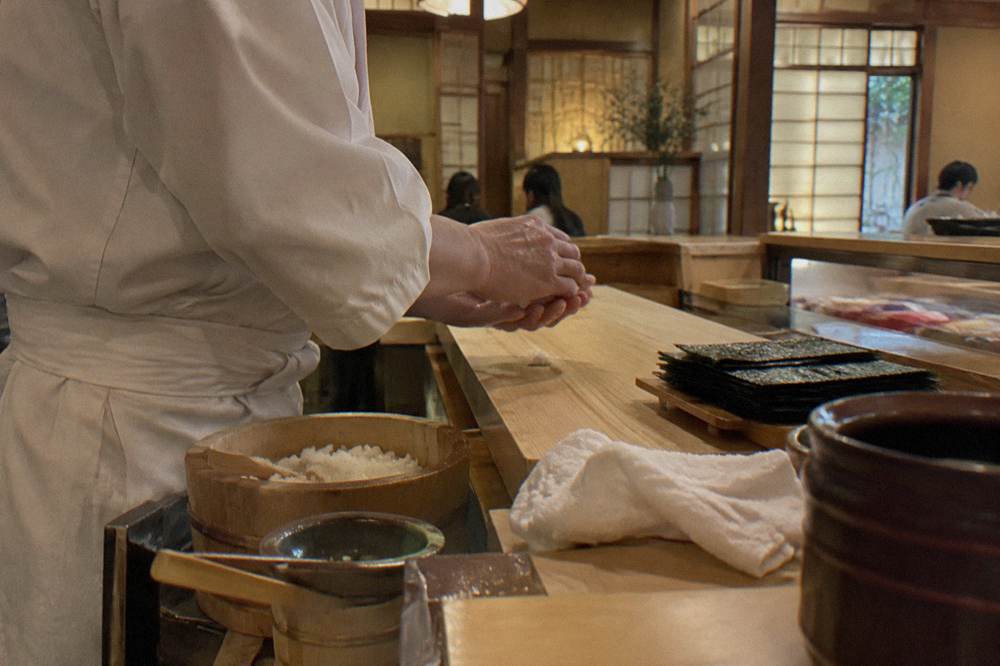
One way to sample the styles before committing to a booking is a guided tasting. The Omakase Sushi and A5 Wagyu premium food tour runs three hours, caps groups at eight, includes a full meal with drinks, and costs from $130.73 per person, rated 4.72 across 329 reviews with free cancellation. It sits at the same price level as a moderate counter meal, which makes it a reasonable rehearsal for deciding whether counter sushi or wagyu grilling is your personal number one.
A cheaper rehearsal still is a hands-on class. The Asakusa sushi-making class with matcha and unlimited sake runs 90 minutes from $44.93 per person, rated 4.94 across 206 reviews, with a meal and drinks included and free cancellation. The review pool is small, so treat the score as promising rather than proven, but as an introduction to what makes Tokyo's counters tick, it is hard to beat the price.
Booking mechanics should shape the choice as much as the food. Rooms labelled booking usually required, like Sushi Yuu or Matsue Ebisu Head Store, demand planning and carry real cancellation exposure. Rooms labelled usually walk-in, like Age.3 ASAKUSA, trade certainty of seat for certainty of queue. Neither is a better answer; they are different answers to the same evening, and pretending one universal number one exists hides that trade-off.
Before you book anything, remember the site you are reading: Best Restaurants Tokyo maintains its 100 picks alongside the full 980+ Food List, and the ratings and booking labels here come from Google listings collected in October 2026, not a listicle frozen years ago.
One Night, Several Winners
Tokyo has no single number one restaurant, and that is the useful answer: the Michelin 2026 guide points to formal excellence across 160 starred rooms, Tabelog points to specialist counters beloved by local regulars, and Google points to rooms like Fukumimi Ginza 1 and Shinjuku Sushi Hatsume, where thousands of diners left 4.9-star happy. Pick the scoreboard that matches your night, then pick the room; treating the four lists as one shortlist of winners beats trusting any one of them. If Michelin-level food fits the plan but the price does not, how to eat cheaply at Tokyo's Michelin-starred restaurants explains why lunch is the smartest way in.
Each of the four views is checkable directly. Michelin's official edition page carries the full 526-restaurant selection. Tabelog's Tokyo ranking page shows how fine the margins are at the top. The Japan Times reported seven Tokyo entries in Asia's 50 Best 2026, a third scoreboard again. Whichever you lean on, the booking labels and price bands in the records above are what turn a list into a reservation you will actually enjoy.
Common Questions About The Number One Restaurant In Tokyo
What is the number one restaurant in Tokyo?
There is no single answer. Michelin's 2026 Tokyo guide lists 12 three-star restaurants, Tabelog's top user scores sit in the high 4.6 range, and among the restaurants on this site the highest Google ratings, all 4.9, belong to a wagyu counter, a ramen shop, a dessert shop and several sushi and yakitori counters. Each ranking measures something different, so the number one depends on which measure fits your night.
Does Tokyo have the most Michelin stars of any city?
Yes. Tokyo has held the world's largest count of Michelin-starred restaurants for 19 consecutive guide editions, and the 2026 guide lists 160 starred restaurants: 12 three-star, 26 two-star and 122 one-star.
Why is Sushi Yuu not on the Michelin list?
Not being listed is not evidence of a deficiency. Michelin's inspection model suits formal, consistently bookable kitchens, and many small counters with strong Google scores, like Sushi Yuu at 4.8 across 504 reviews with booking usually required, operate at a scale and access level the guide rarely captures.
Can a cheap restaurant really beat an expensive one?
On Google's satisfaction measure, yes. Among the restaurants on this site with at least 1,000 reviews on Google, seven of the ten highest-rated are inexpensive, including a dessert shop and a ramen counter. That measures broad diner happiness, not the refinement a starred inspection rewards, so it answers a different question rather than a better one.
How far ahead should I book Tokyo's top restaurants?
For the most sought-after counters, seats typically open on a set schedule one to two months ahead, and availability disappears quickly. Rooms labelled booking usually required, such as Matsue Ebisu Head Store and Sushi Yuu, warrant the earliest planning; rooms labelled usually walk-in trade booking for queuing.