Cheap Eats In Tokyo: Full Meals At Walk-In Counters And Where To Find Them
Tokyo's cheapest full meals sit at walk-in counters: ramen shops with ticket machines, soba stands, katsudon counters and dessert cafes, all labelled inexpensive on the Food List.
Short answer
Among the 100 restaurants curated on this site, 43 carry the inexpensive price label and 45 are usually walk-in, and the overlap is where cheap eating happens: ramen, udon, soba, tempura, dessert and even sushi counters with no booking needed. This guide explains the mechanics, ticket machines, tax split and charges, then lists every qualifying record.
Tokyo's cheap-eating infrastructure is not hidden, but it runs on unwritten mechanics. Of the 100 restaurants curated on this site, 43 carry the Food List's inexpensive price label, and 45 are labelled usually walk-in. The overlap between those two labels is where a full meal without a reservation lives: ramen counters with ticket machines by the door, standing soba shops near stations, katsudon counters in Akasaka and tempura tendon lines in Nihonbashi. This guide maps all of it, from the machine at the entrance to the tax difference between eating in and taking away.
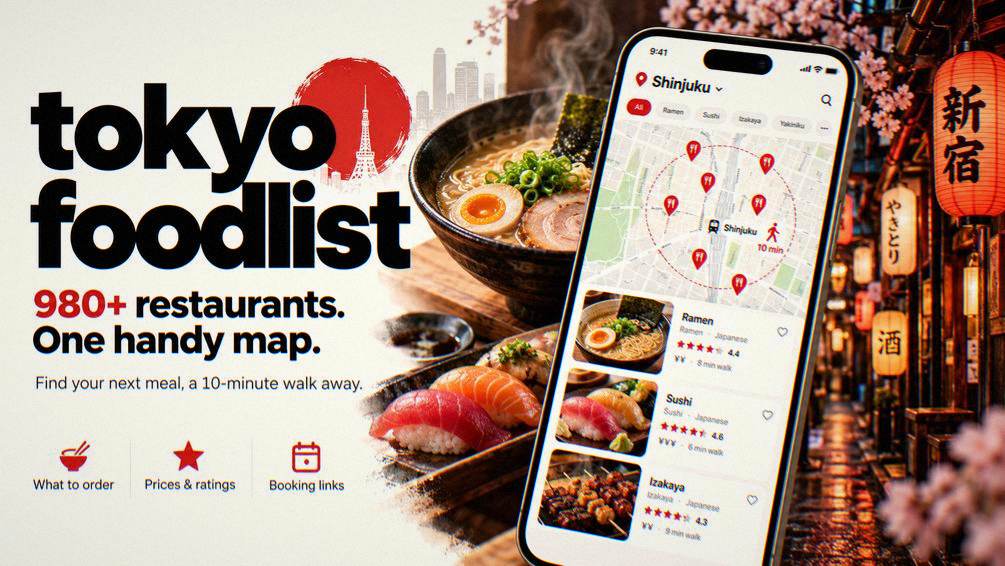
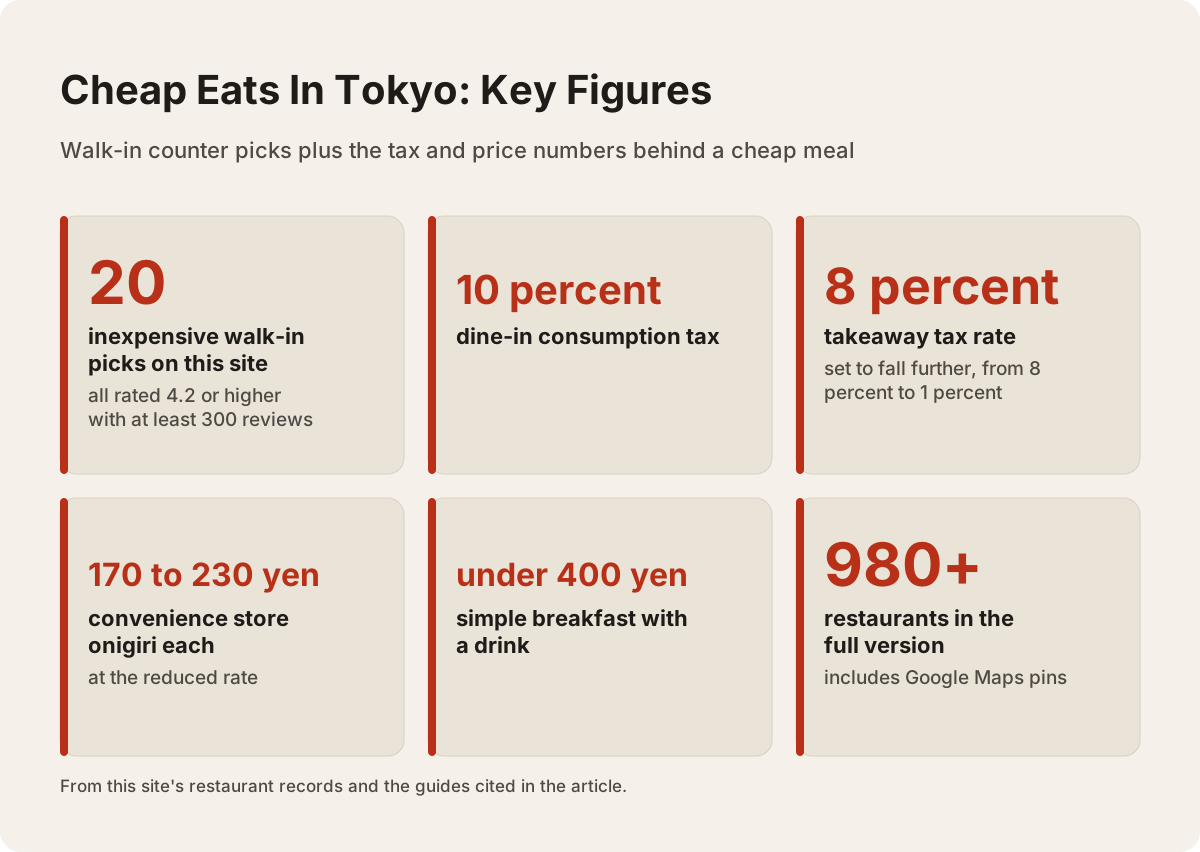
Cheap here has a strict definition. A restaurant qualifies only when its Google listing shows an inexpensive price level and a usually walk-in booking label. That filter leaves 20 restaurants across ramen, udon, soba, tempura, tonkatsu, sushi, izakaya, coffee and dessert, every one rated 4.2 or higher on Google with at least 300 reviews. If you want the full 980+ restaurant version with Google Maps pins, what to order at each one and a map of what sits within a 10-minute walk, our own guide, The Tokyo Food List, sorts all of it by price range and neighbourhood on a phone screen. If sushi is where you'd rather spend a bit more, our guide to sushi dinner prices in Tokyo walks up the ladder from standing bars to omakase counters, including whether lunch beats dinner on value.
Where To Find Cheap Eats In Tokyo
Cheap eats in Tokyo concentrate in three places: train stations, market districts and youth shopping areas. Among the 20 inexpensive walk-in picks on this site, ramen dominates with seven entries, followed by udon, tempura, sushi, tonkatsu and dessert with two each, and the wards they sit in are Taito, Chiyoda, Shibuya, Chuo, Minato, Shinjuku and Bunkyo. None needs a booking.
Stations and their side streets carry the standing soba shops and gyudon chains that Tokyo office workers use daily. Market districts, Tsukiji in Chuo and Asakusa in Taito, hold the oyster ramen and tendon counters. Youth shopping areas, Shibuya and Harajuku, hold the dessert cafes and the experimental ramen shops. The geography matters because cheap Tokyo is a walking city: Ramen Oyster And Shell sits in Tsukiji, Tencha in Asakusa, and both are usually walk-in, but they are half a city apart. If you want a sit-down step up from counter noodles without leaving the same neighborhoods, the guide to Ginza and Asakusa's polished counters and old-Tokyo favorites covers the options within walking distance of these sights.
The crowd labels tell you what to expect at the counter itself. Thirteen of the 20 records carry a mixed crowd label, four are labelled local, and three, Sushi Mon Shinjuku, the halal ramen shops in Asakusa and Honolu's in Taito, tend to draw visitors. A local crowd at a counter usually means faster turnover and a menu that assumes you know the drill, which the next section decodes. Eating on a budget gets easier when The Tokyo Food List sorts restaurants by price range alongside Google ratings.
How Ticket Machines Work At Tokyo Counters
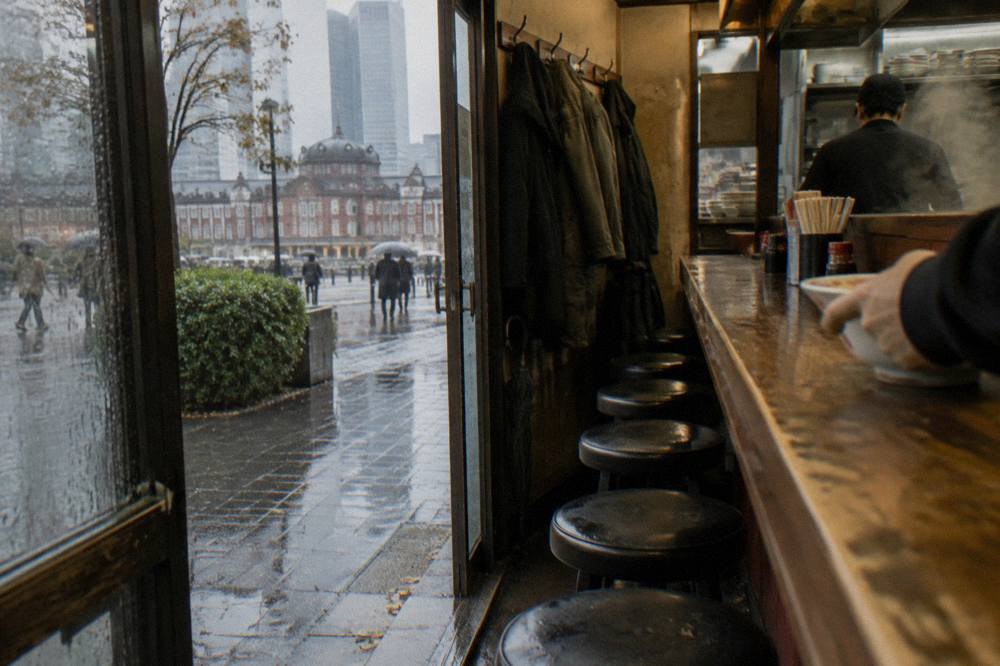
At most Tokyo ramen shops you buy a meal ticket from a vending machine by the entrance, hand it to staff when seated, and eat fast because turnover is quick. The machine takes cash, and increasingly IC cards. Touch-panel machines with an English toggle and photos are now common at tourist-facing shops, which removes the old language barrier entirely.
The mechanics are simple once you have seen them once. Money goes in first, the buttons light up, you press your choice and a small paper ticket drops into the tray. You hand that ticket over when a seat frees up. Ichiran, the tonkotsu chain, runs the whole flow this way: a machine at the entrance, then solo booths with a written order sheet for customising broth richness, garlic and noodle firmness, as its official system page explains. The sheets come in English at most branches.
Machines are also where the cash habit bites. Many small ramen shops and counters remain cash-only or cash plus IC card, while others take cards, and there is no uniform policy, so coins in your pocket are still the cheapest-eats essential. A 2026 survey of Tokyo ramen shop users reported by FOOD FUN found that 73.8 percent of cash payers would prefer cashless payment if every option were available, which tells you the machines are catching up, just not evenly.
One more machine-era habit: do not linger. Counter seats exist to be turned over. Finish, stack your bowl neatly, and go. Some popular shops have moved past queuing altogether and issue same-day numbered tickets from the morning, a pattern reported at 2026 Bib Gourmand ramen shops, so check the door before joining a line that may not be a line.
Why Teishoku Set Lunches Fill You Up For Less
A teishoku is a set meal served all at once on a tray: rice, soup, a main and sides. Japan Manners describes the eating style as moving between components, a bite of main, a bite of rice, a sip of soup, rather than finishing each dish in sequence. Lunch is where the format is cheapest, and it is typically far cheaper than dinner at the same counter.
The set meal is the structural answer to eating cheaply without cooking. Everything arrives together, portions are fixed, and the price reflects a kitchen cooking in volume. Tokyo's lunch economy runs on it: office districts fill with teishoku counters at noon and empty by two. Japan Brand Collection, in collaboration with japan-guide.com, lists one Ginza sushi counter where lunch ran roughly 9,000 yen against roughly 20,000 yen at dinner; the sushi case is extreme, but the direction holds everywhere, lunch is the cheap seat at the same table.
Washoku, the underlying cuisine, is built on the same balance. GO TOKYO's Gourmet pages describe ichiju-sansai, one soup and three dishes plus rice, as the foundation, which is exactly the teishoku tray. When you order katsudon at Happiness is KATSUDON Akasaka, 4.8 on Google across 1,541 reviews and usually walk-in, you are eating the format at its most direct: rice, cutlet, egg, pickles, done.
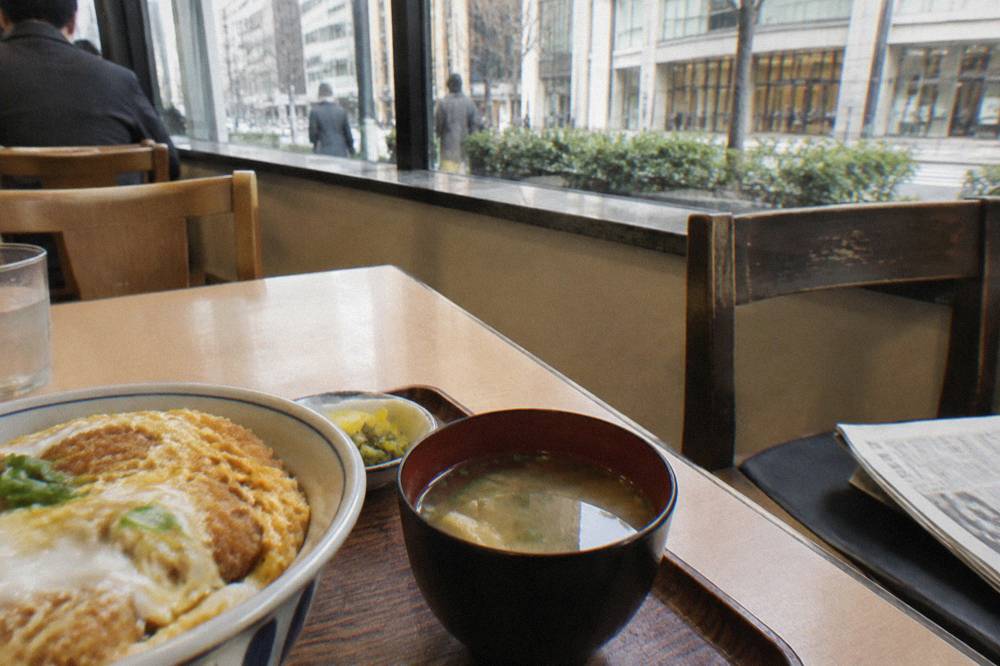
The same logic applies to tendon, the tempura rice bowl. Tencha in Asakusa, 4.8 on Google across 436 reviews, inexpensive and usually walk-in, lists kakiage and tendon mabushi gozen among its order tags. Tempura Kaneko Hannosuke Nihonbashi, 4.2 across 2,625 reviews with the same labels, is the queue-around-the-block version of the same dish. Both hand you a complete meal in the teishoku shape without a reservation.
Dine-In Or Takeaway: How The Tax Split Works
Dine-in meals in Japan carry 10 percent consumption tax while identical takeaway food is taxed at 8 percent, and a further cut for takeout is planned. The rate is decided at the register based on whether you eat in. Tax-included pricing on menus and tags is required, so the price you read is the price you pay.
The split produces odd, useful effects. Tripguide Tokyo's cheap-eats guide documents the gyudon chains running it precisely: Yoshinoya's regular gyudon costs one price to eat in and a slightly lower one to take away, purely because of the 10 versus 8 percent gap. At a convenience store the same rule applies at the register, as NIPPON VISA & LIFE explains: the same lunch box is taxed differently if you use the eat-in corner versus walking out with it.
| Mechanic | What happens | Why it matters for cheap eating |
|---|---|---|
| Ticket machine | Cash or IC card in, paper ticket out, handed to staff | Coins required at many shops, no card minimums |
| Teishoku lunch | Fixed tray, rice, soup, main, sides | Full meal format at its cheapest hour |
| Takeaway tax rate | 8 percent versus 10 percent for eating in | The same item costs less to walk out with |
| Otoshi table charge | Small automatic appetiser at izakaya, acts as a per-person fee | Rare at pure counters, common the moment drinks appear |
| Numbered ticket | Same-day slot issued from the morning at some shops | Frees you to wander instead of standing in line |
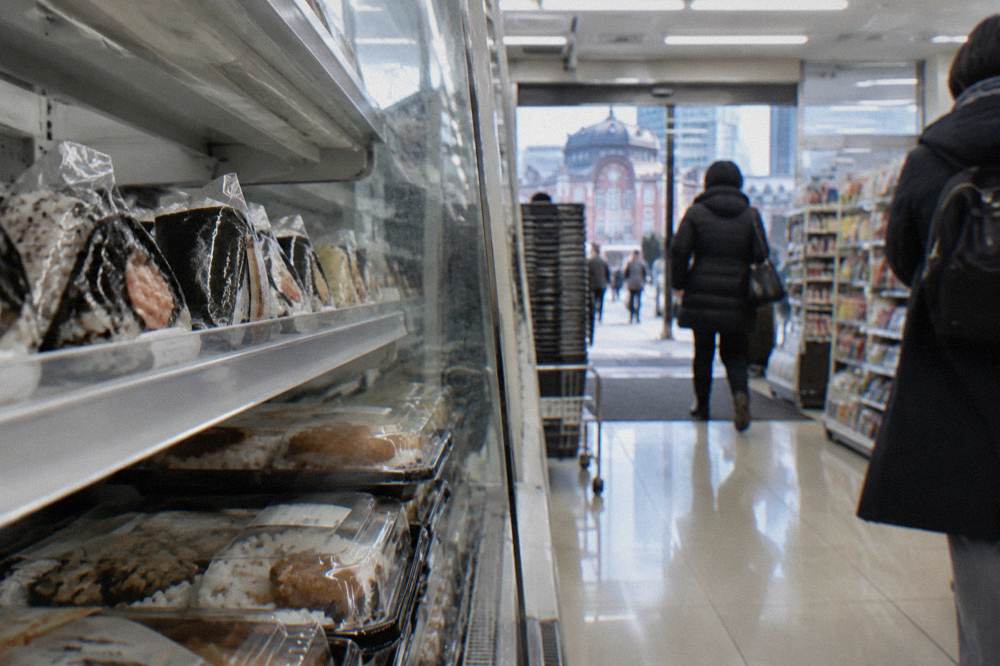
For a budget eater the takeaway rate is a quiet discount on an already cheap base. Convenience store onigiri, the classic breakfast, run roughly 170 to 230 yen each at the reduced rate, per Tripguide Tokyo's convenience-store guide, and a simple breakfast with a drink lands under 400 yen. NHK WORLD-JAPAN has reported that the takeout rate is set to fall further, from 8 percent to 1 percent, under a plan scheduled to run for two years from April 2027, while dine-in stays at 10 percent, so the gap is widening rather than closing.
Cash, IC Cards And Cards At Cheap Counters
Many small ramen shops and counters remain cash-only or cash plus IC card, while others take cards, and there is no uniform policy. IC cards such as Suica and PASMO are accepted at all major convenience store chains and many fast-food chains. JapanNook's payment guide lists the big three convenience store chains plus fast food and coffee shops as IC-friendly.
Practically, carry both. A few thousand yen in coins covers any machine, and the IC card covers chains and convenience stores. This site's companion piece on the question goes deeper: see cash versus card for Japan travellers for the full breakdown. The short version for cheap eats: the cheaper the counter, the more likely it wants cash or IC, and the machine at the door makes no change-based argument, it simply needs the money first.
Ichiran's machines illustrate how fast this is moving. The vending machines at branches such as Shinjuku Central East Exit accept cash, mobile payments, credit cards and IC cards, per its official branch page. Ippudo, the other great chain, accepts credit cards, IC cards, QR payments and electronic money at its Tokyo branches and provides foreign-language menus, which makes the chain pair the most card-friendly end of cheap noodles. The solo-booth versus table-service comparison between the two is covered in Ichiran or Ippudo compared.
Tipping, Otoshi And Other Charges At The Counter
Tipping is not customary in Japanese restaurants and staff may return a tip left behind. Some higher-end and hotel restaurants add an automatic service charge of 10 to 15 percent, but that world is not the cheap counter. The charge that does reach cheap eating is otoshi, a small appetiser that works as a per-person table fee at most izakaya.
Otoshi is the one bill surprise a budget eater meets. Served automatically, typically a few hundred yen per person and up to about 1,000 yen at nicer places, it is tied to the seat and sometimes can be declined politely before eating. At a pure ramen, soba or udon counter it rarely appears. It appears the moment you sit down anywhere drinks are the point. Some chains say no to it outright: Tokyo.how's charges guide notes that Torikizoku states on its website that it charges no otoshi, table fee or late-night surcharge.
Tipping, by contrast, simply does not exist here. Leave coins on the counter and staff may chase you to return them, as Hinomaru's Tokyo travel guide puts it plainly: tipping is not customary at restaurants, cafes, bars, taxis or hotels. The price on the ticket machine is the whole transaction. For anything beyond that world, the reservation mechanics and cancellation fees of mid and high-range Tokyo are a different sport, covered in how to make restaurant reservations in Japan.
The Best Inexpensive Walk-In Counters In Tokyo
Twenty records on this site are both inexpensive and usually walk-in, spanning ramen, udon, soba, tempura, tonkatsu, sushi, izakaya, coffee and dessert. Every one is rated 4.2 or higher on Google with at least 300 reviews. The table below lists all of them by cuisine, with their Google rating, review count and the order tags from their listings.
| Cuisine | Restaurant | Ward / Area | Google rating | Reviews | Order tags |
|---|---|---|---|---|---|
| ramen | Jikasei MENSHO | Shibuya | 4.8 | 4,480 | spicy miso ramen, vegan tantanmen, truffle ramen |
| ramen | HALAL WAGYU RAMEN SHINJUKU-TEI Asakusa | Taito / Asakusa | 4.8 | 3,457 | wagyu, chicken ramen |
| ramen | Afuri Shibuya Dōgenzaka | Shibuya | 4.8 | 3,278 | yuzu ramen, shio ramen, char siew rice |
| ramen | Ramen Oyster And Shell | Chuo / Tsukiji | 4.7 | 3,715 | oyster ramen, oyster broth, oyster rice |
| ramen | Afuri Roppongi Hills | Minato / Roppongi | 4.6 | 3,464 | yuzu salt ramen, yuzu ramen |
| ramen | Afuri Roppongi Crossing Gate | Minato / Roppongi | 4.5 | 3,738 | yuzu ramen |
| ramen | UMAIR HALAL WAGYU RAMEN UENO | Bunkyo / Yushima | 5.0 | 486 | fried chicken, chicken ramen |
| udon | Udon Maruka | Chiyoda / Kanda | 4.3 | 3,730 | chikuwa, toriten, kamatama udon |
| udon | Honolu's Wagyu Udon & Ramen Halal Asakusa | Taito / Asakusa | 4.9 | 1,555 | chicken ramen, gyoza, spicy fried chicken ramen |
| soba | Kanda Matsuya | Chiyoda / Kanda | 4.3 | 3,768 | sesame soba, yuzu |
| sushi | Sushi Mon Shinjuku | Shinjuku | 4.7 | 1,552 | ochazuke, omakase |
| sushi | Yakata-bune and Sushi Komagata | Taito / Komagata | 4.8 | 600 | omakase, eel |
| izakaya | もつ焼 煮込み ヤリキ 上野支店 | Taito / Ueno | 4.7 | lengua, beef tongue sashimi, motsuyaki | |
| tempura | Tempura Kaneko Hannosuke Nihonbashi | Chuo / Nihonbashi | 4.2 | maitake | |
| tempura | Tencha | Taito / Asakusa | 4.8 | 436 | kakiage, tendon mabushi gozen, shiba shrimp |
| tonkatsu | Happiness is KATSUDON Akasaka | Minato / Akasaka | 4.8 | katsudon, katsu | |
| tonkatsu | #カツ丼は人を幸せにする 銀座店 | Chuo / Ginza | 4.9 | katsudon, tonkatsu, katsu curry | |
| coffee | The Coffee Counter Tokyo | Chiyoda / Kanda | 4.9 | panini, toasties, banana bread | |
| dessert | Age.3 ASAKUSA | Taito / Asakusa | 4.8 | 4,352 | sandwiches, creme brulee, fried sandwich |
| dessert | Age.3×Q HARAJUKU | Shibuya | 4.9 | 2,650 | creme brulee, sandwiches, fried sandwich |
Read the table as a menu of decisions, not a ranking; Google ratings measure reviewer sentiment, not objective quality. For noodles, Jikasei MENSHO carries the biggest review pool and the most distinctive order tags, including a vegan tantanmen. For something near the fish market, Ramen Oyster And Shell in Tsukiji builds bowls on oyster broth. For sushi at walk-in prices, Sushi Mon Shinjuku and Yakata-bune and Sushi Komagata are the two records that clear both filters. The list also stretches beyond noodles and fish: もつ焼 煮込み ヤリキ 上野支店 covers izakaya, with motsuyaki and beef tongue sashimi among its order tags, and #カツ丼は人を幸せにする 銀座店 covers tonkatsu, tagged katsudon and katsu curry. Afuri deserves its own note: it holds three of the 20 slots, all usually walk-in, all built around yuzu ramen, and its official site lists the branches.
Halal diners get a real presence in this set. The halal wagyu ramen shops in Asakusa and Ueno appear by name, and their listings carry halal in the restaurant name itself; confirm the current certification status with the restaurant directly, as the name reports the listing, not an audit. The broader picture, including vegetarian and gluten-free realities like dashi made from fish stock, is covered in the site's dedicated dietary guide to Tokyo.
Cheap Versus Moderate: What Each Cuisine Costs To Eat
Among the 100 restaurants on this site, ramen is the cheapest cuisine to eat: 11 of its 15 are inexpensive. Izakaya follows with 8 of 12, udon 2 of 3 and yakitori 3 of 8. Sushi splits almost evenly, 4 inexpensive against 8 moderate and 4 expensive, which is why walk-in sushi is the exception worth hunting.
| Cuisine | Inexpensive | Moderate | Expensive or above | Usually walk-in | Booking recommended or required |
|---|---|---|---|---|---|
| ramen | 11 | 3 | 1 | 10 | 5 |
| izakaya | 8 | 3 | 1 | 2 | 10 |
| yakitori | 3 | 5 | 0 | 0 | 8 |
| udon | 2 | 1 | 0 | 3 | 0 |
| sushi | 4 | 8 | 4 | 4 | 12 |
| tempura | 3 | 2 | 3 | 4 | 4 |
| tonkatsu | 2 | 5 | 1 | 7 | 1 |
| soba | 1 | 0 | 3 | 3 | 1 |
The table exposes a trade-off. Ramen and tonkatsu combine cheap prices with walk-in access. Yakitori is often inexpensive, yet the Google listings label most of these spots booking recommended, because good skewer counters seat few people. Izakaya is the reverse surprise: cheap on the plate, but 10 of the 12 restaurants on this site carry that label, and the otoshi charge arrives with the seat. Sushi is the mirror of ramen, mostly moderate or expensive, which makes its two inexpensive walk-in listings genuinely rare.
Cheap Eats In Tokyo: Key Figures 10 percent
If a cheap trip has room for one splurge logic, use lunch. Japan Brand Collection, in collaboration with japan-guide.com, records the same pattern: the same kitchen, the same counter, a fraction of the price at noon. The mid-range and starred end of that story is a separate guide, and Best Restaurants Tokyo holds the full map from this cheap-eats baseline to the top of the market.
Standing Soba, Gyudon Chains And Konbini Runs
Standing soba and udon shops near stations, tachigui, serve plain kake soba at chain prices, with meals typically finished in under five minutes, per Tokyo.how's budget guide. Gyudon chains run beef bowls at chain prices that differ by a few yen between eat-in and takeaway because of tax. Convenience stores cover breakfast and late night.
This is the layer below the curated restaurants, and it is the layer Tokyo itself eats in. Fuji Soba runs over 100 locations in the city with plain kake soba at a fixed tax-included price, standing counters, no ceremony. The gyudon trio, Sukiya, Yoshinoya and Matsuya, does the same for beef bowls, and several major chains including Sukiya and Matsuya now apply a late-night surcharge of roughly 7 percent on orders from 10pm, as reported by the Kukmin Ilbo, which pushes the cheapest window earlier rather than later.
Convenience stores are the third pillar. Onigiri at the reduced takeaway rate, the eat-in tax trap at the register, IC cards accepted at every major chain: the whole stack is covered in this site's guide to what to eat in Tokyo for trip-wide planning. The one rule that saves real confusion is the eat-in corner: sitting down with a purchase can change its tax rate, so decide where you are eating before you pay.
Where this layer meets the curated list is Udon Maruka in Kanda, 4.3 on Google across 3,730 reviews, inexpensive and usually walk-in, with toriten and kamatama udon among its order tags. It is a sit-down version of the standing-shop economics: fixed bowls, fast kitchen, no booking. Kanda Matsuya, around the corner in the same ward, does the same for soba, with sesame soba and yuzu on its order tags and a mixed local crowd.
A Guided Way Into Tokyo's Cheap Eats
Two verified listings let a local walk you into this world on night one. The Shinjuku Local Eateries Walk runs from $84.21 per person, 4.9 across 10,498 reviews, 3 hours, maximum 12 travellers, meal and drinks included, free cancellation. The Tsukiji Market walk with 5 tastings runs from $97.17 per person, 4.9 across 3,868 reviews, 3 hours, maximum 20, meal included, free cancellation.
The Shinjuku walk suits the alley layer of this guide, the Omoide Yokocho end where shops sell skewers in twos and some set 90-minute limits on groups, rules the Shinjuku Japan guide to the alley documents. A guide flattens the entry rules: one drink and one food item per person at some shops, table charges at others, and the choices a first-timer would agonise over. For a deeper read on the neighbourhood's sit-down side, see the best restaurants in Shinjuku; for the alleys themselves, the walk is the shortcut.
The Tsukiji walk suits the market layer instead. Ramen Oyster And Shell sits in Tsukiji, and the outer market's lanes hold dozens more walk-in counters; the market's own information centre has had to ask guided tours to hold back during the busiest year-end weeks, which tells you how dense the eating there is. A tasting walk with a local parses a market that size in three hours, and the free-cancellation terms on both listings mean a plans change costs nothing.
There is also a case for skipping the guide entirely and doing it alone: every record in the big table above is usually walk-in, every machine is solvable with coins, and our own guide, The Tokyo Food List, puts the 980+ restaurant version of that table on a phone with booking links and Google Maps pins sorted by price band. Cheap eating in Tokyo rewards confidence more than knowledge. Pick a ward from the table, walk in, order what the counter is known for.
Common Questions About Cheap Eats In Tokyo
How cheap is a full meal at a Tokyo counter?
Among our 100 picks, 43 carry the inexpensive price label and 45 are usually walk-in. A full counter meal sits in that overlap: ramen, udon, soba, tempura rice bowls and katsudon, all without a reservation. Exact prices vary by shop, so check the listing or the shop's own page rather than expecting a fixed figure.
Do I need cash for cheap eats in Tokyo?
Typically yes at small counters. Many small ramen shops remain cash-only or cash plus IC card, while chains increasingly take cards, IC cards and mobile payments at their ticket machines. Coins and a charged IC card cover essentially every cheap-eats scenario.
Is it cheaper to take food away in Tokyo?
Yes, slightly. Dine-in meals carry 10 percent consumption tax while takeaway food is taxed at 8 percent, and a further reduction for takeout is planned from April 2027. The rate is decided at the register based on whether you eat in, including at convenience store eat-in corners.
Should I tip at cheap restaurants in Tokyo?
No. Tipping is not customary in Tokyo restaurants, cafes, bars, taxis or hotels, and staff may return money left behind. The price on the ticket machine or menu is the full amount. Table charges at izakaya, such as otoshi, are separate and automatic, not tips.
Can I eat sushi cheaply without a booking?
Yes, though it is rare. Of the 16 sushi restaurants on this site, only four are inexpensive and four are usually walk-in, and the overlap is small: Sushi Mon Shinjuku and Yakata-bune and Sushi Komagata both clear the inexpensive and walk-in filters, at 4.7 and 4.8 on Google respectively.
What is the cheapest cuisine in Tokyo overall?
Ramen, by the numbers. Across the restaurants on this site, 11 of the 15 ramen restaurants are inexpensive and 10 are usually walk-in, a combination no other cuisine matches. Soba and udon counters, gyudon chains and convenience stores form the layer below it.