What Is The Food Capital Of Japan?
Tokyo, Osaka and Kyoto all claim the food capital title. A look at the Michelin counts, the rankings and Tokyo's dining depth from the data.
Three Japanese cities make a serious case for being the country's food capital, and each argues from a different direction. Osaka points to its street food culture and its old nickname, the nation's kitchen. Kyoto leans on centuries of refined kaiseki tradition and temple cuisine. Tokyo simply puts numbers on the table: more starred restaurants than any other city on earth, and a dining scene whose depth runs from 500-yen standing noodle counters to eight-seat sushi counters booked months ahead. The published guides keep landing on the same answer.
What Is The Food Capital Of Japan?
Tokyo holds the strongest claim to being the food capital of Japan. The Michelin Guide Tokyo 2026 lists 160 starred restaurants, twelve of them with three stars, which is the largest starred total of any city in the world, and the city's dining range spans standing ramen counters and conveyor sushi through to expensive omakase counters in Ginza. Osaka and Kyoto each hold distinguished traditions, but neither matches Tokyo's breadth. Starred dining is not reserved for big spenders, and our guide to affordable Michelin-starred meals in Tokyo explains how lunch service puts a starred experience within reach of most budgets.
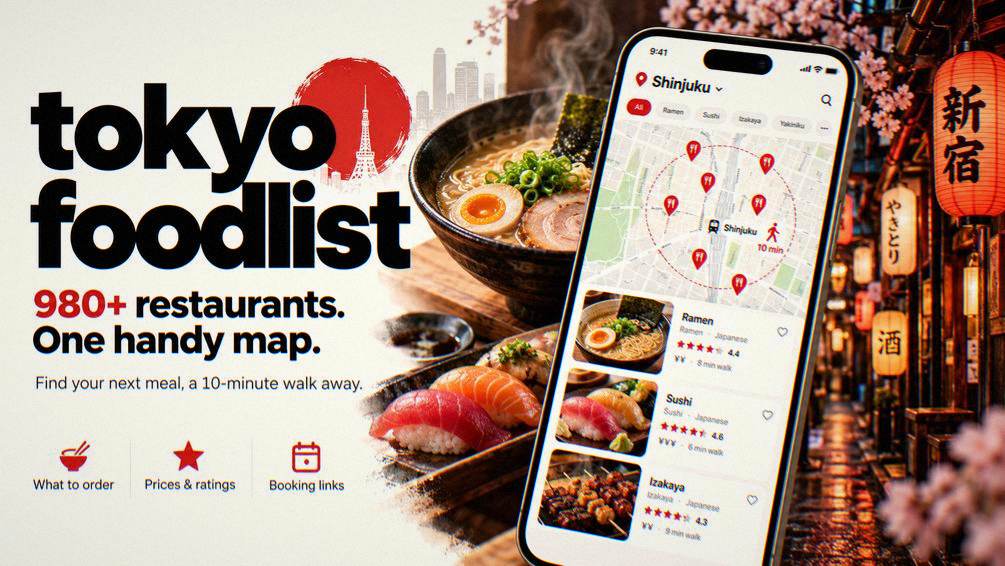
The argument is not really a matter of taste. It is a matter of what the record shows, and the record keeps repeating itself. Tokyo Smart notes that Tokyo has led the world in total Michelin-starred restaurants for the nineteenth consecutive edition, and the city has held that lead in every year the guide has covered it. Kyoto and Osaka are covered in a separate combined guide, and while both cities perform strongly, their totals sit well below Tokyo's. Beneath the starred layer sits an everyday dining scene of a scale the other two cities cannot match, which is where the difference becomes obvious to a visitor. Our own guide, The Tokyo Food List, holds 980+ Tokyo listings sorted by cuisine, Google rating and price range, and the hundred restaurants shown on this site are a curated subset of that: Google rating 4.2 or higher, at least 300 reviews. If all those ratings leave you unsure where to start, our guide to picking Tokyo's single best restaurant explains why Michelin, Tabelog and Google reviewers often disagree, and how to choose the right one for your own night.
That depth matters because a food capital is not only about one great meal. It is about how many different great meals a city can produce, at how many price points, and how consistently. A traveller who wants inexpensive tonkatsu in the morning, moderate conveyor sushi at lunch and an expensive counter at night can do all three in Tokyo without crossing the city twice. The sections below put the three contenders side by side using published guide counts, then look at what Tokyo's own dining data shows underneath the rankings. For more restaurant picks beyond this table, The Tokyo Food List adds 980+ places sorted by cuisine, Google ratings and price ranges.
How Many Michelin Stars Does Tokyo Hold?
The Michelin Guide Tokyo 2026 lists 160 starred restaurants: twelve with three stars, twenty-six with two stars and one hundred twenty-two with one star. Michelin's own publication page also puts the full Tokyo 2026 selection at 526 restaurants, including 114 Bib Gourmand entries. Tokyo has held the world's largest starred total for nineteen consecutive editions, a run no other city approaches.
Those are the numbers the title argument usually turns on. The Michelin Guide Tokyo 2026 selection, announced by Michelin's own publication page, counts 526 restaurants in total across every category, with the starred layer of 160 split twelve, twenty-six and one hundred twenty-two. The Japan Times reported the same three-two-one split at announcement, noting twelve establishments earning three-star status. Star counts differ between sources. The figures used here come from Michelin itself for the Tokyo 2026 edition: 160 starred restaurants, split into 12 three-star, 26 two-star and 122 one-star.
| City | Guide edition | Three-star | Two-star | One-star | Total starred |
|---|---|---|---|---|---|
| Tokyo | Michelin Guide Tokyo 2026 | 12 | 26 | 122 | 160 |
| Kyoto | Michelin Guide Kyoto Osaka 2026 | 6 | not stated in the announcement | not stated in the announcement | not stated |
| Osaka | Michelin Guide Kyoto Osaka 2026 | 3 | not stated in the announcement | not stated in the announcement | not stated |
The Kyoto and Osaka column gaps are honest ones: the ceremony announcement that Michelin published for the Kyoto Osaka 2026 reveal gives the three-star counts directly and does not break out the lower tiers in the same summary. Even on three-star counts alone, Tokyo's twelve stands clear of Kyoto's six and Osaka's three. Tokyo's 2027 selections, along with the next Kyoto-Osaka edition, are scheduled for a simultaneous announcement in Tokyo on 16 February 2027, so the comparison will be refreshed soon enough. On the current evidence the gap is not close.
What Does Osaka Claim To The Food Capital Title?
Osaka's claim rests on street food and appetite rather than fine dining: the city is famous for takoyaki, okonomiyaki and kushikatsu, and for a culture that treats eating as the point of a night out. In the published rankings, however, Osaka's Michelin Guide Kyoto Osaka 2026 entries include three three-star restaurants, a quarter of Tokyo's twelve. The claim is real but the top tier is thinner.
Nobody disputes that Osaka eats brilliantly. The city's nickname tradition, the idea that Osaka people ruin themselves spending on food, is centuries old and still visible in districts like Dotonbori, where grill smoke and octopus balls define the streetscape. The dishes travel well too. Kushikatsu, breaded skewers fried to order, appears in Tokyo izakaya kitchens as an import, and one of the best-rated examples in the curated hundred here is Kushikatsu Tanaka Higashi-Ginza Store, 4.8 on Google across 4,494 reviews, inexpensive, with booking recommended and takoyaki and kushikatsu among the order tags. An Osaka speciality, served in Ginza, at Osaka prices.
The distinction is one of shape. Osaka's food culture peaks in the casual band: street snacks, standing bars, grill counters, all inexpensive or moderate. Tokyo covers that same casual band, with 43 of the curated hundred labelled inexpensive and 38 moderate, and then keeps going upward through expensive soba counters and very expensive sushi counters in a way Osaka's published record does not match. A visitor deciding between the two cities for a single food-focused trip gets more range in Tokyo: the same late-night skewer culture, plus the top of the market, plus everything between. If your question is which city argues hardest about food, Osaka wins. If it is which city can feed you at every level, the counts say Tokyo.
Where Does Kyoto Fit In Japan's Food Rankings?
Kyoto's case is the opposite of Osaka's: refined, formal and seasonal, built around kaiseki courses, temple shojin cuisine and the ichiju-sansai structure of one soup and three sides plus rice. The Michelin Guide Kyoto Osaka 2026 gives Kyoto six three-star restaurants, the second-highest three-star count in Japan after Tokyo's twelve. Kyoto is the tradition capital, not the volume capital.
Kyoto's cooking carries a formality the other two cities lack. The GO TOKYO Gourmet guide describes the foundation of washoku as ichiju-sansai, one bowl of rice, one soup, one main dish and side dishes served in balance, and Kyoto's kaiseki kitchens present that structure across many measured courses. It is a cuisine of seasons and restraint, and the guides reward it: six Kyoto restaurants hold three stars in the current combined edition. The city also performs strongly in international rankings, and Japan's national tourism body promotes seasonal kaiseki-style dining, including Buddhist temple meals with garden views, as a signature experience.
But Kyoto's depth narrows quickly outside that formal band. The city's dining economy is built around the ryotei and the temple kitchen, both of which reward planning and booking, and the inexpensive end that defines daily eating in Tokyo and Osaka is a smaller part of the picture. Kyoto also sits two hours and a bullet-train fare from Tokyo, which is why many travellers treat it as a course within a longer food trip rather than the base. For a single-city question, the arithmetic is stubborn: Kyoto's six three-star restaurants are a serious showing for a city its size, and they are still half of Tokyo's twelve, with no comparable volume behind them.
How Deep Is Tokyo's Dining Scene?
The hundred restaurants curated on this site break down as 43 inexpensive, 38 moderate, 16 expensive and 3 very expensive, spread across fourteen cuisine categories from sushi and ramen through to unagi, udon and dessert. Booking labels split 45 usually walk-in, 48 booking recommended and 7 booking usually required. That spread, not the star count, is what makes a food capital.
The category view is the one first-time visitors underestimate. Sushi is the largest single group here with 16 records, but ramen follows immediately with 15, izakaya with 12, wagyu with 10, and then tempura, tonkatsu and yakitori at 8 each. Every price band is represented in almost every category: ramen runs from 11 inexpensive shops to a single very expensive one, sushi from 4 inexpensive to 4 expensive records. A traveller is never trapped at one spending level.
| Cuisine | Inexpensive | Moderate | Expensive | Very expensive | Total |
|---|---|---|---|---|---|
| sushi | 4 | 8 | 4 | 0 | 16 |
| ramen | 11 | 3 | 0 | 1 | 15 |
| izakaya | 8 | 3 | 1 | 0 | 12 |
| wagyu | 3 | 7 | 0 | 0 | 10 |
| tempura | 3 | 2 | 2 | 1 | 8 |
| tonkatsu | 2 | 5 | 0 | 1 | 8 |
| yakitori | 3 | 5 | 0 | 0 | 8 |
Booking behaviour varies just as widely by category, which is worth knowing before you plan a day. Among the 16 sushi records, 4 are usually walk-in, 8 are booking recommended and 4 are booking usually required. Ramen skews the other way: 10 of 15 records usually walk-in, four booking recommended and one booking usually required. Yakitori and wagyu sit in the middle: every yakitori record in the set is either walk-in or booking recommended, and 9 of the 10 wagyu records carry a booking recommendation. When a dinner decision matters, The Tokyo Food List labels reservation difficulty and booking links for each of its 980+ listings, which is exactly the question these labels answer. Once you know which counters need a reservation, our food-led guide to what not to miss in Tokyo helps you slot the walk-ins and the booked stops into one satisfying day of eating.
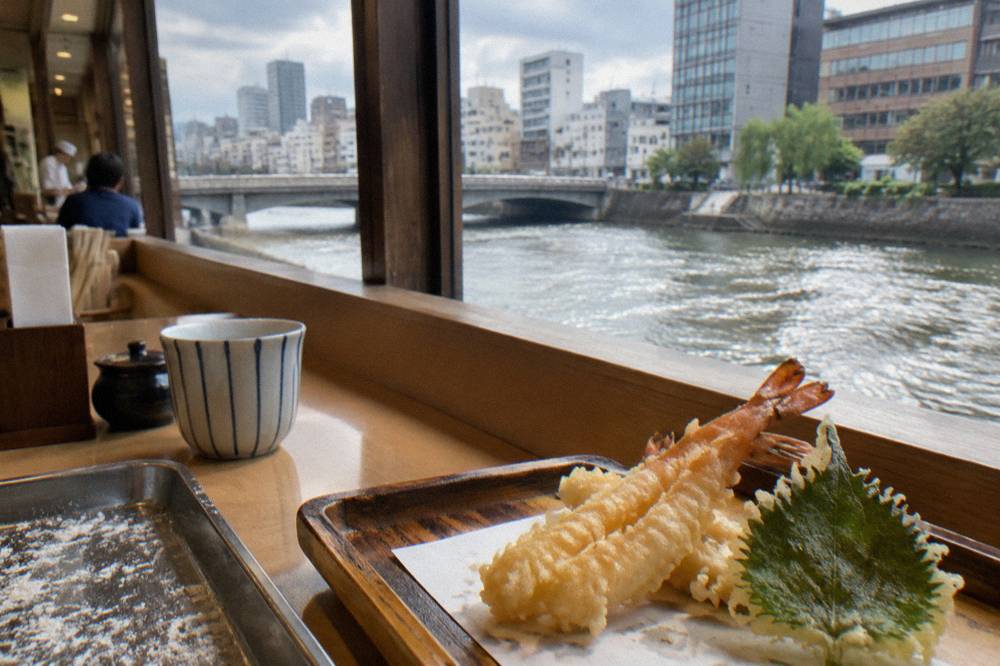
Two mechanics shape that booking picture. Popular omakase counters on reservation platforms typically open their books about two months ahead, with availability disappearing quickly, and seats at many sought-after starred counters open on a set schedule one to two months out. Casual categories simply do not work that way: ramen runs on ticket machines and fast turnover, and tempura queues form on the pavement. Planning a Tokyo food trip means matching the booking style to the category, and the depth above is what lets you build a whole week without repeating a cuisine.
Which Tokyo Restaurants Show That Depth?
Five records from the curated hundred make the point in one table: a 4.9-rated sushi counter in Shinjuku, an inexpensive ramen shop with 4,480 reviews, an inexpensive tempura queue in Nihonbashi, a moderate wagyu counter in Shibuya and an inexpensive izakaya in Ginza. Together they cover three wards, two price bands and both booking styles, walk-in and booking recommended.
Each one is a different argument for Tokyo. Shinjuku Sushi Hatsume, 4.9 on Google across 2,487 reviews, moderate, booking recommended, serves omakase in a ward better known for yakitori alleys. Jikasei MENSHO in Shibuya, 4.8 across 4,480 reviews and inexpensive, carries spicy miso ramen, vegan tantanmen and truffle ramen among its order tags, usually walk-in. Tempura Kaneko Hannosuke Nihonbashi, 4.2 across 2,625 reviews, inexpensive and usually walk-in, is the queue-for-it model, with takuan and maitake among its tags. Kobe Beef Dia Shibuya 1st store, 4.9 across 3,829 reviews and moderate, is the wagyu tier with kobe beef and teppanyaki tags, booking recommended. Kushikatsu Tanaka Higashi-Ginza Store, covered above, brings the Osaka import home.
| Restaurant | Category | Ward | Google rating | Reviews | Price level | Booking label |
|---|---|---|---|---|---|---|
| Shinjuku Sushi Hatsume | sushi | Shinjuku | 4.9 | 2,487 | moderate | booking recommended |
| Jikasei MENSHO | ramen | Shibuya | 4.8 | 4,480 | inexpensive | usually walk-in |
| Tempura Kaneko Hannosuke Nihonbashi | tempura | Chuo | 4.2 | 2,625 | inexpensive | usually walk-in |
| Kobe Beef Dia Shibuya 1st store | wagyu | Shibuya | 4.9 | 3,829 | moderate | booking recommended |
| Kushikatsu Tanaka Higashi-Ginza Store | izakaya | Chuo | 4.8 | 4,494 | inexpensive | booking recommended |
The pattern to notice is that high ratings sit at both ends of the price scale. The wagyu counter and the ramen shop both hold 4.8 or better on Google with more than 3,000 reviews each, one moderate and one inexpensive. That is the Tokyo signature, and it repeats across the wider set: among curated records with 1,000 or more reviews, the highest Google ratings include inexpensive halal wagyu ramen shops and moderate kushikatsu chains alongside wagyu counters. The ramen shop's own page and the tempura counter's own site both confirm the details diners actually need, and ratings this deep into four figures are not accidents of a quiet week.
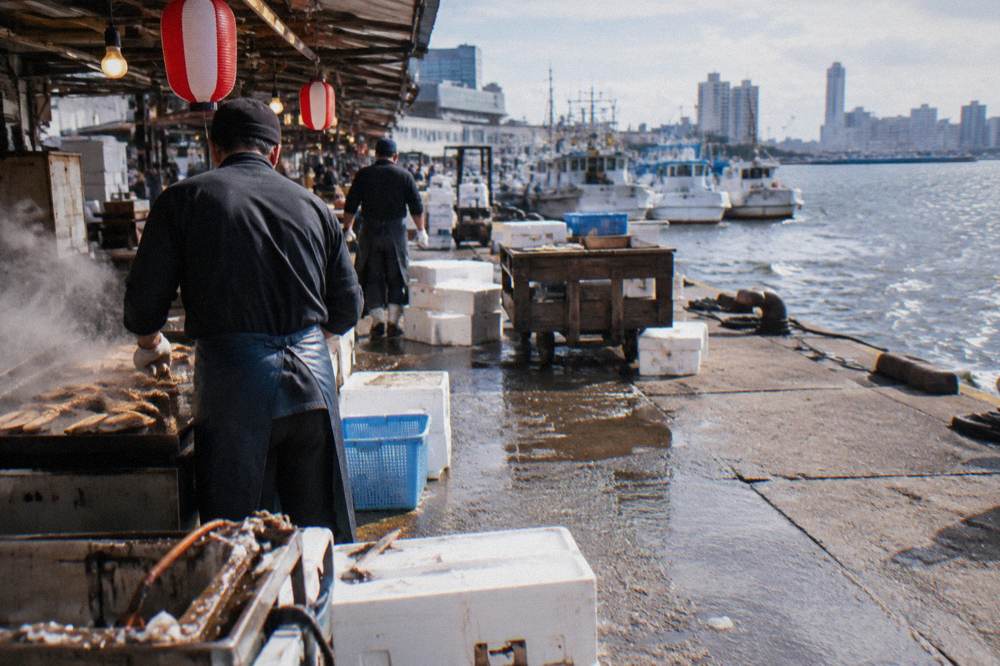
For a structured way into these neighbourhoods, two guided options keep close to the data. The Shinjuku Local Eateries Walk runs three hours from $84.21 per person, a meal and drinks included, capped at twelve travellers, with free cancellation, and it scores 4.9 across 10,498 reviews. The Tsukiji Market walk with five tastings runs three hours from $97.17 per person, a meal included, capped at twenty, also with free cancellation, at 4.9 across 3,868 reviews. Both are beginner-friendly routes into districts the table above already names.
Shinjuku holds just three records in the curated hundred, two izakaya and one ramen shop, while Chuo and Taito lead with fifteen each, so a three-hour walk there covers a narrower slice of the category table than those wards offer. If your interest runs to market eating rather than alley eating, the Tsukiji walk below is the counterpart: five tastings in the lanes of the outer market, which never relocated and still operates separately from the Toyosu wholesale market that took over the tuna auctions in 2018. You can Check availability for the Tsukiji walk on the live listing, and the same link carries the free-cancellation terms.
Does Tokyo Deserve The Title Over Kyoto And Osaka?
On every countable measure, yes. Tokyo holds 160 starred restaurants to Kyoto's and Osaka's smaller totals, leads the world for the nineteenth consecutive edition, and fields a category spread from 43 inexpensive records to 3 very expensive ones across fourteen cuisines. Kyoto wins on tradition, Osaka on street food energy, and Tokyo wins on everything that can be counted.
A fair verdict credits all three. Kyoto's six three-star restaurants and its kaiseki lineage make it the keeper of Japan's most formal cooking, and a food pilgrimage there is justified on its own terms. Osaka's casual cooking is genuinely unmatched for energy, and its signature dishes now appear on Tokyo menus at Osaka prices, as the Ginza kushikatsu record shows. But a food capital has to feed everyone, every day, at every level, and that is the test Tokyo passes with room to spare. The same city that holds twelve three-star restaurants also holds eleven inexpensive ramen records and a walk-in tempura queue in Nihonbashi, and the booking labels show 45 of the curated hundred need no reservation at all.
That combination is rare anywhere, and it is why Best Restaurants Tokyo exists as a site: the depth is the story. If you are turning the title fight into an itinerary, start with the guides that break the categories open, from Tokyo's best ramen shops to izakaya and yakitori in Tokyo, and let the booking labels on each record dictate how far ahead you plan. The Tokyo Food List puts the same reservation-difficulty labels, order suggestions and map pins behind all 980+ listings, made to open on a phone and pick by neighbourhood, with updates staying on the same link. Whichever city you crown, that is the practical way to eat the argument.
Common Questions About The Food Capital Of Japan
What Is The Food Capital Of Japan?
Tokyo has the strongest claim. The Michelin Guide Tokyo 2026 lists 160 starred restaurants, the most of any city in the world, and the restaurants on this page run from 43 inexpensive records to expensive and very expensive counters across fourteen cuisines. Osaka and Kyoto hold strong traditions but smaller top tiers.
Does Osaka have more Michelin stars than Tokyo?
No. The Michelin Guide Kyoto Osaka 2026 gives Osaka three three-star restaurants, against Tokyo's twelve. Osaka's food reputation rests on casual specialities such as takoyaki, okonomiyaki and kushikatsu-style skewers rather than on starred fine dining volume.
How many three-star restaurants does Kyoto have?
The Michelin Guide Kyoto Osaka 2026 lists six three-star restaurants in Kyoto, the second-highest three-star count in Japan. Tokyo's twelve remains the national high-water mark.
Why does Tokyo have so many Michelin stars?
Tokyo combines an unusually high density of skilled small counters with sheer variety: sushi, tempura, ramen, soba, yakitori and French kitchens all compete at the top level, and the city has led the world in starred restaurants for nineteen consecutive guide editions.
Is Tokyo or Osaka better for street food?
Osaka is the traditional street food capital, but Tokyo covers the same casual band at scale: 43 of the curated hundred records here are inexpensive, including walk-in ramen, tempura and izakaya. A guided street-food walk in Shinjuku or Tsukiji is an easy way in.