Why Is Omakase So Expensive?
The real cost drivers behind Tokyo omakase: seat counts, booking deposits, cancellation economics and the cheaper lunch door, with data from 16 curated sushi counters.
Why Is Omakase So Expensive?
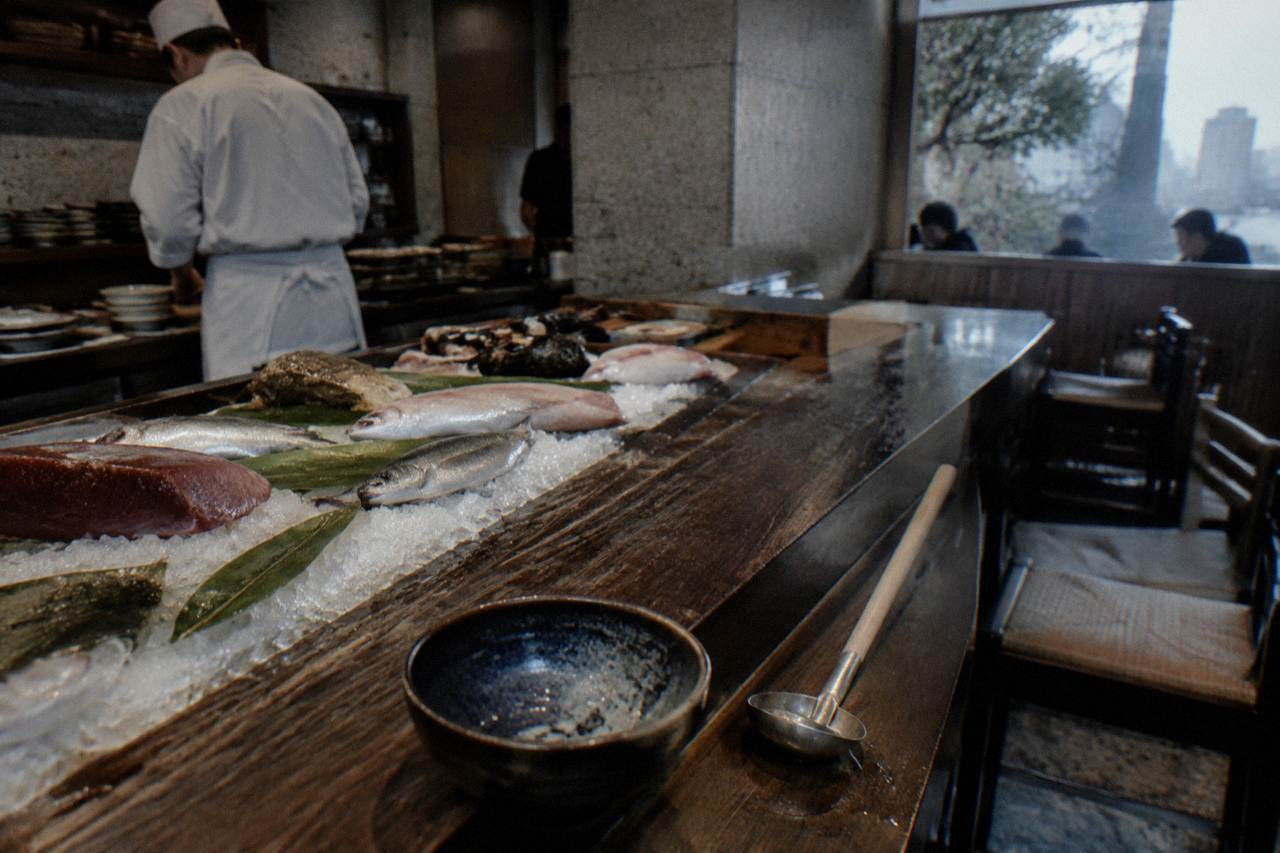
Omakase is expensive because a small counter sells very few seats per night, sources a rotating list of premium fish, and protects those seats with deposit and cancellation rules that push the risk of an empty chair onto the diner. The format concentrates a full kitchen's costs onto eight or ten places. Lunch menus, where offered, typically deliver the same kitchen at a fraction of the dinner price.
That is the short answer. The longer one runs through four mechanical drivers, and each of them is visible in real data rather than in folklore about mystic chefs. Seat count is the first: a counter with eight stools serves maybe sixteen diners a night even with two seatings, so every fixed cost, the fish, the apprentices, the rent of a prime location, divides by a number most restaurants would laugh at.
The second driver is supply. A shop like Matsue Ebisu Head Store in Shibuya, 4.8 on Google across 1,632 reviews and labelled expensive in the Google listings, lists omakase plus sea urchin and toro as its order words. Those two items are among the most volatile seafood buys in Japan, and a course built around them has to price in the weeks the supplier comes back empty. Booking economics are the third driver, and the cancellation ladder is the fourth. We will take them in turn, with the figures that actually appear on listings. For more restaurant picks beyond this table, The Tokyo Food List adds 980+ places sorted by cuisine, Google ratings and price ranges.
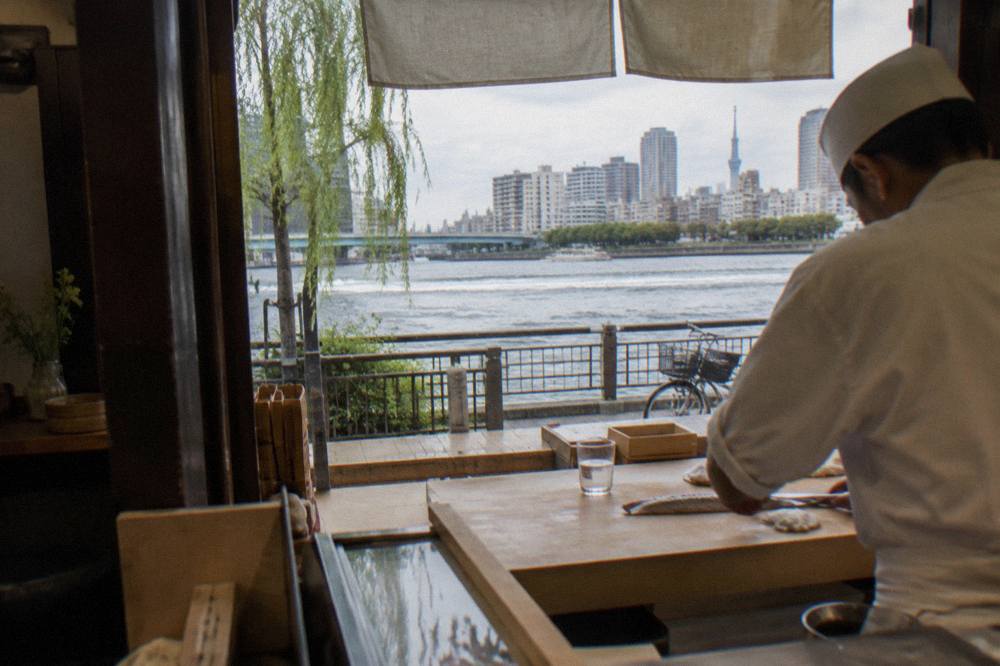
The interesting thing is how much of the price survives even when you strip the fish away. Tokyo's own tourism board frames washoku, of which sushi is one branch, around balance and seasonality rather than luxury. The cost sits in the format. When you understand that, the bill stops looking like a mystery and starts looking like arithmetic, which also tells you exactly where the discounts hide.
For anyone comparing counters before committing, The Tokyo Food List, our own guide, covers 980+ Tokyo restaurants sorted by Google rating, price range and reservation difficulty, with what to order at each one. It costs $9, updates stay on the same link, and it is built to open on a phone and pick by neighbourhood. If you want to see how extreme reservation difficulty can get, our guide to booking Sukiyabashi Jiro and its bookable alternatives explains what is actually possible at the hardest counter in the city.
What Are You Actually Paying For At The Counter?
You are paying for scarcity of seats, a chef's continuous judgement across a full progression of courses, and fish bought at market prices that move daily. The omakase format hands the entire ordering decision to the counter, which means the kitchen buys without knowing exactly what you will want, and prices accordingly. None of that is a service charge or a tourist premium.
The word itself means "I leave it up to you", and that transfer of choice is the product. At Shinjuku Sushi Hatsume, 4.9 on Google across 2,487 reviews and labelled booking recommended, the order tag is simply omakase. The restaurant's own listing is where the current course detail lives, and Google listings show a mixed crowd, which tells you the format is not reserved for special occasions. It sits in the moderate price band among the restaurants on this site, proof that omakase as a format does not automatically mean expensive.
That said, the progression itself is what concentrates cost. One Ginza counter's economics, cited by Japan Brand Collection with japan-guide.com, illustrate the spread: about 9,000 yen at lunch against about 20,000 yen at dinner in the same room. Multiply that by eight seats and you can see why a counter cannot discount its way to volume the way a 40-seat restaurant can. Every empty stool is a full loss, which leads directly to the deposit rules in a later section.
Tipping, incidentally, is not part of the equation. As japan-guide.com notes, tipping is not customary in Japanese restaurants and staff may return money left behind; some higher-end and hotel restaurants instead add an automatic service charge of 10 to 15 percent. So the price on the menu is, typically, the whole price plus tax, with no expectation layered on top at the end.
How Do Seat Counts And Scheduling Drive The Price?
A counter that seats eight and runs two seatings sells sixteen experiences a night, so fixed costs divide by sixteen rather than by two hundred. That single arithmetic explains more of an omakase price than any ingredient story, and it also explains why such restaurants guard their schedules with booking systems and why seats at sought-after counters typically open one to two months ahead.
The sushi restaurants on this site make the booking half of that equation visible. Among the 16, four are labelled booking usually required, eight booking recommended, and only four usually walk-in. The walk-in four are mostly the inexpensive and moderate shops, exactly the ones whose seat counts and turnover can absorb a stranger at the door. Yakata-bune and Sushi Komagata in Taito, 4.8 on Google across 600 reviews, inexpensive and usually walk-in, is the clearest example: omakase and eel on the order list, and no deposit standing between you and the stool.
| Restaurant | Google rating | Reviews | Price level | Booking label |
|---|---|---|---|---|
| Shinjuku Sushi Hatsume | 4.9 | 2,487 | moderate | booking recommended |
| TOKYO SUSHI ITAMAE SUSHI Shimbashi | 4.7 | 2,467 | moderate | booking recommended |
| KINKA Sushi Bar Izakaya | 4.5 | 2,830 | moderate | booking recommended |
| Matsue Ebisu Head Store | 4.8 | 1,632 | expensive | booking usually required |
| Uogashi Nihon-Ichi | 4.5 | 2,629 | moderate | usually walk-in |
| Sushi Mon Shinjuku | 4.7 | 1,552 | inexpensive | usually walk-in |
| sushi fish bar | 5.0 | 666 | inexpensive | booking recommended |
| Sushi Teppen Shibuya | 5.0 | 618 | moderate | booking recommended |
| R/Q | 4.9 | 680 | moderate | usually walk-in |
| Sushi Kuni | 4.3 | 1,463 | expensive | booking usually required |
| Sushi Tooden Ninoya Shinbashishiodomemise | 4.8 | 644 | inexpensive | booking recommended |
| Sushi Gen Akasaka | 4.8 | 614 | moderate | booking recommended |
| Ebisu Sushi Hatsume | 4.8 | 613 | moderate | booking recommended |
| Yakata-bune and Sushi Komagata | 4.8 | 600 | inexpensive | usually walk-in |
| Sushi Yuu | 4.8 | 504 | expensive | booking usually required |
| Shabu Shabu & Sushi Hassan Roppongi | 4.5 | 676 | expensive | booking usually required |
If you're curious how these prices stack up across the city, our guide to typical sushi dinner costs in Tokyo compares everything from standing bars to high end counters.
Notice the pattern in the price column. All four of the expensive sushi restaurants on this site, Matsue Ebisu Head Store, Sushi Kuni, Sushi Yuu and Shabu Shabu & Sushi Hassan Roppongi, carry the booking usually required label. Sushi Yuu in Minato's Azabu district, 4.8 on Google across 504 reviews, expensive, booking usually required, with fatty tuna as its headline order word, is the archetype: few seats, premium fish, and a booking wall. The moderate shops, by contrast, mostly say booking recommended, which is a different promise entirely, it means book ahead but the room will not collapse if you do not.
Crowd labels tell the same story from the other side. The records labelled as tending to draw a local crowd, Sushi Teppen Shibuya with 5.0 across 618 reviews, Ebisu Sushi Hatsume with omakase and its tuna and sea urchin specialities, Sushi Gen Akasaka with Pacific bluefin tuna on the order list, are local favourites in the literal sense that locals can get into them. Reserving omakase in Tokyo is its own topic, and our guide to making restaurant reservations in Japan walks through the systems in detail.
Why Are Deposits And Cancellation Fees So Strict?
Because an empty seat at a counter is nearly a total loss, high-end and omakase restaurants commonly charge 30 to 50 percent of the course price for cancellations a few days ahead, rising to 100 percent for same-day cancellations and no-shows. The rules look harsh until you do the arithmetic of a sixteen-cover night, at which point they look like insurance.
That ladder comes from SHOKU NOREN's guide to Japanese restaurant cancellation policies, and it is worth internalising before you book anything labelled expensive.
| When you cancel | Typical charge at a high-end counter |
|---|---|
| A week or more ahead | Often little or no charge, policy varies by restaurant |
| A few days ahead | Typically 30 to 50 percent of the course price |
| Same day | Typically 100 percent |
| No-show | 100 percent |
The booking platforms add their own fixed fees on top. NativeCall's survey of English-friendly booking options records a multilingual Tabelog booking fee of about 440 yen per person with a card required, and an OMAKASE fee of about 390 yen per seat with card registration; SHOKU NOREN, covering the same platforms, notes both fees are generally non-refundable if you cancel for your own reasons. TableCheck, the third common system, typically needs a card for holds or prepayment rather than a per-seat fee. None of this is hidden: it is the visible price of a kitchen holding a stool for a stranger with no local phone number. The wider set of guides lives on Best Restaurants Tokyo.
If the deposit economy feels like too much commitment for a first taste of premium seafood, there is a guided alternative. The Omakase Sushi and A5 Wagyu tour combines an omakase sushi course with A5 wagyu in one three-hour sitting, from $130.73 per person, 4.72 across 329 reviews, a maximum of eight travellers, drinks included, and free cancellation, so the cancellation ladder above never applies. You can Check availability on the live listing.
One structural note worth knowing: the deposit system is not aimed at tourists specifically. As reporting by STAYGO on Tokyo's reservation landscape describes, popular omakase counters typically open bookings about two months out and availability disappears quickly, with cherry blossom and autumn foliage seasons compressing timelines further. The prepayment model exists because that scarcity made restaurants cautious. The cure is the same in every case: book through a system that confirms in writing, and treat the cancellation deadline as seriously as a flight time.
Is Lunch The Cheaper Door Into Omakase?
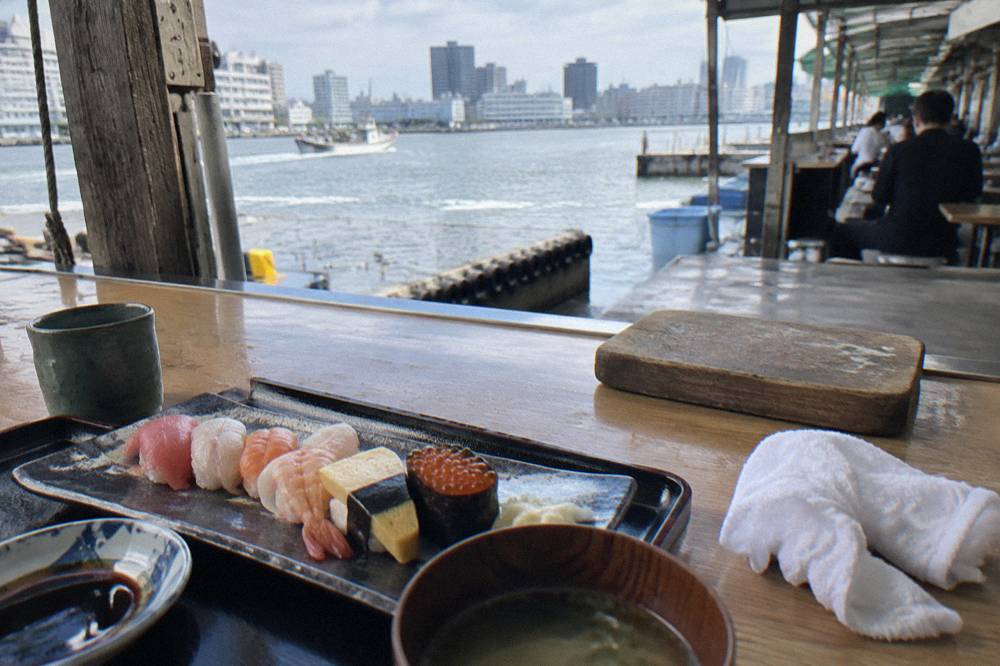
Yes, typically. Lunch at the same counter usually costs a fraction of the dinner omakase, because the kitchen can run shorter progressions, standardise courses and fill seats in hours that would otherwise sit empty. The Japan Brand Collection, a japan-guide.com collaboration, puts one Ginza counter at about 9,000 yen for lunch against about 20,000 yen at dinner: the same fish, the same chef.
The 9,000 versus 20,000 yen gap above comes from one Ginza counter, reported by Japan Brand Collection with japan-guide.com, so treat it as an illustration rather than a rule. But the mechanism travels. A counter that struggles to fill midweek lunch covers has every incentive to price them accessibly, and the moderate price band across our 100 picks, eight of the sixteen sushi restaurants on this site, shows how many Tokyo counters sit in reach of a normal dinner budget once you drop the expectation of a two-hour progression.
| Strategy | What it typically saves | Trade-off |
|---|---|---|
| Lunch instead of dinner at the same counter | A large fraction of the dinner course price | Shorter progression, fixed menu, less chat with the chef |
| Moderate-band counter instead of expensive | The band gap between moderate and expensive records | Fewer premium items such as toro and sea urchin |
| Walk-in labelled shop | No deposit, no booking fee | You may wait or miss the counter at peak times |
| Guided premium tour | No deposit or cancellation ladder | Fixed itinerary, not a solo counter experience |
The other cheap door is a counter rather than a time slot. TOKYO SUSHI ITAMAE SUSHI Shimbashi, 4.7 on Google across 2,467 reviews, sits in the moderate band with booking recommended, and its order words include bluefin tuna and fatty tuna alongside omakase, the premium items without the premium band. Choosing between counters this way, by price band and booking label rather than by name recognition, is exactly the comparison our guide to omakase in Tokyo is built for, and The Tokyo Food List lets you run the same comparison across the whole city by neighbourhood, price range and reservation difficulty.
Can You Experience Omakase Culture Without Paying Counter Prices?
You can get close. A sushi-making class teaches the same fish handling and the same progression logic at a fraction of the price, and a market tasting walk shows the supply side that omakase pricing is built on. Neither replaces a counter progression, but both explain it, and for many travellers that understanding is worth more than the seat itself.
The Asakusa sushi making class with matcha and unlimited sake runs from $44.93 per person, 4.94 across 206 reviews, an hour and a half with a meal and drinks included and free cancellation. It is a class, not a dinner, but it puts the ingredients in your hands, and a diner who has tried to shape rice and slice fish understands instantly why a counter charges for the finished article.
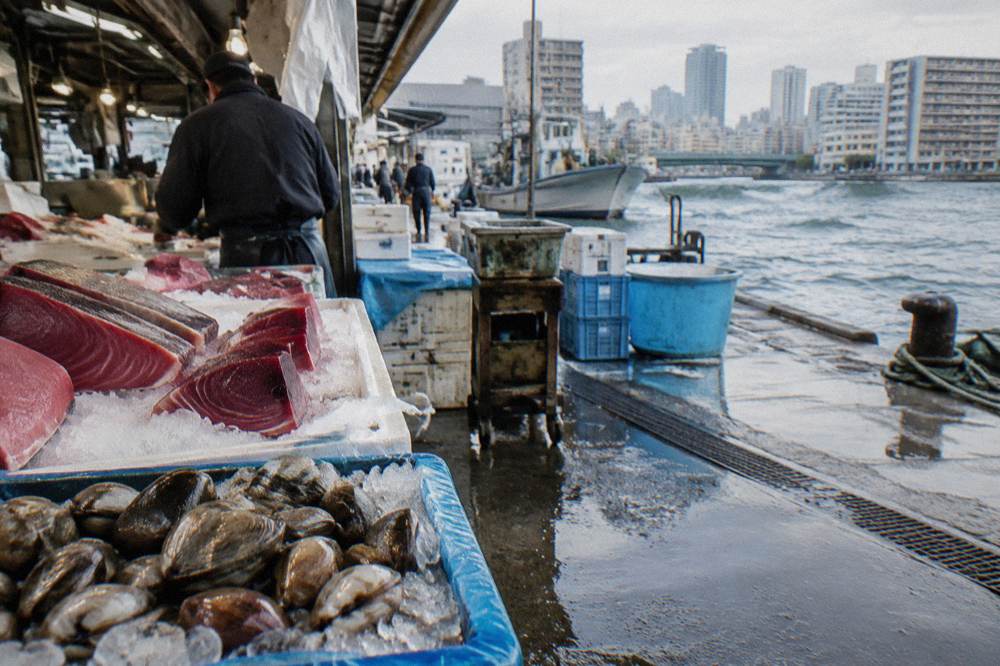
The supply side is the other half of the education. Tsukiji's outer market never relocated, and a five-tasting walk there, from $97.17 per person, 4.9 across 3,868 reviews, three hours with tastings included, shows the market stalls where premium fish is bought before it ever reaches a counter. Between them, these formats cover most of what the omakase price decomposes into: skill, supply and scarcity.
If a counter night is still the goal, aim it deliberately. Ebisu Sushi Hatsume, 4.8 on Google across 613 reviews and a local-crowd label, lists omakase and its tuna and sea urchin speciality, in the moderate band, booking recommended. Sushi Teppen Shibuya, 5.0 on Google across 618 reviews with negitoro and sea urchin on the order list, is moderate too, and its listing notes a crowd that tends local. These are the counters where the omakase format and a sane price band meet, and Best Restaurants Tokyo exists to make that search a five-minute job instead of a week of tabs. For the deep end, Matsue Ebisu Head Store's own site carries the current course and booking details, and its expensive band and booking usually required label tell you what to expect before you commit.
Common Questions About Omakase Prices
Why is omakase so expensive?
Because a counter sells very few seats a night, buys premium fish at volatile market prices, and protects those seats with deposits and cancellation fees. The price reflects scarcity and risk, not a tourist premium, and lunch menus typically open the same kitchen at a fraction of the dinner cost.
Is omakase worth the money in Tokyo?
That depends on what you want. If the progression, the chef's judgement and the seat itself are the point, the moderate-band counters among our 100 picks, such as Shinjuku Sushi Hatsume at 4.9 on Google across 2,487 reviews, deliver the format without the expensive-band bill.
Do you have to pay a deposit for omakase in Tokyo?
At counters labelled booking usually required, typically yes. Booking platforms charge a per-seat fee, about 440 yen per person on multilingual Tabelog and about 390 yen per seat on OMAKASE according to reporting on those systems, and these are generally non-refundable if you cancel for your own reasons.
How far ahead should you book omakase in Tokyo?
Typically one to two months for sought-after counters, with seats opening on a set schedule and disappearing quickly. Cherry blossom and autumn foliage seasons compress the timelines further, so book as early as the release schedule allows.
Can you eat omakase in Tokyo without a reservation?
Sometimes. Four of the 16 sushi restaurants on this site are labelled usually walk-in, mostly in the inexpensive and moderate bands, such as Yakata-bune and Sushi Komagata in Taito at 4.8 on Google across 600 reviews. Expensive-band counters almost always require booking.