Is It Hard To Get A Reservation At Sushi Jiro?
What is actually verifiable about booking Sukiyabashi Jiro in Ginza, how the reservation process works, and which bookable Tokyo sushi counters make a realistic alternative.
Is It Hard To Get A Reservation At Sushi Jiro?
Yes, and by design rather than by accident. Sukiyabashi Jiro's own site states that reservations are accepted by phone only, and that overseas guests must book exclusively through the concierge of the hotel where they are staying and present photo ID. The restaurant was also dropped from the Michelin Guide Tokyo from the 2020 edition because it stopped taking reservations from the general public, which tells you how narrow the door is.
The short answer above comes almost entirely from the restaurant's own reservation page, which is the primary source here. Sukiyabashi Jiro sits in the basement of the Tsukamoto Sogyo Building in Ginza, an address confirmed by the filming location record for Anthony Bourdain's Tokyo episode, and it became globally famous partly through that exposure. Fame created demand, and the restaurant responded by shrinking the booking funnel rather than widening it. Before you set your heart on a counter seat, The Tokyo Food List flags reservation difficulty and links straight to booking.
That is the honest shape of the problem. There is no public online calendar, no booking platform entry, no walk-in list. The door is a phone line and, for foreign visitors, a hotel concierge acting on your behalf. Everything else you may have read about secret booking hacks is noise around that simple fact.
If the goal is excellent sushi in Tokyo rather than one specific name, the situation improves dramatically. The curated records on this site include sushi counters rated between 4.5 and 5.0 on Google with booking labels ranging from "usually walk-in" to "booking recommended", meaning the realistic answer for most travellers is to aim at Jiro only if you have a concierge, and otherwise book a genuinely great counter elsewhere. Our own guide, The Tokyo Food List, sorts 980+ Tokyo restaurants by reservation difficulty and includes booking links, which is exactly the decision this article is about. Once you have a realistic target in mind, our guide to sushi dinner prices in Tokyo shows what you should expect to pay at every level, from standing bars to high-end omakase counters.
How Do You Actually Book Sukiyabashi Jiro In Tokyo?
Three routes exist, and two of them do not apply to most readers. The restaurant's official site says reservations are taken by phone only. Overseas guests, per the same page, must book exclusively through the concierge of the hotel where they are staying and present photo ID at the door. There is no self-service online booking route at all.
That is the whole system, verbatim from the source. The restaurant's own reservation page is worth reading directly, because it is short and unambiguous: the concierge route is not a suggestion, it is the only accepted channel for guests staying at hotels. Domestic diners can phone, in Japanese, at opening times the page lists.
This is where the difficulty actually lives. A hotel concierge in Ginza books into Jiro regularly and knows the drill; a traveller cold-calling from overseas without Japanese generally does not. Michelin's Tokyo guidance adds the general context for top counters: starred restaurants should typically be booked one to two months ahead, via online services, a concierge or the Michelin partner booking system. Jiro sits at the extreme end of that spectrum because it has removed itself from the online services entirely. If Jiro proves out of reach, our guide to Ginza and Asakusa's polished counters and old-Tokyo favorites highlights excellent sushi destinations that are far easier to book.
For comparison, here is how the realistic booking routes for high-end Tokyo sushi stack up. The fee figures in the table come from tokyo.how's booking guide, which put the OMAKASE seat fee at 390 yen and the multilingual Tabelog booking fee at 440 yen per person, both separate from the meal.
| Route | Who can use it | Fee on top of the meal | Card needed | Fits Jiro? |
|---|---|---|---|---|
| Hotel concierge | Overseas hotel guests | Set by the hotel | Varies | Yes, the only overseas route |
| Phone directly | Japanese speakers | None | No | Domestic guests only |
| OMAKASE platform | Registered users with SMS-capable phone | 390 yen per seat, per tokyo.how | Yes, registered card | No, Jiro is not listed |
| Multilingual Tabelog booking | Web users | 440 yen per person, per tokyo.how | Yes | No, Jiro is not listed |
| TableCheck | Web users, card hold or prepayment | Varies by restaurant | Usually | No, Jiro is not listed |
The pattern to notice: the platforms that make Tokyo sushi bookable for foreigners are exactly the channels Jiro does not use. Our guide on how to make restaurant reservations in Japan walks through each platform in detail for the restaurants that do appear on them.
Why Is The Booking So Restricted At Sukiyabashi Jiro?
The most concrete documented reason is the Michelin delisting. SHOKU NOREN reports that Sukiyabashi Jiro was removed from the Michelin Guide Tokyo starting with the 2020 edition because it no longer accepts reservations from the general public. A restaurant that stopped serving the general public is, definitionally, hard for the general public to book.
The delisting is the cleanest single fact in this whole story because it shows an external institution reacting to the same restriction travellers hit. The Michelin Guide does not drop famous three-star restaurants lightly, and the reported reason was access, not quality. SHOKU NOREN's guide is the source for that account.
Celebrity exposure is part of the demand side. The filming record for Bourdain's No Reservations Tokyo episode lists the Ginza basement address, and Bourdain featured Tokyo sushi prominently across his programmes, including Sushi Karaku in the first episode of A Cook's Tour, per the official channel listing. Two decades of that kind of coverage built a global queue at a counter with a handful of seats.
None of this makes the restaurant mythical in a way that should derail a trip. It makes it a phone-and-concierge booking with photo ID at the door, which is unusual but not mysterious. What it also does is redirect the practical question: if a concierge is not in your itinerary, which counters are open to you tonight or this week? The Tokyo Food List answers that with reservation difficulty and booking links for each listing, and the section below does the same from our curated records.
What Happens If You Cancel A High-End Sushi Booking In Tokyo?
Cancellation terms at high-end and omakase restaurants are strict, typically 30 to 50 percent of the course price for cancellations a few days ahead, rising to 100 percent for same-day cancellations and no-shows. This matters more once you leave the Jiro question, because the bookable alternatives below use exactly these policies.
SHOKU NOREN's cancellation-policy guide reports that range, and it is the standard shape of the policy rather than one restaurant's rule. The platform era has made this mechanical: when a booking system holds your card, the cancellation fee is charged to it per each restaurant's own policy, counted from Japan Standard Time midnight regardless of when you confirmed. The practical takeaway is simple. Book a premium sushi counter only for a night you are certain about, and if your plans are loose, choose a counter labelled usually walk-in instead.
| Cancellation timing | Typical charge at high-end counters |
|---|---|
| A few days ahead | 30 to 50 percent of the course price |
| Same day | Up to 100 percent |
| No-show | 100 percent |
| Walk-in counter | No booking, so no fee |
This is also where the "is it worth chasing the booking" calculus lands for most travellers. A Jiro attempt costs concierge effort and a fixed evening. A bookable counter costs a card hold and the discipline to show up. If your Tokyo dates are still fluid, treat the expensive counters as a fixture and plan the rest of the day around them, or pick the walk-in tier and keep total freedom.
Which Tokyo Sushi Counters Can You Realistically Book Instead?
Seven curated counters on this site make a strong alternative shortlist, five of them labelled booking recommended and two labelled booking usually required, with Google ratings from 4.7 to 5.0. Unlike Jiro, every one of them appears on booking systems or takes direct online reservations, which is the whole difference.
The records below are the curated subset: Google rating 4.2 or higher with at least 300 reviews, drawn from the 980+ listings in The Tokyo Food List. Booking labels such as "usually walk-in" describe what usually happens, not a fixed policy.
| Counter | Ward | Google rating | Reviews | Price level | Booking label |
|---|---|---|---|---|---|
| Shinjuku Sushi Hatsume | Shinjuku | 4.9 | 2,487 | moderate | booking recommended |
| TOKYO SUSHI ITAMAE SUSHI Shimbashi | Minato, Shinbashi | 4.7 | 2,467 | moderate | booking recommended |
| Sushi Teppen Shibuya | Shibuya | 5.0 | 618 | moderate | booking recommended |
| Ebisu Sushi Hatsume | Shibuya | 4.8 | 613 | moderate | booking recommended |
| Sushi Gen Akasaka | Minato, Akasaka | 4.8 | 614 | moderate | booking recommended |
| Matsue Ebisu Head Store | Shibuya | 4.8 | 1,632 | expensive | booking usually required |
| Sushi Yuu | Minato, Azabu | 4.8 | 504 | expensive | booking usually required |
A few pointers from the records themselves. At Shinjuku Sushi Hatsume the order tag is omakase, and the counter's own page is the place to watch for reservation announcements. ITAMAE SUSHI in Shinbashi tags bluefin tuna, fatty tuna and omakase, and the group's official site carries its booking route. Sushi Teppen Shibuya, a 5.0 on Google across 618 reviews, tags omakase, negitoro and sea urchin, and its crowd label reads local rather than tourist. The two expensive entries, Matsue Ebisu Head Store and Sushi Yuu, are the closest in spirit to a premium counter experience, tagging omakase plus toro and sea urchin at the former and fatty tuna at the latter, and both carry booking usually required labels, so treat them as plan-ahead dinners rather than spontaneous ones. For a wider field, our best sushi in Tokyo guide covers all sixteen curated sushi records.
Can A Tour Replace The Counter Experience In Tokyo?
For many travellers, yes, and it is the least friction-heavy route to premium sushi. A guided food tour buys you a seat at counters and tastings that would otherwise each need separate bookings, and the roster on this site includes options from $44.93 to $130.73 per person, all with free cancellation and a meal included.
The Omakase Sushi and A5 Wagyu premium foodie tour is the clearest example: from $130.73 per person, 4.72 across 329 reviews, three hours, a maximum of eight travellers, with a meal and drinks included and free cancellation. That price sits at or below a single dinner at the expensive counters above, and it removes every booking mechanic this article has described, no concierge, no card hold, no cancellation window arithmetic. Its differentiator is pairing omakase-style sushi with A5 wagyu in one sitting, which no single counter in the table offers.
The other format worth knowing is a hands-on class. The Asakusa sushi making class with matcha and unlimited sake runs from $44.93 per person, holds a 4.94 rating across 206 reviews, lasts an hour and a half, and includes a meal and drinks with free cancellation. You leave knowing how the rice, the wasabi and the knife work fit together, which changes how you eat at every counter afterwards, including the ones in the table above.
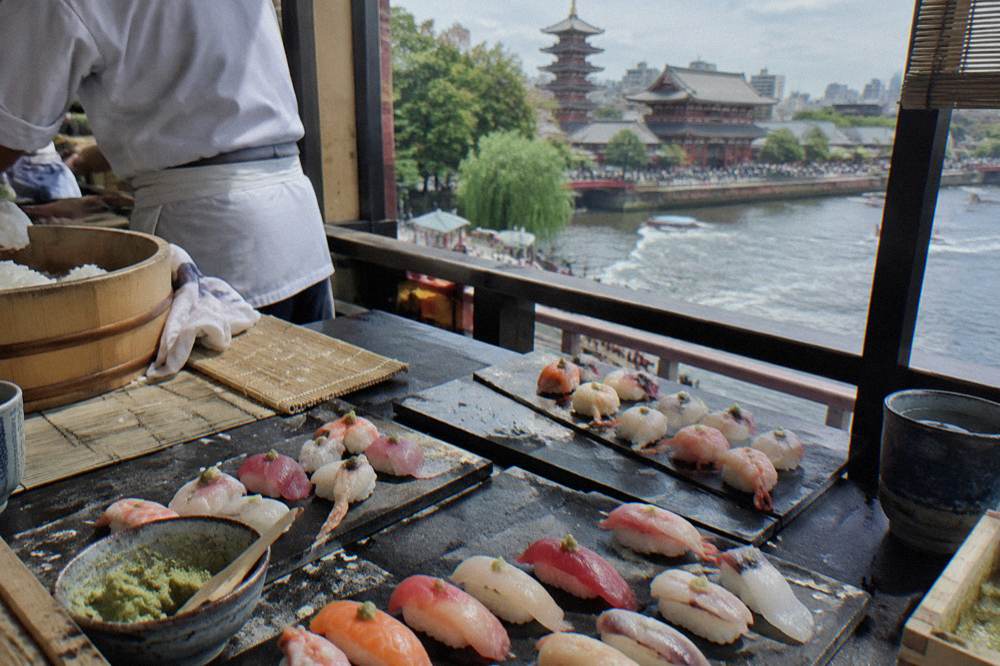
Tours do not replace a booked counter, they replace the booking process. If the goal is to watch a master work a counter for two hours, book Matsue Ebisu Head Store or Sushi Yuu a few weeks out and protect the evening. If the goal is to eat very well in Tokyo with zero reservation logistics, the tour route wins on convenience, and the free-cancellation terms make it a low-risk anchor for a first night. For depth on the format itself, see our omakase in Tokyo guide.
Is Chasing The Jiro Booking Still Worth It For Visitors?
Only if you are staying at a hotel with a strong concierge and can commit a fixed evening a month or more ahead. For everyone else, the honest reading of the record is that Jiro has made itself deliberately hard to book, while Tokyo offers dozens of counters at 4.5-plus on Google that want your reservation.
Weigh it as a decision, not a pilgrimage. On the Jiro side: one counter, one booking channel, a concierge dependency and photo ID at the door, plus a phone-only policy that excludes most overseas diners without hotel help. On the other side: a city the 2026 Michelin Guide credits with 12 three-star, 26 two-star and 122 one-star restaurants, seven Tokyo entries on Asia's 50 Best list, and curated counters like Sushi Teppen Shibuya at 5.0 on Google that can often be booked the same week. Before you compare prices across those counters, our breakdown of why omakase costs so much explains what actually drives the bill at a Tokyo sushi seat.
There is also the simple freedom argument. Tipping is not customary in Tokyo, dine-in carries a 10 percent consumption tax while takeaway is taxed lower, and many counters close between lunch and dinner or on fixed weekdays, so a rigid plan built around one impossible reservation leaves you working around a city that rewards flexibility. The Food List approach, pick by neighbourhood, sort by reservation difficulty, book what is open, tends to produce better meals per day than a single-name quest, and it is what the rest of this site, including Best Restaurants Tokyo, is built to support.
Common Questions About Booking Sushi Jiro In Tokyo
Is It Hard To Get A Reservation At Sushi Jiro?
Yes. The restaurant takes phone reservations only, overseas guests must book exclusively through their hotel concierge and show photo ID, and it has not appeared in the Michelin Guide Tokyo since the 2020 edition because it stopped accepting general-public reservations.
Can foreigners book Sukiyabashi Jiro directly?
No. The restaurant's own reservation page states that overseas guests must book exclusively through the concierge of the hotel where they are staying, so a hotel stay with a capable concierge is a prerequisite rather than a convenience.
Why was Sushi Jiro removed from the Michelin Guide?
Because it no longer accepts reservations from the general public, according to SHOKU NOREN's account of the 2020 edition delisting. The reported reason concerns access policy, not the food.
How far ahead should you book high-end sushi in Tokyo?
Typically one to two months ahead for sought-after counters, per Michelin's Tokyo guide advice, either through online reservation systems, a hotel concierge or the guide's official booking partner.
What are realistic alternatives to Sushi Jiro?
Curated counters like Shinjuku Sushi Hatsume at 4.9 on Google across 2,487 reviews, Sushi Teppen Shibuya at 5.0 across 618 reviews, and Matsue Ebisu Head Store at 4.8 across 1,632 reviews all take bookings through normal channels.
Do you lose money if you cancel a sushi counter booking?
Typically yes. High-end and omakase restaurants commonly charge 30 to 50 percent of the course price for cancellations a few days ahead, rising to 100 percent for same-day cancellations and no-shows.