What Is The Etiquette For Eating At An Izakaya?
Izakaya etiquette in Tokyo explained: seating, the otoshi table charge, ordering rounds, smoking rules, and how to pay, with real venue records and booking labels.
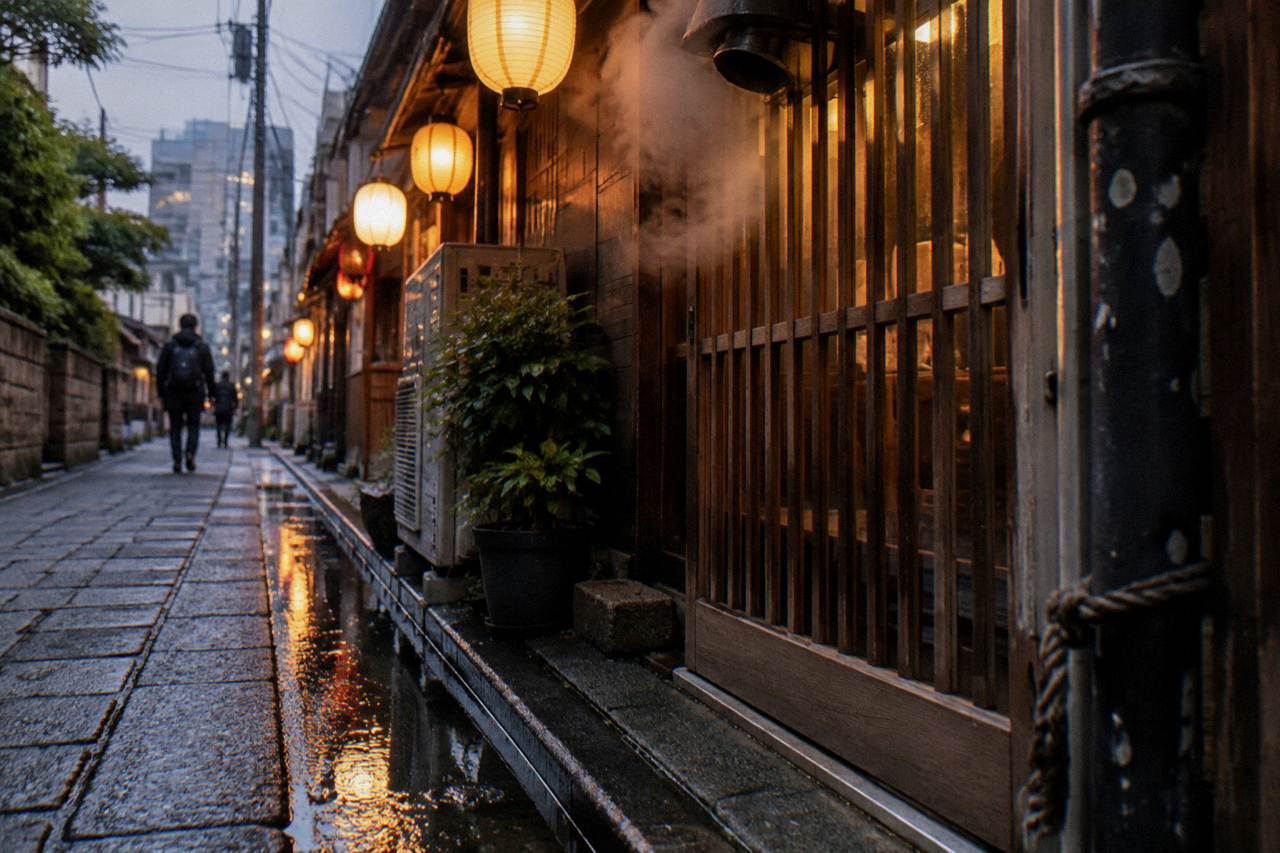
Izakaya etiquette trips up visitors at three predictable points: the otoshi appetiser that appears without being ordered, the pace of ordering in rounds rather than one big plate of everything, and the bill that arrives with a small per-person charge already on it. None of it is complicated once you can see the mechanics. This page walks through each step, from taking your shoes off at the entrance to paying at the till, using the actual charge rules, the smoking law and eight real Tokyo izakaya records with their Google ratings and booking labels. If you're also wondering whether foreign visitors actually get turned away at the door, the guide to izakaya access for foreign visitors has the short answer.
The etiquette itself is forgiving. Tokyo izakaya regulars care far more about a few practical things, settling your tab in full, not lingering after paying, respecting a small shop's space, than about chopstick form. If you would like a hand-picked shortlist before you go, The Tokyo Food List, our own guide, covers 980+ Tokyo restaurants with reservation difficulty and booking links, which matters most at the booking-recommended izakaya described below.
What Is The Etiquette For Eating At An Izakaya?
The core etiquette is: accept the seat you are offered, let the otoshi appetiser stand as an unwritten table charge, order drinks first and food in rounds, keep your voice moderate in small rooms, and pay the full bill at the till without tipping. Smoking is only allowed where signage permits it. Most friction comes from the otoshi and the cover charges, not from table manners.
Everything else in this etiquette chain is expansion on those six moves. An izakaya is a drinking-first establishment; the name literally means "stay in sake", and the food arrives as accompaniment rather than as a single plated meal. That single fact explains most of the rules. Drinks come first because the shop is organised around them. Food comes in small shared dishes because it is paced to the drinking. The bill comes at the end, often with the otoshi already counted in, because the seat itself carries a small cost in a city where floor space is the scarcest ingredient. For yakitori evenings beyond this street, The Tokyo Food List covers 980+ restaurants sorted by cuisine, with Google Maps pins and tourist favorites next to local spots.
First-timers often worry about doing something wrong. In practice, the genuinely punished mistakes are economic rather than social: walking out without paying, demanding the otoshi be removed after eating it, or lighting a cigarette where the law forbids it. Table manners, by contrast, are relaxed. Sharing from communal plates is normal, pouring beer for your neighbour before your own glass is a quiet courtesy, and nobody expects a visitor to know the vocabulary. The sections below take each step in the order you will actually meet it.
How Does Seating Work At A Tokyo Izakaya?
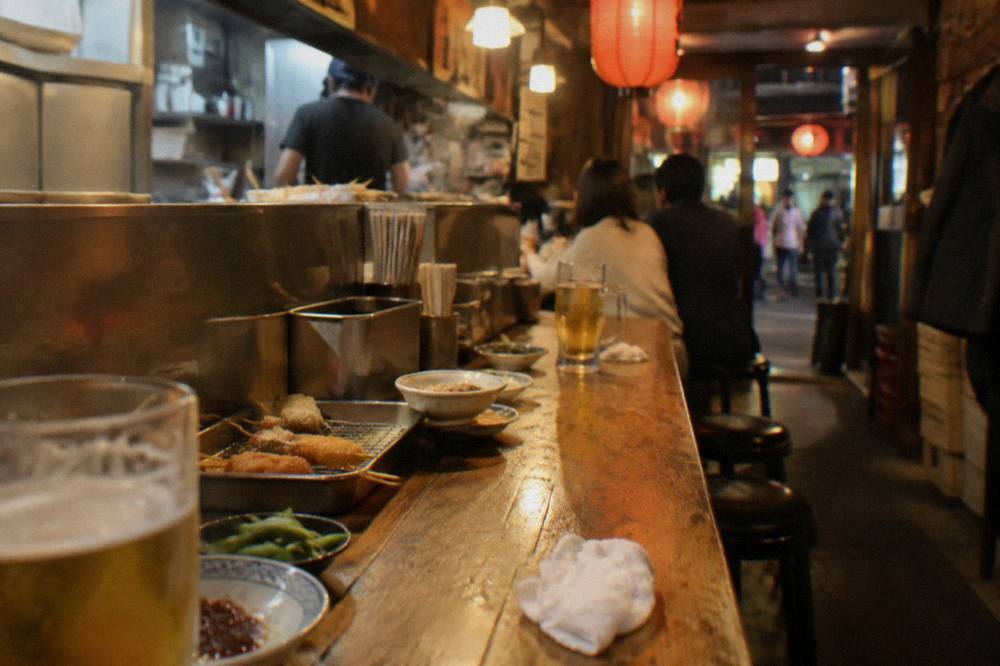
Most Tokyo izakayas seat you rather than letting you choose: counter seats for solo diners and pairs, table or tatami rooms for groups. At smaller shops you may be asked to remove shoes, put coats on hooks or into baskets, and move bags off the floor. Large groups are usually split or given a private room, and standing at the counter at a tachinomi bar is its own format with no seat at all.
The first question at the door is often just "how many people", and everything follows from the answer. A party of two at a counter is unremarkable; a party of six at a six-seat counter is not, which is why bigger izakaya either take bookings for private rooms or split groups across tables. The Google listings show the same pattern in the booking labels: seven of the eight izakaya covered here carry a "booking recommended" label, and only Sakaba Totoya in Asakusa is labelled usually walk-in. For a group on a Friday night, booking is the difference between a table and a 40-minute wait.
Shoes are the one physical ritual that catches visitors out. At a tatami-style shop you remove them at the genkan step and, at many places, turn them to face the door before stepping up. At counter and table venues in the modern chains, shoes stay on. Tsumugido Shinjuku, 4.7 on Google across 3,800 reviews, is a good example of the moderate-format shop where counter, table and small-room seating coexist; the Food List labels it booking recommended and mixed crowd, which is the standard profile for a Shinjuku evening spot. If seating choice matters to you, the booking notes in The Tokyo Food List flag which of the 980+ listings sit you and which let you pick.
Solo travellers have the easiest ride. Counter seats exist precisely for one person with a drink and a few dishes, and nobody reads anything into dining alone. Zekkocho teppen in Shinjuku, 4.8 on Google across 2,493 reviews, runs on grilled fish and counter conversation, with chub mackerel and grilled mackerel among its order tags, and its own site describes a fish-focused sakaba built around that format.
| Step | What happens | Where the rule comes from |
|---|---|---|
| Arrival | Staff ask party size and seat you; you rarely choose your own table | Standard izakaya practice, seating is assigned |
| Shoes | Off at tatami shops, on at counter and chain venues | Venue-dependent, follow the genkan step |
| Groups | Split across tables or given a private room; booking helps | Booking labels on Google listings |
| Solo | Counter seating is normal and expected | Counter-format izakaya practice |
What Is Otoshi And Do You Have To Pay It?
Otoshi is a small appetiser that arrives automatically at most izakaya without being ordered, and it works as a per-person table charge, typically a few hundred yen, up to around a thousand at nicer places. You can sometimes decline it politely before eating, but it is usually tied to the seat, so once you have eaten it the charge stands. Asking for it to be removed afterwards is the classic visitor mistake.
The charge exists because an izakaya sells time at a table as much as food, and the otoshi monetises the seat directly. The tokyo.how restaurant-charges guide puts it at typically 300 to 500 yen, rising toward 1,000 at more polished venues. What lands on your tray varies wildly: a small dish of edamame, a bite of dashimaki egg, pickles, a tiny portion of the kitchen's choosing. You did not order it and it is not a mistake. Nor is it a scam, whatever a decade of forum threads claims; it is the local version of a cover charge, printed nowhere and collected everywhere.
Can you refuse it? Sometimes, before you touch it. Tokyo.how's guide to restaurant charges in the city says you can sometimes decline politely before eating, but often the otoshi is tied to the seat, meaning the charge applies whether or not you eat the dish. The honest position for a visitor: treat the otoshi as part of the price of the table, eat it if it appeals, and leave it if it does not, but do not argue about it after the fact. Staff at busy shops have this conversation every night and have no discretion by then.
Not every izakaya charges one. Torikizoku, a national skewer chain, states on its own website that it charges no otoshi, no table fee and no late-night surcharge, a fact reported by the tokyo.how charges guide. That makes chain izakaya the low-friction option for travellers who would rather not parse the charge at all. Kushikatsu Tanaka Higashi-Ginza Store, 4.8 on Google across 4,494 reviews and labelled inexpensive and booking recommended by the Food List, is from a similar chain family, with takoyaki and kushikatsu among its order tags; its own site lists the shop's details. Meanwhile at the other extreme, many bars in Shinjuku's Golden Gai charge an explicit seat charge of roughly 500 to 1,500 yen per person, usually posted on the door, as the Izakaya Manual's Golden Gai guide reports, which at least makes the cost visible before you sit down. For a look at how far seat pricing can climb, what makes a Tokyo omakase seat cost so much traces the deposit, booking and cancellation mechanics behind those counter dinners.
| Charge type | What it is | Typical behaviour |
|---|---|---|
| Otoshi | Automatic small appetiser doubling as a per-person table charge, typically 300 to 500 yen | Accept it; decline politely only before eating |
| Golden Gai seat charge | Explicit cover charge, roughly 500 to 1,500 yen, often posted on the door | Check the door before entering |
| No charge | Chain izakaya such as Torikizoku state no otoshi or table fee | Simply order from the menu |
How Do You Order And Pace Rounds In A Tokyo Izakaya?
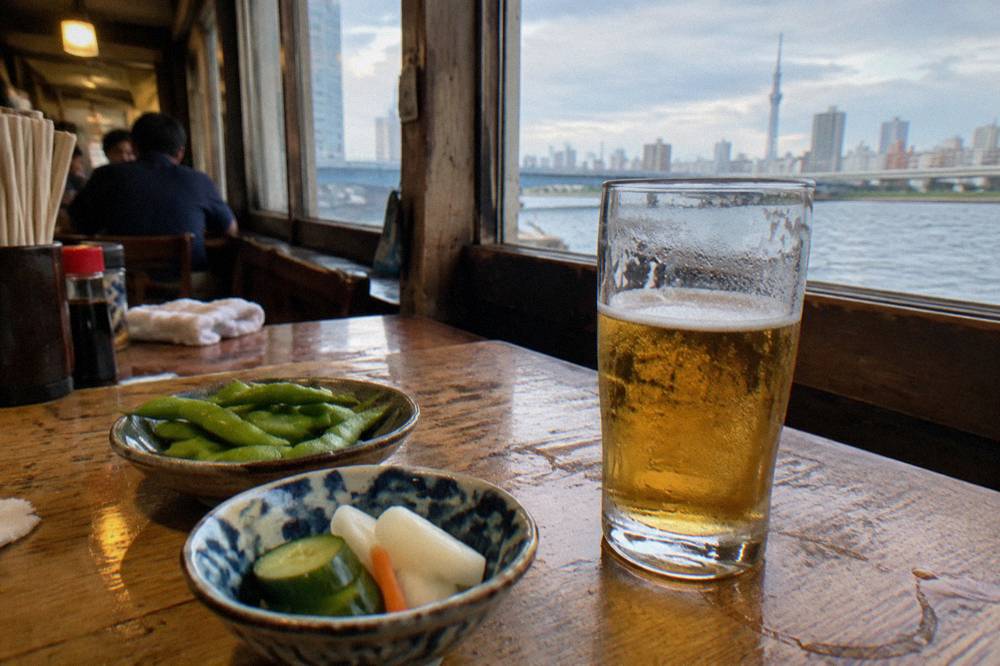
Ordering at an izakaya is round-based: start with drinks for the whole table, add a few small dishes, and order again as plates empty, rather than ordering everything at once. The first drink order is the real starting gun, and in the alley shops of Omoide Yokocho some venues require each customer to order at least one drink and one food item on entering. Nomihoudai free-flow plans, where offered, typically run 90 or 120 minutes.
The round system exists because the kitchen is built for it. Small dishes come out as they are ready, the table shares them, and the next round is ordered when conversation rather than food needs refilling. A visitor who orders eight dishes in the first five minutes clogs a tiny kitchen and eats half of it cold. Two or three dishes per round per four people is the working rhythm. Sakaba Totoya in Asakusa, 4.7 on Google across 3,964 reviews, is a textbook moderate izakaya for this style, with mentaiko, aji fry and beef tendon stew among its order tags, all snack-paced dishes that suit the round system. The rest of the planning pages sit on Best Restaurants Tokyo.
The entrance rule in the alleys deserves its own warning. The Omoide Yokocho merchants association states plainly that some shops impose a table charge, some require each customer to order one drink and one food item as they enter, and some set a 90-minute time limit on each group, and its advice is to check before you go in. That is the whole etiquette of Omoide Yokocho compressed into one sentence: the rules are posted or spoken at the door, and the only real error is not asking. The association's guide, at shinjukujapan.com, lists these conditions for the alley's roughly 60 bars and restaurants.
Yakitori itself is ordered in a way that surprises first-timers: skewers at Omoide Yokocho are most often sold in twos, not singly, and saying "omakase" hands the choice to the counter, which is how most regulars order, the same merchants association notes. None of this is a test. Menus with photos, touch-panel ordering and English menus are increasingly standard at chain and tourist-adjacent venues, and pointing at a neighbouring table's dish remains a fully functional ordering method everywhere.
For travellers who would rather have the ordering done for them on a first night, a guided walk removes the language layer entirely. The Shinjuku Local Eateries Walk, from $84.21 per person, runs three hours with a meal and drinks included, capped at 12 travellers and free to cancel, with a 4.9 rating across 10,498 reviews; it exists precisely for people who want the alley mechanics explained while they eat.
Where Can You Smoke At An Izakaya In Tokyo?
Indoor smoking in Tokyo restaurants is prohibited by default under the Health Promotion Act and the Tokyo ordinance fully in force since April 2020, with exterior signage showing each venue's status; only small pre-existing owner-run shops of 100 square metres or less with no employees can apply for smoking-permitted status. In the Golden Gai and Omoide Yokocho alleys, smoking is banned in the streets and only allowed inside shops that permit it.
This is the one izakaya rule backed by hard law rather than custom, and it is set out by the Tokyo Metropolitan Government: indoor smoking is prohibited by default, signage at the entrance declares the venue's status, and the small-owner exception is narrow and requires registration. For a visitor the practical read is simple: look for the sticker at the door before lighting anything, and never smoke while walking, which is separately prohibited on many Tokyo streets and in both of the famous Shinjuku alley districts. TripGuide.Tokyo reports that street smoking is banned outright in Golden Gai and Omoide Yokocho.
Non-smokers benefit from the same signage. If a venue's mark says smoking-permitted and that bothers you, the sign has done its job before you ordered a drink. Larger modern venues, including the mall-based izakaya covered on this site such as Uomori Coredo Muromachi Terrace in Nihonbashi, well rated on Google with yuzu, taimeshi and ochazuke among its order tags, sit inside commercial buildings, where Tokyo's default indoor smoking ban typically applies and any smoking area will be marked.
The etiquette point around smoke is therefore short: follow the signage, take it outside only where the street itself allows, and expect the tiny five-seat Golden Gai bar you squeezed into to be one of the registered exceptions rather than the rule. If a guide takes you through the alleys, they will know which doors are which, which is one quiet argument for a first-night tour over self-navigation.
| Venue type | Smoking status | Source of the rule |
|---|---|---|
| Standard restaurant interior | Prohibited by default | Tokyo ordinance, in force since April 2020 |
| Small owner-run shop, 100 sq m or less, no employees | May register as smoking-permitted | Tokyo Metropolitan Government |
| Golden Gai and Omoide Yokocho alleys | Street smoking banned; only inside shops that allow it | Alley rules reported by Tripguide.Tokyo |
How Do You Pay And Leave A Tokyo Izakaya?
In a Tokyo izakaya you pay at the end, usually at the till by the door rather than at the table, and you never tip, since tipping is not customary and staff may return money left behind; ask for "o-kaikei" to get the bill, check it, settle it in full, and leave promptly once paid, as lingering after paying at a small shop is the one departure habit locals actually notice.
The bill itself is uncomplicated. It will include the otoshi if there was one, your drinks and dishes, and any stated cover charge, and consumption tax is already included in the displayed prices, with dine-in taxed at 10 percent and takeout at 8 percent under the rules described in the NIPPON VISA & LIFE tax guide. Payment at the till by the door is the default at small shops; at larger venues you may pay at the table, but walking to the register with your party when finished is never wrong. Leaving cash on the table and departing, a habit imported from elsewhere, causes genuine confusion, because tipping is not customary and staff may chase you down to return the money, as the hinomaru.one Tokyo guide notes.
Card versus cash is a per-venue question with no uniform policy, so the safe move at a small independent izakaya is carrying cash; chain venues almost always take cards and IC payment. When you want certainty in advance, the booking and payment details for each venue in The Tokyo Food List, our own guide, flag what is known before you commit to a booking. The same card-versus-cash question comes up at ramen counters, and our Ichiran versus Ippudo comparison for Tokyo covers ordering format, opening hours and how each chain handles payment.
The leaving part matters more than the paying part. Once the bill is settled at a small izakaya, the seat is expected to turn over, which is the same logic as the 90-minute limits posted in Omoide Yokocho. Bow lightly or say "gochisosama" on the way out, gather everything, and go. Two other timing habits belong here. japan-guide.com notes that many Tokyo restaurants close between lunch and dinner service and stop taking last orders before closing, so an izakaya arriving on the early side may be your only option in a given block. Korean press coverage of chain pricing has likewise reported that several major chains apply a late-night surcharge of roughly 7 percent on orders from 10 pm onward.
One record in this set shows how far upmarket the format can go: Dynamic Kitchen & Bar Hibiki Shinagawa, 4.5 on Google across 2,826 reviews, is labelled expensive by the Food List, with whiskey and butajiru among its order tags, and it is the version of the izakaya where a 10 to 15 percent service charge, the pattern japan-guide.com describes for higher-end restaurants, is most likely to appear on the bill instead of an otoshi.
Which Tokyo Izakayas Suit First-Time Visitors Best?
For a first izakaya, pick a venue labelled usually walk-in or booking recommended rather than booking usually required, in a neighbourhood you can reach easily: Sakaba Totoya in Asakusa for the walk-in classic format, a Kushikatsu Tanaka branch in Ginza or Shibuya for a low-friction chain experience, or Tsumugido Shinjuku for the grilled-and-fried small-dish format near the station bars. All eight records below sit at 4.5 or higher on Google.
The trade you are making is between friction and atmosphere. The chain end, Kushikatsu Tanaka Higashi-Ginza Store at 4.8 across 4,494 reviews and Kushikatsu Tanaka Shibuya Hyakkendana, both inexpensive and both booking recommended on the Food List, gives you a predictable version of the format with menus and systems that a first-timer can navigate without much guesswork. The independent end, Sakaba Totoya with its mentaiko and beef tendon stew, or Tsukada Nojo Akihabara Chuo Dori with chicken nanban among its order tags, gives you the round-based, counter-paced evening this page has been describing. All carry a Google rating on their listings, and all are labelled mixed crowd in the Food List, which for a first-timer is a feature: a mixed room is a forgiving room.
If the alley version is the draw, a guided evening removes every friction on this list at once. The Bar Hop, Free Flow Full Dinner tour in Shinjuku runs three hours from $109.35 per person, includes a full dinner and free-flow drinks, caps groups at seven travellers and offers free cancellation, with a 4.9 rating across 4,086 reviews; the format handles the Golden Gai cover charges and the one-drink entry rules so the evening stays about the drinking. It pairs naturally with the deeper venue coverage in the izakaya and yakitori guide, and the question of access for foreign visitors has its own answer in do izakayas allow foreigners.
Common Questions About Izakaya Etiquette In Tokyo
What Is The Etiquette For Eating At An Izakaya?
Accept the seat offered, let the otoshi appetiser stand as the table charge, order drinks first and food in rounds, keep noise moderate in small rooms, follow the smoking signage, and pay the full bill at the till without tipping. The charges and the timing, not table manners, are where visitors stumble.
Do I have to pay the otoshi charge?
Usually yes. It is typically a few hundred yen per person and is tied to the seat. You can sometimes decline politely before eating it, but once eaten the charge stands; chain izakaya such as Torikizoku charge no otoshi at all.
Can I smoke inside a Tokyo izakaya?
Only where the signage says so. Indoor smoking is prohibited by default under the Tokyo ordinance in force since April 2020, with narrow exceptions for small owner-run registered shops. Street smoking is banned in Golden Gai and Omoide Yokocho.
Is tipping expected at an izakaya?
No. Tipping is not customary in Japanese restaurants and staff may return money left on the table. Some higher-end venues add a 10 to 15 percent service charge to the bill instead, which is not a tip.
Should I book an izakaya in advance?
For a weekend group, yes. Seven of the eight izakaya records on this page carry a booking recommended label; only Sakaba Totoya in Asakusa is usually walk-in. Booking also secures counter or private-room seating for larger parties.
How long can I stay at an izakaya table?
Typically as long as you keep ordering, though some Omoide Yokocho shops set a 90-minute limit per group and nomihoudai plans run 90 or 120 minutes. Once you have paid, leave promptly so the seat can turn over.